
A bad Japanese restaurant name can ruin your company before a single person arrives at your door. Selecting the wrong Japanese restaurant name is one of the biggest mistakes new restaurant owners often make, and the majority of them do not realize this until it’s too late. You’ve spent months reworking your menu, designing your interior, and educating your staff. However, if the name of your restaurant does not resonate with customers instantly, all that hard work is buried.
Let’s face it, the restaurant industry is more competitive than ever before, and it’s getting more competitive day by day. A forgettable name means you’re invisible. But is it the right name? It creates your whole Japanese brand image from the beginning.
If you’re planning to open a cozy Japanese design restaurant, a contemporary Japanese restaurant to serve Japanese cuisine, or something completely related to Japan’s rich culture, your perfect brand name exists. It’s just not there yet.
It’s changing now. These 700+ great names for the perfect Japanese restaurant include exactly what you are looking for.
What Makes A Good Japanese Restaurant Name?
Names are what people first remember. This is the very first thing they look up. An interesting fact? This is the first thing people look at when they make a judgment.
What is it that separates the great restaurant name from one that is just ignored?
Nothing complicated, just a few basic things.
It’s real. A strong restaurant name carries weight. It sounded as if it were a part of a place that has a history story to tell. Names that are rooted in Japanese tradition or Japanese food traditions naturally carry importance. They are not invented.
It stays. A name builds a memorable restaurant personality. Consider this: if someone refers a friend to your Japanese restaurant, will they remember your name the next day? If not, you’ve already lost a customer.
It represents the persona you are. Your name should reflect the authentic restaurant personality. Do you have a traditional place that honors Japanese tradition? A contemporary space with a design that’s influenced by Japanese simplicity and clean Japanese design? Your name should reflect it without having to describe it.
It must be easy to pronounce and to spell. And believe me, this is one of the biggest mistakes that often gets ignored. If people can’t pronounce your name with confidence, they won’t endorse your services. As simple as that.
It must be different. A unique restaurant name stands out on Google, Yelp, Instagram, and everywhere else that is important now.
The most natural names are those that appear natural. They don’t overthink it. They simply fit, and people are able to remember them.
Looking for beautiful and meaningful Japanese girl names with cultural depth and modern inspiration? Explore the complete Japanese girl names collection .
Good Japanese Restaurant Names
The art of finding good Japanese restaurant names takes more than choosing a name that just sounds Japanese. The most effective restaurant names carry real meaning and flow effortlessly from the mouth and leave a lasting impression. They are based on word of mouth.
Below are 50 of our hand-picked Japanese restaurant name ideas, each with its meanings, pronunciation, and the kanji. These restaurant name ideas are fresh, original, distinctive, and guaranteed to help you make the next choice.
| Name | Meaning | Pronunciation | Kanji |
|---|---|---|---|
| Yoshino | Good field | yoh-shee-noh | 吉野 |
| Haruki | Spring radiance | hah-roo-kee | 春輝 |
| Mizuho | Fresh rice ears (symbol of abundance) | mee-zoo-hoh | 瑞穂 |
| Sora | Sky | soh-rah | 空 |
| Kasumi | Misty haze | kah-soo-mee | 霞 |
| Fudo | Immovable strength | foo-doh | 不動 |
| Nishiki | Brocade, rich beauty | nee-shee-kee | 錦 |
| Hayase | Swift current | hah-yah-seh | 早瀬 |
| Kotone | Sound of koto (harp) | koh-toh-neh | 琴音 |
| Ryusei | Shooting star | ryoo-say | 流星 |
| Shirogane | Silver | shee-roh-gah-neh | 白銀 |
| Tamari | Gathering place | tah-mah-ree | 溜 |
| Yukimi | Watching snow | yoo-kee-mee | 雪見 |
| Kaoru | Gentle fragrance | kah-oh-roo | 薫 |
| Asahi | Morning sun | ah-sah-hee | 朝日 |
| Mugen | Infinite, endless | moo-gen | 無限 |
| Tsubaki | Camellia flower | tsoo-bah-kee | 椿 |
| Irodori | Colorful harmony | ee-roh-doh-ree | 彩 |
| Shizuku | Water droplet | shee-zoo-koo | 雫 |
| Kumo | Cloud | koo-moh | 雲 |
| Hotaru | Firefly | hoh-tah-roo | 蛍 |
| Arashi | Storm | ah-rah-shee | 嵐 |
| Nagomi | Harmony | nah-goh-mee | 和み |
| Toiro | Ten colors | toh-ee-roh | 十色 |
| Beniaka | Deep crimson red | beh-nee-ah-kah | 紅赤 |
| Zangetsu | Remaining moon at dawn | zan-get-soo | 残月 |
| Komorebi | Sunlight through leaves | koh-moh-reh-bee | 木漏れ日 |
| Fukami | Depth | foo-kah-mee | 深み |
| Shizenka | Natural beauty | shee-zen-kah | 自然花 |
| Oboro | Hazy moon | oh-boh-roh | 朧 |
| Wakaba | Fresh leaves | wah-kah-bah | 若葉 |
| Tsukiyo | Moonlit night | tsoo-kee-yoh | 月夜 |
| Kinari | Natural purity | kee-nah-ree | 生成り |
| Izumi | Spring water | ee-zoo-mee | 泉 |
| Hanabi | Fireworks | hah-nah-bee | 花火 |
| Kokoro | Heart, soul | koh-koh-roh | 心 |
| Moegi | Fresh green sprout | moh-eh-gee | 萌黄 |
| Seiran | Blue mountain mist | say-rahn | 晴嵐 |
| Fubuki | Snowstorm | foo-boo-kee | 吹雪 |
| Kuroki | Dark wood | koo-roh-kee | 黒木 |
| Tomoshibi | Candlelight | toh-moh-shee-bee | 灯火 |
| Akebono | Dawn | ah-keh-boh-noh | 曙 |
| Yugen | Profound beauty | yoo-gen | 幽玄 |
| Midori | Green nature | mee-doh-ree | 緑 |
| Shiorin | Gentle rain | shee-oh-reen | 潮霖 |
| Rindo | Gentian flower | reen-doh | 竜胆 |
| Kaigan | Coastline | kye-gahn | 海岸 |
| Toen | Distant garden | toh-en | 遠園 |
| Ibuki | Breath of life | ee-boo-kee | 息吹 |
| Yomogi | Healing herb | yoh-moh-gee | 蓬 |
This list of Japanese restaurant names isn’t just beautiful words. Each one tells the story. The perfect name from this list may become the core of your branding. Be patient, say these out loud, and observe which is similar to yours.
Looking for legendary and powerful Japanese sword names inspired by history, mythology, and anime culture? Explore the complete Japanese sword names collection .
Unique Japanese Restaurant Names
Anybody can choose a standard name. However, unique Japanese restaurant names offer something unique, they make people take a second look and remember the name of your restaurant.
The creative restaurant names are built around unique Japanese words, as well as poetic concepts and concepts you won’t see everywhere. If you’re looking for clever restaurant names that stand apart from the rest, the list below is perfect the perfect choice for you.
| Name | Meaning | Pronunciation | Kanji |
|---|---|---|---|
| Kazahana | Snowflakes carried by wind | kah-zah-hah-nah | 風花 |
| Shinonome | The sky just before sunrise | shee-noh-noh-meh | 東雲 |
| Utsuroi | The gentle change of seasons | oo-tsoo-roh-ee | 移ろい |
| Tobikiri | Exceptionally outstanding | toh-bee-kee-ree | 飛び切り |
| Nawate | A narrow path between rice fields | nah-wah-teh | 畷 |
| Kagayaki | Brilliant shine, radiance | kah-gah-yah-kee | 輝き |
| Shunkei | Spring scenery, seasonal beauty | shoon-kay | 春景 |
| Hagoromo | Feathered robe of celestial beings | hah-goh-roh-moh | 羽衣 |
| Noroshi | Signal fire, a beacon in the distance | noh-roh-shee | 狼煙 |
| Tsurara | Icicle | tsoo-rah-rah | 氷柱 |
| Mikoto | A noble, exalted being | mee-koh-toh | 命 |
| Sazanami | Gentle ripples on water | sah-zah-nah-mee | 漣 |
| Fūrin | Wind chime | foo-reen | 風鈴 |
| Kogarashi | Cold winter wind that strips leaves | koh-gah-rah-shee | 木枯らし |
| Tamoto | The fold of a kimono sleeve | tah-moh-toh | 袂 |
| Yūnagi | Evening calm after the sea wind stops | yoo-nah-gee | 夕凪 |
| Kakuriyo | The hidden world, the unseen realm | kah-koo-ree-yoh | 隠世 |
| Nowaki | Autumn storm that bends the grass | noh-wah-kee | 野分 |
| Hibari | Skylark bird, cheerful song | hee-bah-ree | 雲雀 |
| Shigure | Passing late autumn rain | shee-goo-reh | 時雨 |
| Tokoyo | Eternal land, timeless place | toh-koh-yoh | 常世 |
| Nazuna | Shepherd’s purse, a humble wildflower | nah-zoo-nah | 薺 |
| Amagumo | Rain cloud | ah-mah-goo-moh | 雨雲 |
| Kirari | A sudden sparkling glimmer | kee-rah-ree | きらり |
| Futaba | Two fresh sprouts, new beginnings | foo-tah-bah | 双葉 |
| Rōkaku | A pavilion high above the ground | roh-kah-koo | 楼閣 |
| Keshiki | Scenery, landscape, a view worth remembering | keh-shee-kee | 景色 |
| Yodaka | Nighthawk, a bird of the night sky | yoh-dah-kah | 夜鷹 |
| Mikazuki | Crescent moon | mee-kah-zoo-kee | 三日月 |
| Omokage | A face seen in memory, a lingering image | oh-moh-kah-geh | 面影 |
| Suzuro | Wandering freely without a fixed path | soo-zoo-roh | 漫ろ |
| Takibi | An open bonfire, warmth gathered around flames | tah-kee-bee | 焚き火 |
| Harugasumi | Spring haze hanging over the hills | hah-roo-gah-soo-mee | 春霞 |
| Hikari | Light, brightness | hee-kah-ree | 光 |
| Mishima | Three islands, a place of layered beauty | mee-shee-mah | 三島 |
| Tokusa | Horsetail plant, ancient and resilient | toh-koo-sah | 木賊 |
| Aonagi | Blue calm, peaceful green water | ah-oh-nah-gee | 青凪 |
| Yūzora | Evening sky | yoo-zoh-rah | 夕空 |
| Kinuha | Silk feather, soft and delicate | kee-noo-hah | 絹羽 |
| Murasaki | Purple, the color of nobility | moo-rah-sah-kee | 紫 |
| Tanomo | A peaceful, hopeful meadow | tah-noh-moh | 頼 |
| Shiokaze | Sea breeze, salty ocean wind | shee-oh-kah-zeh | 潮風 |
| Reimei | The first light of dawn, a new era beginning | ray-may | 黎明 |
| Kogane | Gold, something precious and rare | koh-gah-neh | 黄金 |
| Arare | Small hailstones, also a type of rice cracker | ah-rah-reh | 霰 |
| Mashiro | Pure white, completely clean | mah-shee-roh | 真白 |
| Higurashi | Evening cicada, the sound of summer ending | hee-goo-rah-shee | 日暮らし |
| Fūsui | Flowing water and wind, natural harmony | foo-soo-ee | 風水 |
| Ōzora | The great open sky | oh-zoh-rah | 大空 |
| Noctiluca | Sea sparkle, bioluminescent glow on ocean waves (used in Japan’s coastal poetry) | nok-tih-loo-kah | 夜光虫 |
The unique restaurant name choices go beyond the usual. Each name conveys a sense rather than a mere definition. One of the more clever restaurant names is the ones that make the patron be a part of something even before they take a seat. Choose a name that is as if it were a part of your story.
Creative Japanese Restaurant Names
Sometimes, the most effective restaurant name ideas come from thinking differently. Not something that is just “Japanese” but something interesting, alive, and worthwhile to remember.
These imaginative, creative Japanese restaurant names are inspired by the poetry of nature, emotions, and culture. They’re creative, that make people think “oh, it will be awesome” before even trying the food.
There is no way that a restaurant name generator could put the same amount of consideration into every selection. These names were selected with care, and none is found elsewhere on this list.
| Name | Meaning | Pronunciation | Kanji |
|---|---|---|---|
| Tobimaru | Leaping circle, a name full of energy and motion | toh-bee-mah-roo | 飛丸 |
| Amaoto | The sound of rain | ah-mah-oh-toh | 雨音 |
| Kakizome | The first writing of the new year, a fresh start | kah-kee-zoh-meh | 書き初め |
| Shironami | White waves | shee-roh-nah-mee | 白波 |
| Yūdachi | A sudden evening shower in summer | yoo-dah-chee | 夕立 |
| Kemuri | Smoke, steam rising gently | keh-moo-ree | 煙 |
| Hoshizora | Starry sky | hoh-shee-zoh-rah | 星空 |
| Sarashi | Bleached fabric, pure and refined | sah-rah-shee | 晒し |
| Fujikage | Shadow of Mount Fuji | foo-jee-kah-geh | 富士影 |
| Tanuki | Japanese raccoon dog, a symbol of good luck and fun | tah-noo-kee | 狸 |
| Akikusa | Autumn grasses swaying in the wind | ah-kee-koo-sah | 秋草 |
| Shiratsuyu | White morning dew | shee-rah-tsoo-yoo | 白露 |
| Nezumi | Mouse, a humble and clever creature | neh-zoo-mee | 鼠 |
| Kurenai | Deep crimson, a rich and bold red | koo-reh-nah-ee | 紅 |
| Hayakaze | Fast wind, a quick and lively breeze | hah-yah-kah-zeh | 早風 |
| Tsuwabuki | Leopard plant, a tough and beautiful flower | tsoo-wah-boo-kee | 石蕗 |
| Mikage | Sacred shadow, a divine silhouette | mee-kah-geh | 御影 |
| Yoarashi | Night storm, wild and dramatic | yoh-ah-rah-shee | 夜嵐 |
| Aokage | Blue shadow, calm and cool | ah-oh-kah-geh | 青影 |
| Tsubame | Swallow bird, a sign of good fortune | tsoo-bah-meh | 燕 |
| Karasu | Crow, mysterious and intelligent | kah-rah-soo | 烏 |
| Hanataba | Bouquet of flowers | hah-nah-tah-bah | 花束 |
| Inazuma | Lightning bolt | ee-nah-zoo-mah | 稲妻 |
| Shiokuri | Sending salt, an old Japanese tradition of respect | shee-oh-koo-ree | 塩送り |
| Yukiakari | The soft glow of light reflecting off snow | yoo-kee-ah-kah-ree | 雪明かり |
| Kamikaze | Divine wind, powerful and unstoppable | kah-mee-kah-zeh | 神風 |
| Asagiri | Morning mist | ah-sah-gee-ree | 朝霧 |
| Kinpaku | Gold leaf, delicate and luxurious | keen-pah-koo | 金箔 |
| Shizumare | Growing still, finding peace | shee-zoo-mah-reh | 静まれ |
| Tsukikage | Moonlight shadow | tsoo-kee-kah-geh | 月影 |
| Odori | Dance, joyful movement | oh-doh-ree | 踊り |
| Natsugumo | Summer clouds drifting slowly | nah-tsoo-goo-moh | 夏雲 |
| Shirafuji | White wisteria, elegant and rare | shee-rah-foo-jee | 白藤 |
| Kagehōshi | A shadow monk, mysterious and quiet | kah-geh-hoh-shee | 影法師 |
| Yomogiri | Cutting through the mist | yoh-moh-gee-ree | 霧切り |
| Harusame | Gentle spring rain, also a type of glass noodle | hah-roo-sah-meh | 春雨 |
| Tobikaze | Flying wind, free and fast | toh-bee-kah-zeh | 飛び風 |
| Akatsuki | Dawn, the red sky at daybreak | ah-kah-tsoo-kee | 暁 |
| Shirogiku | White chrysanthemum, a symbol of longevity | shee-roh-gee-koo | 白菊 |
| Mikiri | A clear line of sight, seeing things with clarity | mee-kee-ree | 見切り |
| Haneuma | Winged horse, bold and imaginative | hah-neh-oo-mah | 羽馬 |
| Yukishiro | Snow white castle | yoo-kee-shee-roh | 雪城 |
| Suigetsu | Water moon, the reflection of the moon on still water | soo-ee-get-soo | 水月 |
| Nagareboshi | Shooting star streaking across the sky | nah-gah-reh-boh-shee | 流れ星 |
| Kirishima | Misty island, a place wrapped in clouds | kee-ree-shee-mah | 霧島 |
| Amanogawa | River of heaven, the Milky Way | ah-mah-noh-gah-wah | 天の川 |
| Tamayura | A brief, fleeting moment of happiness | tah-mah-yoo-rah | 玉響 |
| Shirokuma | Polar bear, also a popular Japanese shaved ice dessert | shee-roh-koo-mah | 白熊 |
| Kazamidori | Weather vane, always pointing in the right direction | kah-zah-mee-doh-ree | 風見鶏 |
| Hizakari | The peak brightness of midday sun | hee-zah-kah-ree | 日盛り |
Excellent creative restaurant names aren’t invented. They’re just there. The culture, the language, or the image you’d like your restaurant to express. Each name on this list tells an associated story. The one that fits your own story is somewhere. Follow your instinct and choose the one that makes you smile.
Cool Japanese Restaurant Names
Cool doesn’t only mean looking nice. It’s about feeling fresh, and even slightly unpredictable. These amazing, cool Japanese restaurant names draw inspiration from contemporary Japanese popular culture and street art, the vibrant energy of Tokyo, and the striking design of modern Tokyo areas such as Shibuya, Harajuku, and Shimokitazawa.
If you’re looking for a cool name that makes you feel as if it’s the neon signs of an urban alleyway that is buzzing, the list below is just what you want:
| Name | Meaning | Pronunciation | Kanji |
|---|---|---|---|
| Voltage | Electric energy, inspired by Tokyo’s neon nightlife | vol-tij | 電圧 (Den’atsu) |
| Kemono | Wild creature, bold and untamed | keh-moh-noh | 獣 |
| Akihabara | Field of autumn leaves, now Tokyo’s electric town | ah-kee-hah-bah-rah | 秋葉原 |
| Zankoku | Ruthlessly good, strikingly intense | zan-koh-koo | 残酷 |
| Neonori | Neon ride, a modern Tokyo night vibe | neh-oh-noh-ree | ネオン乗り |
| Cipher | Hidden code, inspired by Tokyo underground culture | sye-fer | 暗号 (Angō) |
| Hagane | Steel, strong and modern | hah-gah-neh | 鋼 |
| Tokyodori | Tokyo street, city energy on a plate | toh-kyoh-doh-ree | 東京通り |
| Byakko | White tiger, one of Japan’s four guardian beasts | byak-koh | 白虎 |
| Raijin | God of thunder and lightning | rye-jin | 雷神 |
| Genkai | The absolute limit, pushing boundaries | gen-kye | 限界 |
| Konton | Chaos, wild and exciting energy | kon-ton | 混沌 |
| Souken | Creative vision, a bold new idea | soh-ken | 創見 |
| Yajuu | Wild beast, raw and powerful | yah-joo | 野獣 |
| Shinku | Deep crimson, a bold and striking color | sheen-koo | 深紅 |
| Gekko | Moonlight, cool and mysterious | gek-koh | 月光 |
| Kurayami | Total darkness, dramatic and edgy | koo-rah-yah-mee | 暗闇 |
| Bōsō | Running wild, out of control energy | boh-soh | 暴走 |
| Shinjuku | New lodging, Tokyo’s most iconic district | shin-joo-koo | 新宿 |
| Tetsu | Iron, tough and minimal | tet-soo | 鉄 |
| Zankou | Remaining light after sunset | zan-koh | 残光 |
| Kirabo | Gift of light, modern and warm | kee-rah-boh | 光の贈り物 |
| Maboroshi | Illusion, phantom, something dreamlike | mah-boh-roh-shee | 幻 |
| Ryūkō | Trend, what’s popular right now | ryoo-koh | 流行 |
| Hadou | Wave motion, surge of energy | hah-doh | 波動 |
| Senkou | Flash of light, quick and striking | sen-koh | 閃光 |
| Kaikō | Rare meeting, an unexpected connection | kye-koh | 邂逅 |
| Genzai | The present moment, right now | gen-zye | 現在 |
| Shibusen | Shibuya current, inspired by Tokyo’s youth culture | shee-boo-sen | 渋川 |
| Akuma | Devil, dark and bold aesthetic | ah-koo-mah | 悪魔 |
| Zephyr | Light breeze, used in modern Japanese coastal culture | zef-er | 微風 (Bifū) |
| Kūkan | Space, emptiness, a minimalist concept | koo-kan | 空間 |
| Bureiku | Break, as in breaking norms and rules | boo-ray-koo | ブレイク |
| Hareta | Cleared up, bright after the storm | hah-reh-tah | 晴れた |
| Jidai | Era, a new age beginning | jee-dye | 時代 |
| Gekidan | Theater troupe, dramatic and expressive | geh-kee-dan | 劇団 |
| Shinrai | Trust, something solid in a fast world | sheen-rye | 信頼 |
| Tobira | A door or gateway, the start of something new | toh-bee-rah | 扉 |
| Kakusei | Awakening, a sharp moment of clarity | kah-koo-say | 覚醒 |
| Niji | Rainbow, colorful and full of life | nee-jee | 虹 |
| Zōkei | Form and design, art made physical | zoh-kay | 造形 |
| Hāto | Heart, the Japanese-English blend word for emotion | hah-toh | ハート |
| Kizuna | Bond, connection between people | kee-zoo-nah | 絆 |
| Nocturn | Of the night, inspired by Tokyo’s nightlife scene | nok-turn | 夜想 (Yasō) |
| Katachi | Shape, form, the look of things | kah-tah-chee | 形 |
| Ikigai | Your reason for being, what makes life worth living | ee-kee-gye | 生き甲斐 |
| Tsuyosa | Strength, toughness with grace | tsoo-yoh-sah | 強さ |
| Shihai | Control, dominance, confidence | shee-hye | 支配 |
| Garasu | Glass, transparent and modern | gah-rah-soo | ガラス |
| Reimei Tōkyō | Dawn of Tokyo, a new day in the city that never sleeps | ray-may toh-kyoh | 黎明東京 |
Cool Japanese restaurant names are different when they have a deeper meaning behind them. If you’re looking to go for a contemporary Tokyo edge or a simple reference towards Japanese music or something that’s sharp and contemporary, the above Japanese names the list covers everything. The perfect name can’t only be the identity of your restaurant. It’s become your restaurant.
Looking for meaningful and beautiful Japanese baby names with deep cultural roots and modern inspiration? Explore the complete Japanese baby names collection .
Famous Japanese Restaurant Names
Certain names are just a bit more pronounced. They scream michelin-starred restaurant before you even enter. It’s like being in a fine dining spot the moment you listen to their sound.
The most Famous Japanese Restaurant Names in the world have one thing in common. They’re basic, significant, full of meaning, and barely hard to forget. You may be dreaming about fine-dining spots that earn three-star eateries standing or establishing two-star restaurants worthy of global recognition, but your name is where the journey begins.
The names on this list are influenced by the elegance, prestige, and beauty of Japan’s best dining culture. Original, fresh, and never before used:
| Name | Meaning | Pronunciation | Kanji |
|---|---|---|---|
| Junsei | Pure and sincere, nothing unnecessary | joon-say | 純粋 |
| Kōrin | Radiant majesty, inspired by Japan’s greatest painters | koh-reen | 光輪 |
| Tenshō | Heavenly glory, divine ascent | ten-shoh | 天祥 |
| Seizan | Blue mountain, calm and timeless | say-zan | 青山 |
| Hyakumi | A hundred flavors, limitless taste | hyah-koo-mee | 百味 |
| Meigetsu | The brightest, most beautiful full moon | may-get-soo | 名月 |
| Shōken | Clear insight, seeing what others miss | shoh-ken | 照見 |
| Koukoku | Glorious land, a place of honor | koh-koh-koo | 光国 |
| Rinshō | Dignified and graceful presence | reen-shoh | 凛昇 |
| Taiga | Great river, powerful and enduring | tye-gah | 大河 |
| Fūga | Elegance, refinement, poetic grace | foo-gah | 風雅 |
| Kiyora | Pure and clean, nothing out of place | kee-yoh-rah | 清ら |
| Shōgetsu | Pine and moon, a classic symbol of Japanese beauty | shoh-get-soo | 松月 |
| Rankō | Orchid fragrance, rare and refined | ran-koh | 蘭香 |
| Kibō | Hope, a light that never goes out | kee-boh | 希望 |
| Taihō | Great treasure, something worth protecting | tye-hoh | 大宝 |
| Seijaku | Sacred silence, the calm that holds everything together | say-jah-koo | 静寂 |
| Kōmyō | Brilliant light, famous glow | koh-myoh | 光明 |
| Zenshō | Complete victory, absolute excellence | zen-shoh | 全勝 |
| Hangetsu | Half moon, perfectly balanced | han-get-soo | 半月 |
| Ryōan | Cool and peaceful, like the famous Kyoto rock garden | ryoh-an | 龍安 |
| Meikō | Brilliant light, a name that shines | may-koh | 明光 |
| Shōryu | Rising dragon, climbing to greatness | shoh-ryoo | 昇龍 |
| Tōkō | Eastern light, dawn from the east | toh-koh | 東光 |
| Kinjō | Golden castle, built to last | keen-joh | 金城 |
| Seihō | Pure direction, always moving forward with integrity | say-hoh | 清方 |
| Taishō | Great commander, strong and respected | tye-shoh | 大将 |
| Ryōkoku | Cool land, a refined and collected place | ryoh-koh-koo | 涼国 |
| Kōdō | The way of fragrance, an ancient Japanese art | koh-doh | 香道 |
| Enshō | Circle of glory, complete and whole | en-shoh | 円祥 |
| Myōken | Wondrous sight, something rarely seen | myoh-ken | 妙見 |
| Kaishō | Rising tide of excellence | kye-shoh | 海升 |
| Tenpō | Heavenly treasure, a gift from above | ten-poh | 天宝 |
| Kōsen | Golden spring water, pure and precious | koh-sen | 黄泉 |
| Shōzan | Small mountain, quiet but immovable | shoh-zan | 小山 |
| Reikō | Spiritual light, an inner glow | ray-koh | 霊光 |
| Eikō | Glory, honor, lasting fame | ay-koh | 栄光 |
| Taiyō | The sun, warm and powerful | tye-yoh | 太陽 |
| Kiyomizu | Pure water, inspired by Kyoto’s sacred temple | kee-yoh-mee-zoo | 清水 |
| Shōen | Pine garden, peaceful and timeless | shoh-en | 松園 |
| Ryūkoku | Dragon land, legendary and powerful | ryoo-koh-koo | 龍国 |
| Meiran | Brilliant orchid, rare and beautiful | may-ran | 明蘭 |
| Kōga | Fragrant elegance, subtle but unforgettable | koh-gah | 香雅 |
| Tōzan | Eastern mountain, steady and respected | toh-zan | 東山 |
| Shinpū | Sacred wind, a gentle but divine force | sheen-poo | 神風 |
| Kanshō | Quiet appreciation, savoring every detail | kan-shoh | 鑑賞 |
| Reizan | Sacred mountain, a place of reverence | ray-zan | 霊山 |
| Shōkō | Rising fragrance, a scent that fills the room | shoh-koh | 昇香 |
| Tairan | Great calm, a stillness that commands respect | tye-ran | 大蘭 |
| Kōtoku | Brilliant virtue, a name built on character | koh-toh-koo | 光徳 |
The most well-known Japanese restaurant names on the planet did not happen by chance. The reason behind all michelin-starred restaurant is a name that was right from the beginning.
If you’re building a fine dining spot from scratch or hoping to reach the top tier of fine-dining spots alongside the world’s top three-star eateries and two-star restaurants, start with a name that feels like it belongs in the same place.
Cute Japanese Restaurant Names
Many people will say the opposite, but cute works. Don’t trust them! A friendly, jolly name draws people in, particularly sushi lovers who want a pleasant, casual dining experience. These cute Japanese restaurant names that are not snarky or silly are adorable without being overly pretentious.
Consider kawaii kitchen energy mixed with authentic Japanese words and authentic Japanese names, which have actual significance. Each name is unique, attractive, charming, and able in order to help your establishment look like a place that people want to visit.
| Name | Meaning | Pronunciation | Kanji |
|---|---|---|---|
| Fuwa | Soft and fluffy, light as air | foo-wah | ふわ |
| Mochi | Soft rice cake, a beloved Japanese sweet | moh-chee | 餅 |
| Poko | Small and round, adorably tiny | poh-koh | ぽこ |
| Kinoko | Mushroom, small and charming | kee-noh-koh | きのこ |
| Usagi | Rabbit, soft and gentle | oo-sah-gee | 兎 |
| Hana Bento | Flower lunchbox, pretty and packed with love | hah-nah ben-toh | 花弁当 |
| Tamagoyaki | Rolled egg, a Japanese breakfast classic | tah-mah-goh-yah-kee | 玉子焼き |
| Neko | Cat, the universal symbol of cute in Japan | neh-koh | 猫 |
| Ichigo | Strawberry, sweet and bright red | ee-chee-goh | 苺 |
| Hoshi Kuma | Star bear, playful and warm | hoh-shee koo-mah | 星熊 |
| Sakura Mochi | Cherry blossom rice cake, a spring treat | sah-koo-rah moh-chee | 桜餅 |
| Fuwari | Floating softly, like a gentle breeze | foo-wah-ree | ふわり |
| Kororin | Rolling around, bouncy and cheerful | koh-roh-reen | ころりん |
| Ponpoko | The sound a tanuki makes on its belly, playful folklore reference | pon-poh-koh | ぽんぽこ |
| Yuki Dango | Snow dumplings, soft and sweet | yoo-kee dan-goh | 雪団子 |
| Momoko | Peach child, rosy and sweet | moh-moh-koh | 桃子 |
| Chibi | Tiny, small and endearing | chee-bee | ちび |
| Tamago | Egg, simple and perfectly round | tah-mah-goh | 卵 |
| Hiyoko | Baby chick, small and fluffy | hee-yoh-koh | 雛 |
| Mitarashi | Sweet soy sauce dango, a classic Japanese street snack | mee-tah-rah-shee | みたらし |
| Nukunuku | Warm and cozy, snug like a blanket | noo-koo-noo-koo | ぬくぬく |
| Konpeito | Star-shaped sugar candy, colorful and tiny | kon-pay-toh | 金平糖 |
| Pikaride | Sparkling ride, fun and energetic | pee-kah-ree-deh | ぴかり出 |
| Yomogi Mochi | Mugwort rice cake, earthy and traditional | yoh-moh-gee moh-chee | 蓬餅 |
| Kuma Pan | Bear bread, inspired by Japan’s famous animal-shaped breads | koo-mah pan | 熊パン |
| Hanachan | Little flower, a sweet nickname-style name | hah-nah-chan | 花ちゃん |
| Suika | Watermelon, bright and refreshing | soo-ee-kah | 西瓜 |
| Tofu Taro | Tofu boy, humble and wholesome | toh-foo tah-roh | 豆腐太郎 |
| Kirakira | Sparkling and glittering, full of shine | kee-rah-kee-rah | きらきら |
| Ohana | Flower in Japanese, family in Hawaiian (a double meaning full of warmth) | oh-hah-nah | お花 |
| Niji Cafe | Rainbow cafe, colorful and cheerful | nee-jee kah-feh | 虹カフェ |
| Pocchiri | Just the right amount, perfectly balanced cuteness | poh-chee-ree | ぽっちり |
| Shiro Neko | White cat, calm and adorable | shee-roh neh-koh | 白猫 |
| Anko | Sweet red bean paste, the heart of Japanese desserts | an-koh | 餡子 |
| Bubburu | Bubble, light and fun (a kawaii twist on the English word) | boo-boo-roo | バブル |
| Petitfuru | Small and delicate, inspired by petit four pastry culture in Japan | peh-tee-foo-roo | プチフール |
| Koibito | Sweetheart, a romantic and tender name | koh-ee-bee-toh | 恋人 |
| Ramuné | Japanese marble soda, a summer festival favorite | rah-moo-neh | ラムネ |
| Hitode | Starfish, bright and cheerful under the sea | hee-toh-deh | 海星 |
| Mikan | Mandarin orange, small and sweet | mee-kan | 蜜柑 |
| Fuwamuwa | Extra soft and fluffy, double the cozy feeling | foo-wah-moo-wah | ふわむわ |
| Taiyaki | Fish-shaped cake filled with sweet bean paste, a beloved street food | tye-yah-kee | 鯛焼き |
| Hoppe | Chubby cheeks, the cutest compliment in Japanese | hoh-peh | ほっぺ |
| Yukiusagi | Snow rabbit, a traditional winter craft made from snow | yoo-kee-oo-sah-gee | 雪兎 |
| Amai | Sweet, the simplest and most honest compliment for food | ah-mye | 甘い |
| Korokoro | Rolling and tumbling, round and fun | koh-roh-koh-roh | ころころ |
| Sakumoto | Cherry blossom origin, rooted in beauty | sah-koo-moh-toh | 桜元 |
| Puchipuchi | The satisfying pop of bubble wrap (a playful, tactile feeling) | poo-chee-poo-chee | プチプチ |
| Shirotama | White rice dumpling, soft and perfectly round | shee-roh-tah-mah | 白玉 |
| Hachimitsu | Honey, golden and naturally sweet | hah-chee-mee-tsoo | 蜂蜜 |
The cute Japanese names aren’t just for kid-friendly establishments and dessert cafés. They are suitable for any place where you want to feel warm, inviting, and fun. Sushi lovers particularly like names that put a smile on their face before the food arrives. That’s the value of a good kawaii kitchen name, it will set the mood right, starting with the initial word.
Looking for beautiful Japanese flower names with deep meanings and cultural symbolism? Explore the complete Japanese flower names collection .
Funny Japanese Restaurant Names
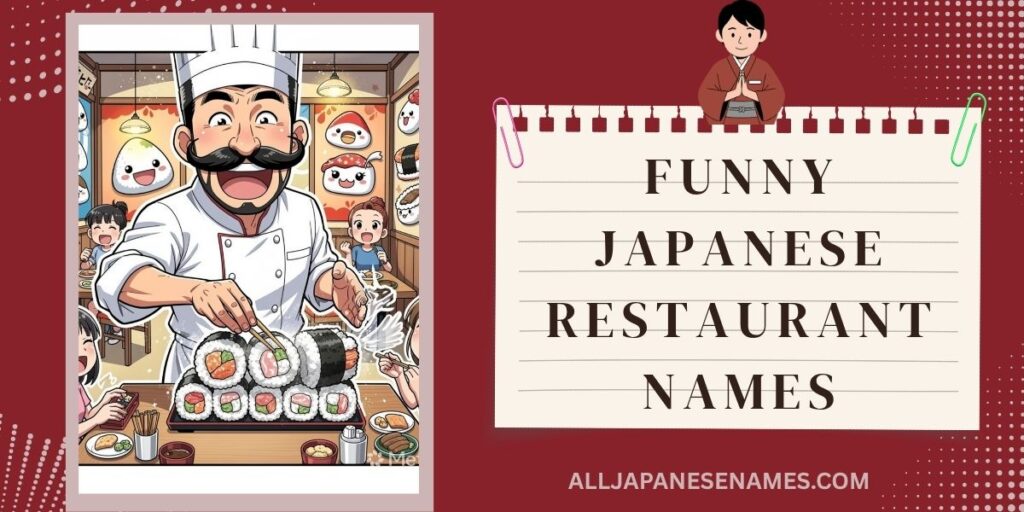
Life’s too short to waste time with dull, boring restaurant names. The funny Japanese restaurant names have something that other names cannot. They inspire laughter before people ever sit down. If someone laughs, they’ll keep it in their mind. That’s the kind of marketing you can’t buy.
The best funny restaurant names are also clever restaurant names. They function at two levels: as a fun comedy on the surface, and their real meaning beneath. These types of restaurant name ideas are playful, fun, funny, and filled with personality. Each name listed here is unique, original, and guaranteed to garner some smiles.
| Name | Meaning | Pronunciation | Kanji |
|---|---|---|---|
| What The Pho | A play on a popular expression (sounds shocked, tastes amazing) | wut-the-fuh | 何これ (Nani Kore) |
| Soy Sauce Boss | The undisputed ruler of flavor | soy-saws-boss | 醤油王 (Shōyu Ō) |
| Ramen Noodle Doodle | As fun to eat as it is to say | reh-men-noo-dul-doo-dul | ラーメン落書き |
| Udon Believe It | Udon + “you don’t believe it” (because the food speaks for itself) | oo-don-buh-leev-it | うどん信じられない |
| Miso Hungry | Miso + “I’m so hungry” (the most relatable restaurant name ever) | mee-soh-hung-gree | 味噌腹ペコ |
| Wasabi About You | Wasabi + “what’s about you” (a spicy way to say hello) | wah-sah-bee-ah-bowt-yoo | わさびについて |
| Sushi Roll Call | Roll call but make it sushi (every roll gets counted) | soo-shee-rohl-kawl | 寿司点呼 |
| Tempura Tantrum | So good it makes you throw a happy fit | tem-pyoo-rah-tan-trum | 天ぷら癇癪 |
| Pho Real | Pho + “for real” (no jokes, just seriously good food) | fuh-reel | 本当にフォー |
| Nori Or Never | Nori seaweed + “now or never” (don’t miss out) | noh-ree-or-nev-er | 海苔か無か |
| Rice Rice Baby | A tribute to Vanilla Ice and Japanese rice culture | ryse-ryse-bay-bee | ライスライスベイビー |
| Wok This Way | Wok + “walk this way” (come on in, food’s ready | wok-this-way | こっちへ炒めて |
| Katsu Do It | Katsu cutlet + “just do it” (motivational and delicious) | kat-soo-doo-it | カツやろう |
| Tofu Or Not Tofu | Shakespeare meets Japanese cuisine (the eternal question) | toh-foo-or-not-toh-foo | 豆腐か否か |
| Dumpling Around | Goofing off but make it gyoza | dum-pling-ah-rownd | 餃子でぶらぶら |
| Soba So Good | Soba noodles + “so far so good” | soh-bah-soh-good | そばサイコー |
| Edama-yum | Edamame + yum (simple and tasty) | eh-dah-mah-yum | 枝豆ヤム |
| Bento Forget | Bento box + “don’t forget” (unforgettable meals) | ben-toh-for-get | 弁当忘れない |
| Poke Me Tender | Poke bowl + Elvis reference (romantic food pun) | poh-keh-mee-ten-der | ポケやさしく |
| Teriyaki Steady Go | Teriyaki + “ready steady go” (always fired up) | teh-ree-yah-kee-sted-ee-goh | 照り焼き準備完了 |
| The Rolling Scones | Rolling Stones reference with a bakery twist | the-roh-ling-skohnz | ローリングスコーン |
| Sashimi Serious | Sashimi + “I’m serious” (no joke food) | sah-shee-mee-seer-ee-us | 刺身本気 |
| Gyoza Gonna Love It | Gyoza + “you’re gonna love it” | gyoh-zah-gun-ah-luv-it | 餃子絶対好き |
| Oh My Gohan | Rice-based twist on “oh my god” | oh-my-goh-han | おいご飯 |
| Nacho Average Ramen | Not your average ramen (fun wordplay) | nah-choh-av-rij-rah-men | 普通じゃないラーメン |
| Absolutely Wonton | Absolutely + wonton (simple and catchy) | ab-soh-loot-lee-won-ton | 絶対ワンタン |
| The Big Katsu Theory | Big Bang Theory parody with katsu | the-big-kat-soo-thee-oh-ree | 大カツ理論 |
| Soy To The World | Soy sauce + “Joy to the World” | soy-to-the-wurld | 醤油世界へ |
| Mochi Mochi Morning | Mochi + “moshi moshi” | moh-chee-moh-chee-mor-ning | もちもちモーニング |
| You Had Me At Miso | “You had me at hello” (miso twist) | yoo-had-mee-at-mee-soh | 味噌で決まり |
| Ramen To That | Ramen + “amen to that” | rah-men-to-that | ラーメンそれな |
| Sushi Happens | Clean pun version of classic phrase | soo-shee-hap-enz | 寿司が起きた |
| Wonton Destruction | Play on “weapons of mass destruction” | won-ton-dee-struk-shun | ワンタン破壊 |
| Holy Shiitake | Mushroom pun for surprise | hoh-lee-shee-tah-keh | 椎茸神様 |
| Umai Zings | Umai (delicious) + flavor zings | oo-my-zingz | うまいジング |
| Seaweed Seriously | Seaweed + “seriously” | see-weed-seer-ee-us-lee | 海藻本気で |
| No Soup For You | Seinfeld-inspired ramen humor | noh-soop-for-yoo | スープなし |
| Chopstick Crisis | Beginner chopstick struggle | chop-stik-kry-sis | 箸の危機 |
| Pho Shizzle | Pho + slang for “for sure” | fuh-shiz-ul | フォーシズル |
| Noodle Incident | Mysterious noodle story joke | noo-dul-in-si-dent | 麺の事件 |
| Tempura Of Doom | Dramatic name for light crispy food | tem-pyoo-rah-of-doom | 天ぷら終末 |
| Wasabi Wednesday | Spicy themed weekday fun | wah-sah-bee-wenz-day | わさび水曜日 |
| Katana Banana | Absurd but memorable contrast | kah-tah-nah-bah-nah-nah | 刀バナナ |
| Soup Or Consequences | Play on “truth or consequences” | soop-or-kon-seh-kwens-ez | スープか結果か |
| That’s What Shiso Said | Shiso herb + classic joke | thats-wut-shee-soh-sed | それがシソの言葉 |
| No Ragrets Ramen | Internet meme spelling (no regrets) | noh-rah-grets-rah-men | 後悔なしラーメン |
| The Soy Awakens | Star Wars + soy sauce pun | the-soy-ah-way-kenz | 醤油の覚醒 |
| Batter Up Tempura | Baseball + tempura pun | bat-er-up-tem-pyoo-rah | バッター天ぷら |
| Fishfully Yours | Fish + “wishfully yours” | fish-foo-lee-yorz | 魚ごころ |
| Lord Of The Ramen | Epic fantasy-inspired ramen title | lord-of-the-rah-men | ラーメンの王 |
The most funny restaurant names aren’t random. They’re clever and smart. Each restaurant name that is smart on this list has a true humorous story, not just a random phrase thrown together.
These names are successful because they make people smile, share, and keep in mind. And in the modern world, the popular name is more valuable than any advertisement you can run. This list of restaurant name ideas proves that a bit of humor can go a far.
Fancy Japanese Restaurant Names
Restaurants just do not serve the food, they offer their customer an experience that lasts long. If you’re creating a perfect upscale dining experience, whether it’s a teppanyaki restaurant, a robatayaki restaurant, or an elegant kaiseki concept, the name must be in line with the space. It must be luxurious before anyone ever decides to make up their mind.
The fancy Japanese restaurant names below are designed to serve this exactly. Each has class as well as weight and the quiet assurance that’s only found in high-end teppanyaki restaurants and white-tablecloth dining experiences that are talked about for decades.
| Name | Meaning | Pronunciation | Kanji |
|---|---|---|---|
| Kōkū | Vast empty sky, infinite and untouchable | koh-koo | 虚空 |
| Shizentei | Pavilion of natural grace | shee-zen-tay | 自然亭 |
| Mugen’en | Garden of infinity | moo-gen-en | 無限園 |
| Hakuryū | White dragon, rare and powerful | hah-koo-ryoo | 白龍 |
| Tōmei | Transparent perfection, nothing hidden | toh-may | 透明 |
| Kinsui | Golden water, precious and pure | keen-soo-ee | 金水 |
| Seien | Serene garden, perfectly still | say-en | 静園 |
| Ryōtei Hana | Traditional high-class restaurant of flowers | ryoh-tay hah-nah | 料亭花 |
| Shōgon | Dignified adornment, dressed to perfection | shoh-gon | 荘厳 |
| Kiyūkan | Hall of elegant leisure | kee-yoo-kan | 貴遊館 |
| Tōkakan | Hall of eastern elegance | toh-kah-kan | 東華館 |
| Ensui | Circle of pure water, balanced and refined | en-soo-ee | 円水 |
| Fujimoto | Origin of Fuji, rooted in Japan’s greatest symbol | foo-jee-moh-toh | 藤本 |
| Kasentei | Pavilion beside the river | kah-sen-tay | 河川亭 |
| Shōrōkaku | Elevated pavilion in the pines | shoh-roh-kah-koo | 松楼閣 |
| Kenzan | Sword mountain, sharp and commanding | ken-zan | 剣山 |
| Hakusen | White line, clean precision on every plate | hah-koo-sen | 白線 |
| Tōjuen | Garden of the eastern castle | toh-joo-en | 東城園 |
| Suirankan | Hall of water and orchids | soo-ee-ran-kan | 水蘭館 |
| Kōyōtei | Pavilion of autumn leaves | koh-yoh-tay | 紅葉亭 |
| Ginsen | Silver spring, quiet luxury | geen-sen | 銀泉 |
| Ryūgūjō | Dragon palace, legendary underwater castle | ryoo-goo-joh | 龍宮城 |
| Seiryūtei | Pavilion of the blue dragon | say-ryoo-tay | 青龍亭 |
| Hakujuen | White tree garden, minimal and pure | hah-koo-joo-en | 白樹園 |
| Kōtōkan | Hall of high refinement | koh-toh-kan | 高等館 |
| Shūsuien | Garden where autumn water gathers | shoo-soo-ee-en | 秋水園 |
| Tenpūkan | Hall of heavenly wind | ten-poo-kan | 天風館 |
| Kōreikan | Hall of glorious grace | koh-ray-kan | 光麗館 |
| Seizanrō | Blue mountain tower, elevated and calm | say-zan-roh | 青山楼 |
| Meikōen | Garden of brilliant light | may-koh-en | 明光園 |
| Ginshanai | Inside the silver mountain | geen-shah-nye | 銀山内 |
| Hakuunrō | White cloud tower, high above everything | hah-koo-oon-roh | 白雲楼 |
| Tōkaen | Garden of eastern flowers | toh-kah-en | 東花園 |
| Suigetsuken | House of water and moon | soo-ee-get-soo-ken | 水月軒 |
| Kōransen | Radiant orchid spring | koh-ran-sen | 光蘭泉 |
| Shōrikan | Hall of pure elegance | shoh-ree-kan | 清麗館 |
| Ryūsenkan | Hall of the dragon spring | ryoo-sen-kan | 龍泉館 |
| Hakuōen | Garden of the white king | hah-koo-oh-en | 白王園 |
| Seihōtei | Western wind pavilion, calm and deliberate | say-hoh-tay | 西風亭 |
| Kinjūkan | Hall of the golden beast | keen-joo-kan | 金獣館 |
| Tōmeirō | Tower of transparent beauty | toh-may-roh | 透明楼 |
| Suiranrō | Orchid water tower, delicate and tall | soo-ee-ran-roh | 水蘭楼 |
| Kōganen | Garden of golden rock | koh-gah-nen | 黄岩園 |
| Shizensui | Natural water flowing freely | shee-zen-soo-ee | 自然水 |
| Meisōkan | Hall of quiet meditation | may-soh-kan | 瞑想館 |
| Hakutōen | Garden of the white peach | hah-koo-toh-en | 白桃園 |
| Ryūkōtei | Pavilion of the flowing dragon | ryoo-koh-tay | 龍光亭 |
| Seiransen | Clear blue orchid spring | say-ran-sen | 青蘭泉 |
| Kōunsō | Villa of golden clouds | koh-oon-soh | 光雲荘 |
| Tenshūkaku | Tower of heavenly gathering | ten-shoo-kah-koo | 天守閣 |
A luxurious, fancy Japanese restaurant’s name isn’t a shout of the word “luxury,” but it whispers it. A good name will make guests feel an upscale dining experience before they set foot in the door.
If you’re operating high-end teppanyaki restaurants, a traditional robatayaki restaurant, or an elegant multiple-course dining experience, your name is the first thing that guests will judge you by. Be sure to make it memorable.
Popular Japanese Restaurant Names
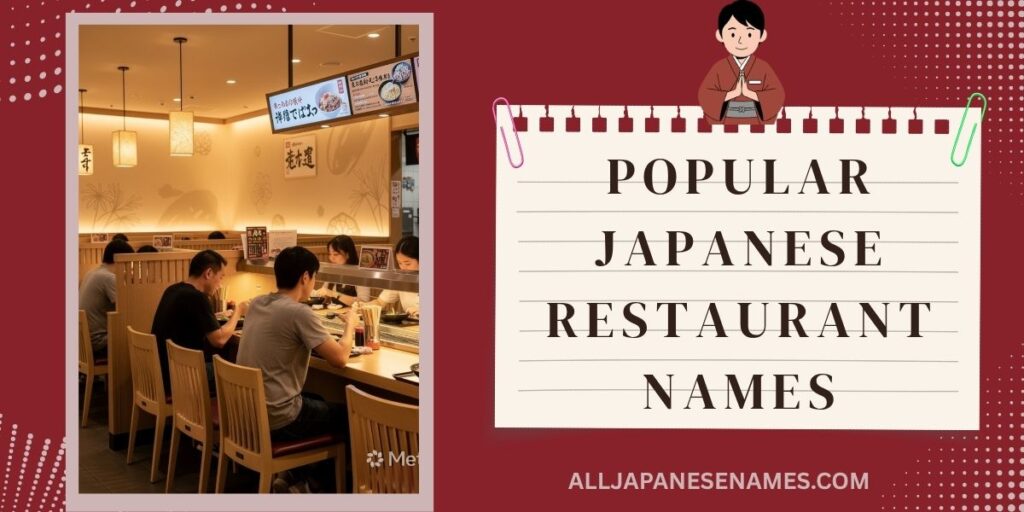
Restaurants that are popular don’t just happen by chance or luck. Behind every successful restaurant chain, every buzzing fast food restaurant, and every bustling quick serve restaurant is a name that people remember. The name diners can trust. The name customers can trust before they taste the food.
The aforementioned popular Japanese restaurant names are designed specifically for wide appeal. No matter if you’re starting the first Japanese fast-food chain, a neighborhood restaurant, or a fast food restaurant chain with huge expansion plans, they’re friendly and accessible. They’re also built to last.
| Name | Meaning | Pronunciation | Kanji |
|---|---|---|---|
| Gohan Go | Rice on the move (fast, filling, and always satisfying) | goh-han-goh | ご飯ゴー |
| Taberu | To eat (the most honest restaurant name possible) | tah-beh-roo | 食べる |
| Hayameshi | Quick meal, fast and filling | hah-yah-meh-shee | 早飯 |
| Donburi Drop | Rice bowl served fast and fresh | don-boo-ree-drop | 丼ドロップ |
| Meshiya | Rice house, a simple and welcoming eatery | meh-shee-yah | 飯屋 |
| Kōban Kitchen | Neighborhood kitchen, always nearby and reliable | koh-ban-kit-chen | 交番キッチン |
| Toriichi | Chicken number one, the top chicken spot | toh-ree-ee-chee | 鳥一 |
| Yasai Market | Vegetable market, fresh and everyday | yah-sye-mar-ket | 野菜マーケット |
| Manpuku | Full stomach, completely satisfied | man-poo-koo | 満腹 |
| Shokudō | Dining hall, casual and communal | shoh-koo-doh | 食堂 |
| Kaitengo | Revolving and going, conveyor belt sushi culture | kye-ten-goh | 回転ゴー |
| Hayate Bowl | Swift bowl, speed and flavor in one | hah-yah-teh-bohl | 疾風ボウル |
| Niku Niku | Meat meat (doubled for emphasis) | nee-koo-nee-koo | 肉肉 |
| Bentoya | Bento box shop, ready to go meals | ben-toh-yah | 弁当屋 |
| Ichiban Stop | Number one stop, first choice destination | ee-chee-ban-stop | 一番ストップ |
| Yakimeshi | Fried rice, hot and fast off the pan | yah-kee-meh-shee | 焼き飯 |
| Matsuya Go | Pine valley on the move | mat-soo-yah-goh | 松谷ゴー |
| Teishoku | Set meal, classic Japanese lunch combo | tay-shoh-koo | 定食 |
| Kuishinbo | Food lover, someone who lives to eat | koo-ee-sheen-boh | 食いしん坊 |
| Tonkatsu Town | Breaded pork cutlet city | ton-kat-soo-town | とんかつタウン |
| Gyūdon Gang | Beef bowl crew, fast and together | gyoo-don-gang | 牛丼ギャング |
| Rairaiken | Come come restaurant, always welcoming | rye-rye-ken | 来来軒 |
| Okawari | Another serving please | oh-kah-wah-ree | おかわり |
| Hinode Shokudo | Sunrise dining hall | hee-noh-deh-shoh-koo-doh | 日の出食堂 |
| Maruichi | Circle one, perfectly rounded | mah-roo-ee-chee | 丸一 |
| Katachi Kitchen | Shape kitchen, crafted form | kah-tah-chee-kit-chen | 形キッチン |
| Oishii Stop | Delicious stop, clear promise | oh-ee-shee-stop | おいしいストップ |
| Samurai Spoon | Fierce dedication to every bowl | sam-oo-rye-spoon | 侍スプーン |
| Kome Kome | Rice rice, double comfort | koh-meh-koh-meh | 米米 |
| Yatai Express | Street food express | yah-tye-ex-press | 屋台エクスプレス |
| Misoten | Miso shop, comfort food soul | mee-soh-ten | 味噌店 |
| Sakaba Quick | Fast izakaya bar | sah-kah-bah-kwik | 酒場クイック |
| Kuruma Ramen | Wheeled ramen culture | koo-roo-mah-rah-men | 車ラーメン |
| Hayashi House | Forest house, warm and familiar | hah-yah-shee-hows | 林ハウス |
| Shio Station | Salt station, pure flavor | shee-oh-stay-shun | 塩ステーション |
| Nigiri Now | Fresh sushi immediately | nee-gee-ree-now | 握り今 |
| Tekka Corner | Tuna corner, sushi go-to spot | tek-kah-kor-ner | 鉄火コーナー |
| Furusato Diner | Hometown comfort diner | foo-roo-sah-toh-dye-ner | ふるさとダイナー |
| Warashibe | Straw-to-fortune folk tale | wah-rah-shee-beh | わらしべ |
| Nakama Eats | Friends eating together | nah-kah-mah-eets | 仲間イーツ |
| Dondon | Rapid continuous service | don-don | どんどん |
| Hashigo | Bar hopping journey | hah-shee-goh | はしご |
| Umami Hub | Center of savory flavor | oo-mah-mee-hub | うま味ハブ |
| Hiroba Kitchen | Open plaza kitchen | hee-roh-bah-kit-chen | 広場キッチン |
| Kōtsū Bento | Transit bento, grab and go | koh-tsoo-ben-toh | 交通弁当 |
| Makanai | Staff meal, honest cooking | mah-kah-nye | 賄い |
| Shimbashi Grill | Working-class Tokyo grill culture | sheem-bah-shee-gril | 新橋グリル |
| Tanoshii | Fun and enjoyable dining | tah-noh-shee | 楽しい |
| Hara Hachi | Eat until 80% full | hah-rah-hah-chee | 腹八 |
| Tsudoi | Gathering place | tsoo-doh-ee | 集い |
Have you noticed one thing about the most popular Japanese restaurant names? They share one thing in common: they become familiar from the first visit.
The comfort of the name is what turns the first-time visitor into a regular customer. When you’re constructing the foundation of a fast food restaurant chain, the cozy place that’s enjoyed by the local diners or the kind of quick serve restaurant that customers return to each week, begin with a name that is a familiar one. This is how one location transforms into an actual restaurant chain people actually care about.
Looking for strong and meaningful Japanese male names with cultural depth and modern style? Explore the complete Japanese male names collection .
Japanese Sushi Restaurant Names
A good sushi restaurant name is much more than the identity of your business. It tells sushi lovers exactly what kind of dining experience they’re about to get. It creates the atmosphere. It helps build anticipation. Especially for a Japanese sushi restaurant, the name is usually the first taste your customer receives, before tasting the fish, the rice, or before any other thing.
The following Japanese sushi restaurant names are made for any kind of sushi restaurant, from intimate Omakase counters to vibrant, informal sushi restaurants packed with energy. Each name is connected to Japanese sushi culture in an authentic, meaningful manner. For the reason that delicious sushi deserves an equally delicious name.
| Name | Meaning | Pronunciation | Kanji |
|---|---|---|---|
| Nigiri No Ma | Room of hand-pressed sushi, an intimate sushi space | nee-gee-ree-no-mah | 握りの間 |
| Umishoku | Ocean meal, eating directly from the sea | oo-mee-shoh-koo | 海食 |
| Sakana Shrine | Fish shrine, a sacred place for seafood | sah-kah-nah-shryne | 魚神社 |
| Maguro House | Bluefin tuna house, the king of sushi fish | mah-goo-roh-hows | 鮪ハウス |
| Shari | Sushi rice, the foundation of every perfect piece | shah-ree | 舎利 |
| Umizakura | Ocean cherry blossom, beautiful and seasonal | oo-mee-zah-koo-rah | 海桜 |
| Kaisen Zen | Seafood meditation, slow and intentional eating | kye-sen-zen | 海鮮禅 |
| Shiromi | White fish, delicate and clean flavored | shee-roh-mee | 白身 |
| Tsukiji Craft | Crafted at the market, inspired by Tokyo’s legendary fish market | tsoo-kee-jee-kraft | 築地クラフト |
| Oumi | Great sea, vast and full of life | oh-oo-mee | 大海 |
| Nami Sushi | Wave sushi, rolling in fresh and powerful | nah-mee-soo-shee | 波寿司 |
| Shōgun Roll | The commander’s roll, strong and authoritative | shoh-gun-rohl | 将軍ロール |
| Kaigansen | Ocean front spring, where fresh water meets the sea | kye-gan-sen | 海岸泉 |
| Tekkaichi | Tuna number one, the top spot for tuna lovers | tek-kah-ee-chee | 鉄火一 |
| Hamachi Hall | Yellowtail hall, dedicated to one of sushi’s finest fish | hah-mah-chee-hawl | ハマチホール |
| Ryūsui Sushi | Flowing water sushi, fresh and constantly moving | ryoo-soo-ee-soo-shee | 流水寿司 |
| Umakara | Delicious and spicy, the two best words in sushi | oo-mah-kah-rah | うま辛 |
| Iso Dining | Rocky shoreline dining, rugged coastal freshness | ee-soh-dye-ning | 磯ダイニング |
| Tairyo | Big catch, an abundant haul from the sea | tye-ryoh | 大漁 |
| Ginzake | Silver salmon, sleek and premium | geen-zah-keh | 銀鮭 |
| Kaisendon | Seafood rice bowl, colorful and generous | kye-sen-don | 海鮮丼 |
| Sakana No Te | The hand of the fish chef, skill and precision | sah-kah-nah-no-teh | 魚の手 |
| Otokonoko Roll | Brave roll, bold flavors for bold eaters | oh-toh-koh-noh-koh-rohl | 男の子ロール |
| Aoumi | Blue ocean, clear and pristine waters | ah-oh-oo-mee | 青海 |
| Suisan | Marine products, everything straight from the water | soo-ee-san | 水産 |
| Shiogama | Salt kettle, the ancient method of preserving fish | shee-oh-gah-mah | 塩釜 |
| Funa Zushi | Boat sushi, traditional fermented sushi from Lake Biwa | foo-nah-zoo-shee | 鮒寿司 |
| Umibana | Ocean flower, blooming with fresh seafood | oo-mee-bah-nah | 海花 |
| Kuromasa | Black elegance, bold and premium quality | koo-roh-mah-sah | 黒雅 |
| Namigashira | Head of the wave, leading the way in sushi | nah-mee-gah-shee-rah | 波頭 |
| Seto Sushi | Sushi from the Seto Inland Sea, rich fishing waters | seh-toh-soo-shee | 瀬戸寿司 |
| Hikarimono | Shiny fish, mackerel and sardine category | hee-kah-ree-moh-noh | 光り物 |
| Uoichi | Fish number one, top market selection | oo-oh-ee-chee | 魚一 |
| Shiosai | Sound of the waves and salt | shee-oh-sye | 潮騒 |
| Kaijin | Sea god, ruler of the ocean | kye-jin | 海神 |
| Aonori Roll | Green seaweed roll, fresh and natural | ah-oh-noh-ree-rohl | 青海苔ロール |
| Umisachi | Gift of the sea | oo-mee-sah-chee | 海幸 |
| Ginrin | Silver scale, shimmering beauty of fish | geen-reen | 銀鱗 |
| Sakuramasu | Cherry salmon, rare and prized fish | sah-koo-rah-mah-soo | 桜鱒 |
| Kairyū | Ocean current, always moving and fresh | kye-ryoo | 海流 |
| Shirasu | Baby whitebait fish, tiny and delicate | shee-rah-soo | 白子 |
| Umikoji | Small ocean path, an intimate route | oo-mee-koh-jee | 海小路 |
| Kurage | Jellyfish, elegant and unique | koo-rah-geh | 水母 |
| Hōbō Sushi | Wandering sushi, inspired by traveling chefs | hoh-boh-soo-shee | 放浪寿司 |
| Umizato | Ocean village, a welcoming seaside community | oo-mee-zah-toh | 海里 |
| Tachiuo | Beltfish, long silver prized fish | tah-chee-oo-oh | 太刀魚 |
| Hamayu | Beach hot spring, coastal warmth | hah-mah-yoo | 浜湯 |
| Uotsuri | Fishing activity, joy of the catch | oo-oh-tsoo-ree | 魚釣り |
| Shiranami Sushi | Unknown wave sushi, surprise in every bite | shee-rah-nah-mee-soo-shee | 白波寿司 |
| Kaisen Hikari | Shining seafood, gleaming freshness | kye-sen-hee-kah-ree | 海鮮光 |
Finding the perfect sushi restaurant name is as important as finding the perfect fish. The most appealing and best Japanese sushi restaurant names feel like they came out of the sea itself.
They are natural, clean, and bursting with character. If you’re planning to open a luxury Japanese sushi restaurant or a local sushi restaurant that sushi lovers would love to go to every week, the name you pick will influence everything that follows. Select a name that feels like the delicious sushi tastes, and your sushi restaurants will have an advantage that no rival will be able to copy.
Japanese Sushi Bar Names
The sushi bar is just different from other types of restaurants. It’s intimate. It’s interactive. You can sit next to the chef, take in every slice, and feel every aspect. This kind of energy merits the sushi bar name that matches the experience. It is fresh, vibrant, and memorable.
The most popular Japanese sushi bar names capture the counter-culture. That quiet drama of watching a masterwork. These names are suitable for separate bars and counters, such as omakase, as well as full sushi restaurants with a bar located in the center of the space. Each Japanese sushi restaurant located on an artery should have names that make people stop and take a second look.
| Name | Meaning | Pronunciation | Kanji |
|---|---|---|---|
| Itamae Bar | Chef’s counter bar named after the master sushi chef | ee-tah-mah-eh-bar | 板前バー |
| Kappo Seki | Intimate chef’s table dining experience | kap-poh-seh-kee | 割烹席 |
| Tachi Nomi | Standing drink bar for quick casual dining | tah-chee-noh-mee | 立ち飲み |
| Omakase Counter | Leave it to the chef dining counter | oh-mah-kah-seh-kown-ter | おまかせカウンター |
| Hinoki Bar | Japanese cypress wood sushi bar | hee-noh-kee-bar | 檜バー |
| Tsumami | Small bites served with drinks | tsoo-mah-mee | 摘み |
| Maguro Stand | Tuna-focused fresh sushi stand | mah-goo-roh-stand | 鮪スタンド |
| Kōri Bar | Ice bar serving fish on chilled presentation | koh-ree-bar | 氷バー |
| Hasami | Scissors symbolizing precision cutting | hah-sah-mee | 挟み |
| Gin No Te | Silver hands of a skilled sushi chef | geen-no-teh | 銀の手 |
| Kauntā Zen | Peaceful sushi counter experience | kown-tah-zen | カウンター禅 |
| Uogashi Bar | Fish market-inspired sushi bar | oo-oh-gah-shee-bar | 魚河岸バー |
| Shōtai | Invitation to the sushi counter | shoh-tye | 招待 |
| Kaiseki Bar | Multi-course elevated sushi experience | kye-seh-kee-bar | 懐石バー |
| Toro Stand | Fatty tuna specialty stand | toh-roh-stand | トロスタンド |
| Ryōba | Dual-edge skill symbolism | ryoh-bah | 両刃 |
| Nagare Bar | Smooth flowing sushi experience | nah-gah-reh-bar | 流れバー |
| Shoku Counter | Simple food-focused counter | shoh-koo-kown-ter | 食カウンター |
| Kireaji | Sharp precision cuts in sushi preparation | kee-reh-ah-jee | 切れ味 |
| Sakana Bar | Simple fish-focused sushi bar | sah-kah-nah-bar | 魚バー |
| Tobiko Lounge | Flying fish roe themed lounge | toh-bee-koh-lownj | とびこラウンジ |
| Umi Counter | Ocean-inspired sushi counter | oo-mee-kown-ter | 海カウンター |
| Tsukuri Bar | Crafted sushi preparation bar | tsoo-koo-ree-bar | 作りバー |
| Shizen Bar | Natural and unprocessed sushi experience | shee-zen-bar | 自然バー |
| Hōchō | Chef’s knife symbol of sushi craft | hoh-choh | 包丁 |
| Aka Shari | Traditional red vinegar sushi rice | ah-kah-shah-ree | 赤舎利 |
| Neta Counter | Sushi topping selection counter | neh-tah-kown-ter | ネタカウンター |
| Kōjin Bar | Fire-inspired seared sushi bar | koh-jin-bar | 荒神バー |
| Shiroko Bar | Seasonal soft roe specialty bar | shee-roh-koh-bar | 白子バー |
| Mizube | Water’s edge dining experience | mee-zoo-beh | 水辺 |
| Kanpai Sushi | Celebration-focused sushi bar | kan-pye-soo-shee | 乾杯寿司 |
| Ukishima Bar | Floating island themed sushi bar | oo-kee-shee-mah-bar | 浮島バー |
| Hikari Counter | Bright and fresh seafood counter | hee-kah-ree-kown-ter | 光カウンター |
| Washoku Bar | Traditional Japanese cuisine bar | wah-shoh-koo-bar | 和食バー |
| Aji Stand | Horse mackerel sushi stand | ah-jee-stand | 鯵スタンド |
| Sabishii Counter | Quiet solo dining counter | sah-bee-shee-kown-ter | 寂しいカウンター |
| Hiyashi Bar | Chilled fresh sushi bar | hee-yah-shee-bar | 冷やしバー |
| Kantan Sushi | Simple no-fuss sushi concept | kan-tan-soo-shee | 簡単寿司 |
| Urawaza Bar | Hidden trick sushi bar experience | oo-rah-wah-zah-bar | 裏技バー |
| Makiichi | Number one sushi roll concept | mah-kee-ee-chee | 巻き一 |
| Tatsumi Bar | Historic fish district inspired bar | tah-tsoo-mee-bar | 辰巳バー |
| Fuji Counter | Mount Fuji inspired sushi counter | foo-jee-kown-ter | 富士カウンター |
| Shio Bar | Salt-focused minimalist sushi bar | shee-oh-bar | 塩バー |
| Kisen | Steam ship inspired seafood concept | kee-sen | 汽船 |
| Uroko Bar | Fish scale inspired sustainable sushi bar | oo-roh-koh-bar | 鱗バー |
| Murasaki Bar | Soy sauce inspired sushi bar | moo-rah-sah-kee-bar | 紫バー |
| Nanami Stand | Seven spice inspired sushi stand | nah-nah-mee-stand | 七味スタンド |
| Kōsei Bar | Personality-driven sushi creations | koh-say-bar | 個性バー |
| Sōmen Counter | Flowing noodle-style counter dining | soh-men-kown-ter | 素麺カウンター |
| Gyoku Bar | Jewel-inspired premium sushi bar | gyoh-koo-bar | 玉バー |
A powerful sushi bar name sets the entire tone before any fish even arrives at the counter. The most appealing Japanese sushi bar names feel as if they belong in that space. They’re clear and focused, but also filled with personality.
If you’re running an intimate sushi restaurant or thinking of building the next renowned Japanese sushi restaurant that has the bar at its heart and a bar at its center, your sushi restaurant name is the first thing that guests will look at. Create a name that they will not forget.
Japanese Ramen Restaurant Names
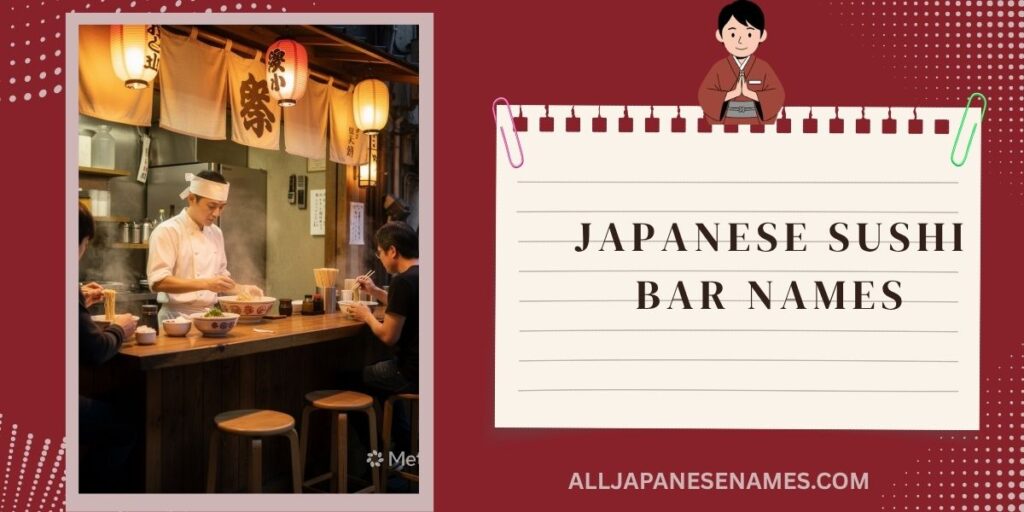
Ramen is more than just a bowl of noodles. It’s comfort. It’s culture. It’s the type of Japanese food people want in the dark and then dream about the next day. A top Japanese ramen restaurant deserves a name that has the same depth and can make you hungry just by listening to it.
It doesn’t matter if you’re opening an intimate noodle shop on a quiet street or a lively restaurant serving up strong noodle dishes from across Japanese cuisine, your name is important more than you imagine. The correct name lets customers know exactly what dishes you provide and what kind of experience they’ll leave with.
| Name | Meaning | Pronunciation | Kanji |
|---|---|---|---|
| Kotsubu | Tiny grain, the smallest details make the best broth | koh-tsoo-boo | 小粒 |
| Niboshi | Dried sardine, secret of deep ramen broth | nee-boh-shee | 煮干し |
| Kakedashi | Base broth where every great bowl begins | kah-keh-dah-shee | かけ出汁 |
| Tare House | Seasoning sauce house, soul of ramen flavor | tah-reh-hows | タレハウス |
| Mendokoro | Dedicated noodle place for ramen lovers | men-doh-koh-roh | 麺処 |
| Chāshūtei | Braised pork pavilion honoring ramen topping culture | chah-shoo-tay | 叉焼亭 |
| Fumikomu | To step in, welcoming casual ramen spot | foo-mee-koh-moo | 踏み込む |
| Abura Noodle | Oil noodles inspired by mazesoba style | ah-boo-rah-noo-dul | 油麺 |
| Shio Koji Ramen | Fermented salt koji ramen | shee-oh-koh-jee-rah-men | 塩麹ラーメン |
| Donbei | Big generous bowl, always satisfying | don-bay | どんべい |
| Yuderu | To boil, key moment in noodle making | yoo-deh-roo | 茹でる |
| Mentsuyu | Noodle broth, liquid gold seasoning | men-tsoo-yoo | 麺つゆ |
| Hakata Hut | Inspired by Hakata tonkotsu ramen culture | hah-kah-tah-hut | 博多ハット |
| Kogarashi Ramen | Cold winter wind ramen, warming comfort | koh-gah-rah-shee-rah-men | 木枯らしラーメン |
| Nikomu | Slow simmered deep flavor cooking style | nee-koh-moo | 煮込む |
| Tonpei | Bold pork-focused flavor style | ton-pay | 豚平 |
| Kuro Shio | Dark rich broth inspired by ocean currents | koo-roh-shee-oh | 黒潮 |
| Menpachi | Lucky balanced noodle bowl concept | men-pah-chee | 麺八 |
| Tsukemen House | Dipping noodle specialist shop | tsoo-keh-men-hows | つけ麺ハウス |
| Yukitatsu | Rising through snow, warmth in cold | yoo-kee-tah-tsoo | 雪立つ |
| Mendori | Noodle bird, light and quick concept | men-doh-ree | 麺鳥 |
| Aburi Tan | Flame-seared broth for deeper flavor | ah-boo-ree-tan | 炙り炭 |
| Shōyu Shack | Honest Tokyo-style soy sauce ramen | shoh-yoo-shak | 醤油小屋 |
| Niku Broth | Bold meat-forward ramen broth | nee-koo-broth | 肉ブロス |
| Kōmian | Fragrant noodle house, aroma-led experience | koh-mee-an | 香味庵 |
| Tonjiru | Pork miso soup, hearty comfort dish | ton-jee-roo | 豚汁 |
| Futomen | Thick chewy noodles for rich ramen bowls | foo-toh-men | 太麺 |
| Karamiso | Spicy miso ramen with bold heat | kah-rah-mee-soh | 辛味噌 |
| Hayajiru | Fast broth, quick and flavorful service | hah-yah-jee-roo | 早汁 |
| Dashi Works | Crafted broth with precision and technique | dah-shee-wurks | 出汁ワークス |
| Menkyō | Noodle mastery earned through practice | men-kyoh | 麺許 |
| Shiro Miso Stand | Mild Kyoto-style white miso ramen stand | shee-roh-mee-soh-stand | 白味噌スタンド |
| Tamashii Broth | Soul-rich deeply crafted ramen broth | tah-mah-shee-broth | 魂ブロス |
| Noroma | Slow simmered patience-based ramen | noh-roh-mah | のろま |
| Hone Dashi | Bone stock foundation of ramen | hoh-neh-dah-shee | 骨出汁 |
| Kuroge | Premium Japanese wagyu beef breed | koo-roh-geh | 黒毛 |
| Negi House | Green onion topping-focused concept | neh-gee-hows | 葱ハウス |
| Kayu Ramen | Soft porridge-style comforting ramen | kah-yoo-rah-men | 粥ラーメン |
| Menba | Casual slang for favorite noodle spot | men-bah | 麺場 |
| Jikasei | Homemade everything from scratch | jee-kah-say | 自家製 |
| Tokkuri | Sake flask inspired ramen bar pairing drinks | tok-koo-ree | 徳利 |
| Kotteri | Rich heavy broth style ramen | kot-teh-ree | こってり |
| Asari Dashi | Light clam-based delicate broth | ah-sah-ree-dah-shee | 浅利出汁 |
| Kurai Yoru | Late-night ramen in the dark hours | koo-rye-yoh-roo | 暗い夜 |
| Kireme | Clean noodle cut and perfect texture | kee-reh-meh | 切れ目 |
| Menshō | Noodle artisan master craft | men-shoh | 麺匠 |
| Fukamushi | Deep steamed slow flavor extraction | foo-kah-moo-shee | 深蒸し |
| Kōtan | Balance of rich and simple flavors | koh-tan | 濃淡 |
| Yajirobe | Balance toy symbolizing harmony in ramen | yah-jee-roh-beh | やじろべえ |
| Mendō | The way of noodles, ramen philosophy | men-doh | 麺道 |
Japanese Ramen has created an entire tradition around one bowl. The most memorable noodle shop names honor that tradition, and make it feel like you’re in a hot street located in Tokyo or a quiet street in Fukuoka.
If your menu is based on delicious noodle dishes rooted in traditional Japanese cuisine or bold new ways to prepare traditional Japanese food, your name will make people hungry immediately when they see it. These dishes need a name that has the same heart as the broth.
Japanese Street Food Restaurant Names
There’s something special about Japanese street food. It’s loud, it’s quick, it’s smoky, and most importantly, it’s delicious. The most memorable Japanese food encounters don’t necessarily occur in fancy dining spaces. Sometimes, they’re at a stall along the side of the road or a booth at a festival, or in a tiny eatery located between two buildings, where the line runs all across the entire corner.
Your name should reflect your restaurant’s lively energy, fresh ingredients, and serve Japanese cuisine hot and fast. The names below work well for food truck markets, as well as informal eateries and any place serving up bold Japanese dishes that are street food with a spirit.
| Name | Meaning | Pronunciation | Kanji |
|---|---|---|---|
| Matsuri Yatai | Festival food stall, the heart of Japanese street food culture | mah-tsoo-ree-yah-tye | 祭り屋台 |
| Kemuri Stand | Smoke stand, grilled food rising in clouds of flavor | keh-moo-ree-stand | 煙スタンド |
| Tōri Michi | Passing through street, a spot for people on the move | toh-ree-mee-chee | 通り道 |
| Kakigōri Cart | Shaved ice cart, Japan’s beloved summer treat | kah-kee-goh-ree-cart | かき氷カート |
| Kushiyaki Lane | Skewer grilling lane, smoky and flavorful | koo-shee-yah-kee-lane | 串焼きレーン |
| Doro Ichi | Mud market number one, raw street energy | doh-roh-ee-chee | 泥市 |
| Takoyaki Town | Octopus ball town, a destination for street snacks | tah-koh-yah-kee-town | たこ焼きタウン |
| Hanami Snack | Cherry blossom viewing snack, seasonal and festive | hah-nah-mee-snack | 花見スナック |
| Nikuman Corner | Steamed pork bun corner, warm and satisfying | nee-koo-man-kor-ner | 肉まんコーナー |
| Natsumatsuri | Summer festival, peak street food season | nah-tsoo-mah-tsoo-ree | 夏祭り |
| Yakisoba Road | Fried noodle road, a timeless street classic | yah-kee-soh-bah-rohd | 焼きそばロード |
| Kushiage Alley | Deep fried skewer alley, crispy and golden | koo-shee-ah-geh-al-ee | 串揚げ横丁 |
| Shichirin Spot | Small charcoal grill spot, smoky and intimate | shee-chee-reen-spot | 七輪スポット |
| Taiko Eats | Drum-inspired energy, lively festival food | tye-koh-eets | 太鼓イーツ |
| Ikayaki Pier | Grilled squid pier, a seaside favorite | ee-kah-yah-kee-peer | イカ焼き桟橋 |
| Tenboshi | Sun-dried food, intensified natural flavor | ten-boh-shee | 天干し |
| Dorayaki Den | Pancake den, sweet filled treats | doh-rah-yah-kee-den | どら焼き穴 |
| Yomichi Eats | Night road eats, best after dark | yoh-mee-chee-eets | 夜道イーツ |
| Gyōza Walk | Dumpling walk, eat while strolling | gyoh-zah-wawk | 餃子ウォーク |
| Akindo | Street merchant, traditional seller | ah-keen-doh | 商人 |
| Sobagaki Shack | Buckwheat dumpling shack, rustic style | soh-bah-gah-kee-shak | そばがき小屋 |
| Omatsuri Bites | Festival bites, celebratory food | oh-mah-tsoo-ree-byts | お祭りバイツ |
| Kōen Yatai | Park food stall, relaxed outdoor dining | koh-en-yah-tye | 公園屋台 |
| Sentō Snacks | Bathhouse snacks, post-soak treats | sen-toh-snaks | 銭湯スナック |
| Monjayaki Spot | Tokyo-style savory pancake experience | mon-jah-yah-kee-spot | もんじゃ焼きスポット |
| Hafu Hafu | Half and half, mix-and-match bites | hah-foo-hah-foo | 半々 |
| Tsumaeru | Something to nibble on casually | tsoo-mah-eh-roo | 摘まえる |
| Yaki Yaki | Double grilled, double flavor | yah-kee-yah-kee | 焼き焼き |
| Dango Walk | Sweet rice dumpling stroll | dan-goh-wawk | 団子ウォーク |
| Chimaki Stand | Bamboo wrapped rice stand | chee-mah-kee-stand | ちまきスタンド |
| Kakurega Eats | Hidden hideout eats, secret spot | kah-koo-reh-gah-eets | 隠れ家イーツ |
| Noren Street | Traditional curtain-lined food street | noh-ren-street | 暖簾ストリート |
| Asaichi Bites | Morning market fresh food | ah-sah-ee-chee-byts | 朝市バイツ |
| Fūdo Cart | Simple food cart concept | foo-doh-cart | フード屋台 |
| Teppan Corner | Iron griddle cooking spot | tep-pan-kor-ner | 鉄板コーナー |
| Odawara Bite | Inspired by Odawara street food | oh-dah-wah-rah-byt | 小田原バイト |
| Kōban Snacks | Neighborhood snack spot | koh-ban-snaks | 交番スナック |
| Yūhi Grill | Sunset grill experience | yoo-hee-gril | 夕日グリル |
| Waraji Eats | Walking street food culture | wah-rah-jee-eets | 草鞋イーツ |
| Fukubukuro | Lucky bag, surprise selection | foo-koo-boo-koo-roh | 福袋 |
| Shimotsuki | November festival season | shee-moh-tsoo-kee | 霜月 |
| Kaburimono | Food to bite into fully | kah-boo-ree-moh-noh | 被り物 |
| Senbei Shack | Rice cracker snack stall | sen-bay-shak | 煎餅小屋 |
| Fūkei Eats | Scenery-based dining experience | foo-kay-eets | 風景イーツ |
| Horo Yoi | Pleasantly tipsy atmosphere | hoh-roh-yoh-ee | ほろ酔い |
| Tōfu Tsuji | Tofu crossroads, plant-based street food | toh-foo-tsoo-jee | 豆腐辻 |
| Asahi Yatai | Morning sun food stall | ah-sah-hee-yah-tye | 朝日屋台 |
| Shiro Kuro | Black and white contrast flavors | shee-roh-koo-roh | 白黒 |
| Nagoya Bite | Inspired by Nagoya street cuisine | nah-goh-yah-byt | 名古屋バイト |
| Yoru Ichi | Night market number one | yoh-roo-ee-chee | 夜市一 |
Street food is the place where Japanese cuisine is most authentic. There are no dress codes. There are no reservations. Simply great Japanese food delivered to your table quickly and hot.
The top eateries founded around Japanese dishes are aware that their names must be a reflection of the same enthusiasm and be casual, lively, and vibrant. If your eatery is an artisanal food truck, a market stall at a festival, or a brick-and-mortar restaurant that has a street food vibe, choose the right name from this list and make sure you own it.
Japanese Fusion Restaurant Names
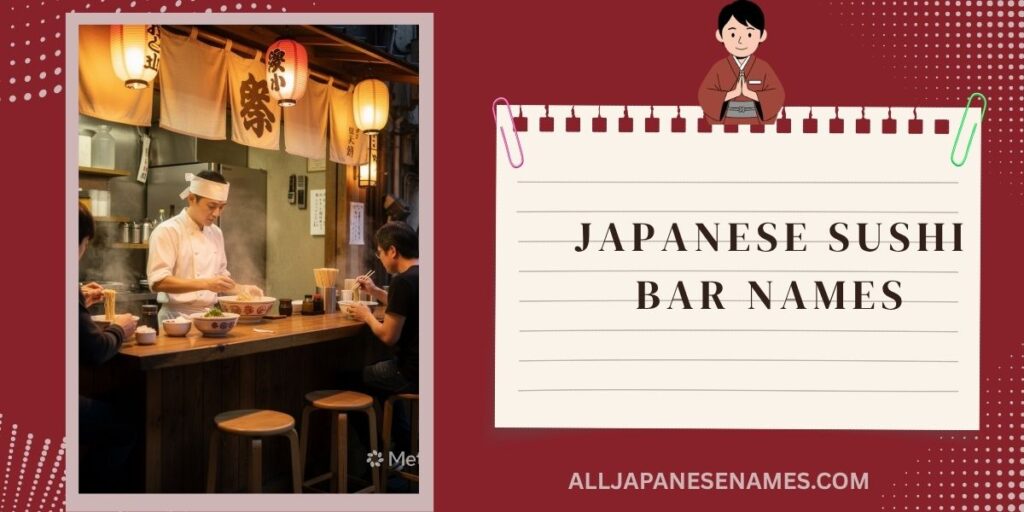
When done right, fusion is among the most thrilling and exciting things in food. It’s not just throwing various ingredients in a dish. A good fusion restaurant takes two food traditions, discovers the places where they naturally meet, and makes something entirely different. A thing that can’t be found in any other way.
Modern Japanese cuisine is always open to foreign influences, in everything from French recipes as well as Italian components to American big flavor. This is precisely the reason why a Japanese cuisine restaurant that has a fusion twist is so appealing. No matter if you’re creating a fusion cuisine restaurant or a special Japanese-Italian fusion restaurant, your name should convey “we do things differently here.”
The names below in this list capture the idea of a creative collision beautifully:
| Name | Meaning | Pronunciation | Kanji |
|---|---|---|---|
| Wabi Bistro | Imperfect beauty bistro, where rustic Japanese aesthetics meet Western dining | wah-bee-bis-troh | 侘びビストロ |
| Sakura Trattoria | Cherry blossom Italian dining room, Japan meets the Mediterranean | sah-koo-rah-trah-toh-ree-ah | 桜トラットリア |
| Nori & Olive | Seaweed meets Mediterranean olive, two worlds on one plate | noh-ree-and-ol-iv | 海苔とオリーブ |
| Umami West | Japan’s fifth taste heading westward | oo-mah-mee-west | うま味ウェスト |
| Zen Kitchen | Peaceful mindful cooking from multiple traditions | zen-kit-chen | 禅キッチン |
| Katachi Table | Form-focused dining where plating matters as much as flavor | kah-tah-chee-tay-bul | 形テーブル |
| Miso & Mozzarella | Fermented flavors from East and West combined | mee-soh-and-mot-sah-rel-ah | 味噌モッツァレラ |
| Tōkyō Tapas | Tokyo-inspired small plates with Spanish influence | toh-kyoh-tah-pahs | 東京タパス |
| Yuzu Grove | Japanese citrus meets fresh Western-style produce | yoo-zoo-grohv | 柚子グローブ |
| Shiso & Sage | Two aromatic herbs from different continents | shee-soh-and-sayj | 紫蘇とセージ |
| Dashi & Demi | Japanese stock meets French demi-glace | dah-shee-and-dem-ee | 出汁とドゥミ |
| Kaizen Table | Continuous improvement dining experience | kye-zen-tay-bul | 改善テーブル |
| Ramen Roma | Tokyo ramen culture meets Rome | rah-men-roh-mah | ラーメンローマ |
| Koji & Koji | Double emphasis on Japan’s fermentation culture | koh-jee-and-koh-jee | 麹と麹 |
| Sansho Pepper Co | Bold Japanese citrus pepper company | san-shoh-pep-er-koh | 山椒ペッパー社 |
| Tofu & Truffle | Humble protein meets luxury ingredient | toh-foo-and-truf-ul | 豆腐とトリュフ |
| Nashi & Noir | Japanese pear meets French noir elegance | nah-shee-and-nwahr | 梨とノワール |
| Matsuri Mezze | Japanese festival meets Middle Eastern small plates | mah-tsoo-ree-mez-ay | 祭りメッゼ |
| Kumo & Cloud | Light airy cuisine inspired by sky imagery | koo-moh-and-klowd | 雲とクラウド |
| Teriyaki Taco | Japan meets Mexico in a fusion bite | teh-ree-yah-kee-tah-koh | 照り焼きタコ |
| Kome & Risotto | Japanese rice meets Italian risotto tradition | koh-meh-and-ree-zot-oh | 米とリゾット |
| Shoyu Cellar | Soy sauce aging meets European cellar tradition | shoh-yoo-sel-er | 醤油セラー |
| Wasabi Green | Farm-to-table concept with Japanese spice | wah-sah-bee-green | わさびグリーン |
| Hana & Herb | Japanese flowers meet Western herb garden | hah-nah-and-erb | 花とハーブ |
| Edo & East | Traditional Tokyo meets broader Asian fusion | eh-doh-and-eest | 江戸と東 |
| Kinoko & Porcini | Japanese mushroom meets Italian porcini | kee-noh-koh-and-por-chee-nee | きのこポルチーニ |
| Takumi Brasserie | French brasserie with Japanese artisan precision | tah-koo-mee-bras-ree | 匠ブラッスリー |
| Soba & Spaghetti | Japanese noodles meet Italian pasta culture | soh-bah-and-spah-get-ee | そばとスパゲッティ |
| Yuzu & Lemon | Two citrus worlds combined | yoo-zoo-and-lem-un | 柚子とレモン |
| Tenko Grill | Heavenly flame grill fusion concept | ten-koh-gril | 天光グリル |
| Sakana & Salt | Fish and universal seasoning balance | sah-kah-nah-and-sawlt | 魚と塩 |
| Mirin & Maple | Japanese sweet wine meets Canadian maple syrup | mee-reen-and-may-pul | みりんとメープル |
| Kokoro Kitchen | Heart-centered cooking across cultures | koh-koh-roh-kit-chen | 心キッチン |
| Ramen & Ragù | Japanese broth meets Italian meat sauce | rah-men-and-rah-goo | ラーメンとラグー |
| Fuji & Fork | Japan meets Western dining symbolism | foo-jee-and-fork | 富士とフォーク |
| Yūgen Table | Profound, unexplainable beauty in dining | yoo-gen-tay-bul | 幽玄テーブル |
| Matcha & Mint | Ceremonial tea meets refreshing herb | mah-chah-and-mint | 抹茶とミント |
| Kuro & Blanco | Black and white cultural contrast fusion | koo-roh-and-blan-koh | 黒とブランコ |
| Tempura & Tapas | Light frying meets Spanish small plates | tem-pyoo-rah-and-tah-pahs | 天ぷらとタパス |
| Owan & Bowl | Japanese soup bowl meets modern bowl food | oh-wan-and-bohl | お椀とボウル |
| Katsu & Kraut | Japanese cutlet meets German sauerkraut | kat-soo-and-krowt | カツとクラウト |
| Sakura Seoul | Japanese cherry blossom meets Korean energy | sah-koo-rah-sohl | 桜ソウル |
| Nabe & Fondue | Hot pot meets Swiss communal dining | nah-beh-and-fon-dyoo | 鍋とフォンデュ |
| Hinoki & Cedar | Japanese wood meets North American cedar | hee-noh-kee-and-see-der | 檜とシダー |
| Ikigai Plate | A plate with purpose and meaning | ee-kee-gye-playt | 生き甲斐プレート |
| Wa & Wei | Japanese harmony meets Chinese balance | wah-and-way | 和と味 |
| Bento & Bruschetta | Japanese lunchbox meets Italian toast culture | ben-toh-and-broo-sket-ah | 弁当とブルスケッタ |
| Shōgun & Chef | Precision leadership meets culinary craft | shoh-gun-and-shef | 将軍とシェフ |
| Zen & Zest | Calm meets citrus energy | zen-and-zest | 禅とゼスト |
| Tōfu & Tofu | Same ingredient, two cultures and languages | toh-foo-and-toh-foo | 豆腐とTofu |
The most effective fusion restaurant names don’t try to explain everything in one sentence. They just suggest the collision. They inspire curiosity. It doesn’t matter if you’re running a fusion cuisine restaurant, a striking Japanese-Italian fusion restaurant, or one that is a modern Japanese concept that pulls from all over the globe, your Japanese cuisine restaurant needs an identity that is as unique as the food that is being served.
Anime-Inspired Japanese Restaurant Names
Anime aren’t just for entertainment anymore. It’s a whole life of culture. It influences the fashion industry, music, and art, and yes, it also affects restaurants.
Japanese music and culture have exploded into the world in an unexpected way that nobody had even imagined, and restaurant owners who are smart are taking note of it. The anime-inspired energy draws a passionate and loyal audience that is present, shares their experiences online, and returns again and again.
The following Japanese names pull from the visual language of manga, anime, and modern Japanese pop culture. They can be used for everything from a bustling Tokyo diner to a nostalgic retro Tokyo diner that feels like stepping into your favourite show.
| Name | Meaning | Pronunciation | Kanji |
|---|---|---|---|
| Shinkai Diner | Deep sea diner, inspired by atmospheric anime world-building | sheen-kye-dye-ner | 深海ダイナー |
| Yōkai Kitchen | Spirit monster kitchen, inspired by mythical Japanese creatures | yoh-kye-kit-chen | 妖怪キッチン |
| Senkō Café | Sparkler café, bright festival-like energy | sen-koh-kah-feh | 線香カフェ |
| Mononoke Eats | Spirit creature eats, wild forest-inspired dining | moh-noh-noh-keh-eets | もののけイーツ |
| Shōnen Bowl | Young hero bowl, big portions for adventurers | shoh-nen-bohl | 少年ボウル |
| Isekai Table | Another world table, dining dimension experience | ee-seh-kye-tay-bul | 異世界テーブル |
| Chihiro’s Kitchen | Inspired by determined anime heroine storytelling | chee-hee-roh-kit-chen | 千尋のキッチン |
| Kage Ramen | Shadow ramen, dark broth atmosphere | kah-geh-rah-men | 影ラーメン |
| Mecha Grill | Robot-inspired grill with bold power energy | meh-chah-gril | メカグリル |
| Tsuki No Shokudo | Moon dining hall, calm night eatery | tsoo-kee-no-shoh-koo-doh | 月の食堂 |
| Senshi Snacks | Warrior snacks, fuel for quests | sen-shee-snaks | 戦士スナック |
| Akira Bites | Bright bites inspired by iconic anime energy | ah-kee-rah-byts | アキラバイツ |
| Totoro Treats | Forest spirit inspired gentle comfort food | toh-toh-roh-treets | トトロトリーツ |
| Zanpakutō Grill | Soul sword grill, sharp intense flavors | zan-pah-koo-toh-gril | 斬魄刀グリル |
| Nakama Noodle | Friendship noodles made for sharing | nah-kah-mah-noo-dul | 仲間ヌードル |
| Senpai Sushi | Experienced sushi crafted for true connoisseurs | sen-pye-soo-shee | 先輩寿司 |
| Genkai Station | Limit-breaking flavor station | gen-kye-stay-shun | 限界ステーション |
| Ryūjin Table | Dragon god table, legendary presence | ryoo-jin-tay-bul | 龍神テーブル |
| Yūsha Kitchen | Hero kitchen, every dish a quest | yoo-shah-kit-chen | 勇者キッチン |
| Phantom Ramen | Ghostly ramen with mysterious flavor | fan-tum-rah-men | 幽霊ラーメン |
| Niji No Shokudo | Rainbow dining hall full of color | nee-jee-no-shoh-koo-doh | 虹の食堂 |
| Majō Café | Witch café with magical charm | mah-joh-kah-feh | 魔女カフェ |
| Shinigami Snacks | Dark aesthetic snacks with bold flavor | shee-nee-gah-mee-snaks | 死神スナック |
| Tōkyō Kaiju | Monster-sized portions and flavor | toh-kyoh-kye-joo | 東京怪獣 |
| Kōsoku Eats | High-speed eats inspired by action pacing | koh-soh-koo-eets | 高速イーツ |
| Manga Meshi | Comic-style meals, every dish tells a story | man-gah-meh-shee | 漫画飯 |
| Oni Kitchen | Demon kitchen with bold intense flavors | oh-nee-kit-chen | 鬼キッチン |
| Sakura Quest Diner | Adventure diner inspired by cherry blossom journeys | sah-koo-rah-kwest-dye-ner | 桜クエストダイナー |
| Tsugumi Table | Inspired by folklore bird symbolism | tsoo-goo-mee-tay-bul | 鶇テーブル |
| Gintama Grill | Silver soul grill inspired by samurai comedy series | geen-tah-mah-gril | 銀魂グリル |
| Kōtetsu Kitchen | Steel kitchen, strong yet warm | koh-tet-soo-kit-chen | 鋼鉄キッチン |
| Bishōjo Bistro | Elegant anime-inspired bistro | bee-shoh-joh-bis-troh | 美少女ビストロ |
| Sōma’s Table | Inspired by passionate anime chef culture | soh-mah-tay-bul | 創真のテーブル |
| Hyōga Bowl | Glacier bowl, cool yet intense flavor | hyoh-gah-bohl | 氷河ボウル |
| Kimetsu Kitchen | Demon slayer inspired precision kitchen | kee-met-soo-kit-chen | 鬼滅キッチン |
| Retro Akiba | Nostalgic Akihabara anime district vibe | ret-roh-ah-kee-bah | レトロ秋葉 |
| Shōjo Sweet | Pastel sweet shop inspired by girl manga | shoh-joh-sweet | 少女スウィート |
| Mugiwara Diner | Adventure diner inspired by straw hat journey | moo-gee-wah-rah-dye-ner | 麦わらダイナー |
| Karakuri Café | Mechanical puppet café with intricate charm | kah-rah-koo-ree-kah-feh | からくりカフェ |
| Tōkyō Drift Diner | Speed-inspired retro Tokyo diner | toh-kyoh-drift-dye-ner | 東京ドリフトダイナー |
| Kensei Ramen | Sword saint ramen, perfected craft | ken-say-rah-men | 剣聖ラーメン |
| Neon Yōkai | Modern neon spirit monster fusion | nee-on-yoh-kye | ネオン妖怪 |
| Gōlem Kitchen | Constructed kitchen built piece by piece | goh-lem-kit-chen | ゴーレムキッチン |
| Chibi Bites | Small portions with big personality | chee-bee-byts | ちびバイツ |
| Tenshi Café | Angel café, soft slice-of-life vibe | ten-shee-kah-feh | 天使カフェ |
| Majutsu Kitchen | Magic arts kitchen, cooking like spellcasting | mah-joo-tsoo-kit-chen | 魔術キッチン |
| Shinkansen Bites | Bullet train fast food with premium flavor | sheen-kan-sen-byts | 新幹線バイツ |
| Kōhai Corner | Beginner-friendly corner for newcomers | koh-hye-kor-ner | 後輩コーナー |
| Yūrei Ramen | Ghost ramen with haunting lasting flavor | yoo-ray-rah-men | 幽霊ラーメン |
| Densetsu Diner | Legendary diner, unforgettable dining experience | den-set-soo-dye-ner | 伝説ダイナー |
Japanese popular culture has created one of the most passionate fan groups around the globe. If the restaurant you choose to open taps into this world by using Japanese names and narratives in visuals, or the vitality in modern Japanese animation culture, you’re not just opening a restaurant to take a bite.
You’re building a destination. It doesn’t matter if it’s an eerily buzzing Tokyo diner or a nostalgic retro Tokyo diner straight out of a popular show, the perfect name will draw your customers into the space and keep people coming back for each episode and meal.
Nature And Zen-Inspired Japanese Restaurant Names
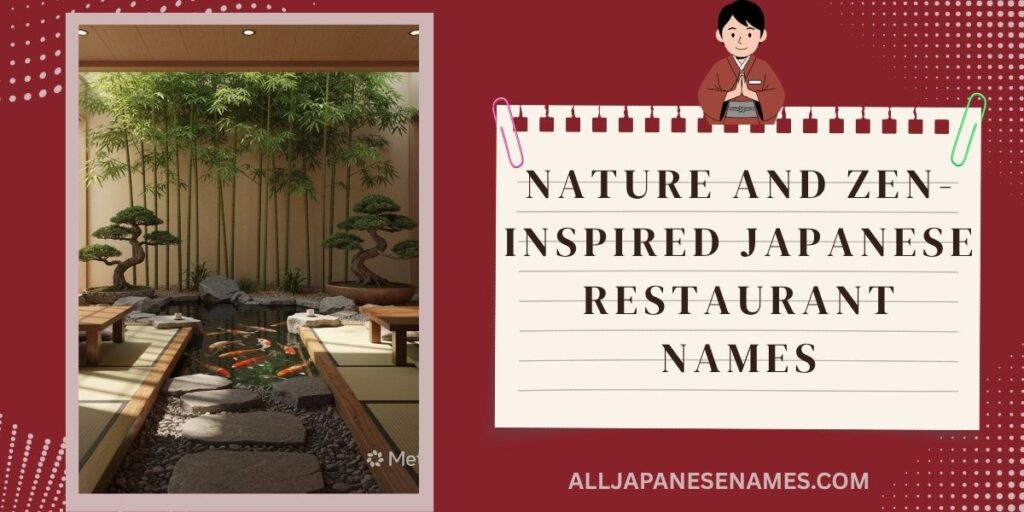
Some Restaurants can help you feel calm from the moment you enter. Soft tone lighting and a clear room, each detail is thought of. This is the beauty of Japanese minimalism, and it’s one of the most effective things a restaurant can communicate simply by its name.
Japanese designs have always been inspired by nature. Mountains, rivers, seasons, and silence. These aren’t just ornaments to Japanese culture, they’re philosophical. They influence the way people eat, how food is served, and the way a dining experience is meant to be.
The names below are inspired by that peaceful beauty. Each name is linked with nature, calm, and Japanese culinary traditions that treat each meal as a treat worth taking the time to slow down for.
| Name | Meaning | Pronunciation | Kanji |
|---|---|---|---|
| Shizuka | Perfectly quiet, a stillness that feels intentional | shee-zoo-kah | 静か |
| Mori No Ma | Room in the forest, surrounded by trees and silence | moh-ree-no-mah | 森の間 |
| Taniwind | Valley wind, a gentle breeze moving through a narrow pass | tah-nee-wind | 谷風 |
| Iwashiro | Rock and white, clean stone aesthetic | ee-wah-shee-roh | 岩白 |
| Sosui | Clear flowing water, pure and uninterrupted | soh-soo-ee | 疎水 |
| Karesansui | Dry landscape garden, iconic rock garden concept | kah-reh-san-soo-ee | 枯山水 |
| Yamazato | Mountain village, simple life at the foot of peaks | yah-mah-zah-toh | 山里 |
| Aomori Table | Blue forest table, cool and shaded | ah-oh-moh-ree-tay-bul | 青森テーブル |
| Tōge | Mountain pass, a pause between places | toh-geh | 峠 |
| Shinsui | Fresh water spring, source of purity | sheen-soo-ee | 新水 |
| Ranzan | Peaceful mountain, calm and steady | ran-zan | 嵐山 |
| Koke | Moss, soft green growth on stone | koh-keh | 苔 |
| Sora No Shita | Beneath the sky, open-air dining | soh-rah-no-shee-tah | 空の下 |
| Tanima | Valley floor, sheltered and calm | tah-nee-mah | 谷間 |
| Nagare | Natural flow, water finding its path | nah-gah-reh | 流れ |
| Yūyake Table | Sunset table, peaceful evening dining | yoo-yah-keh-tay-bul | 夕焼けテーブル |
| Toboso | Small wooden door, entrance to calm | toh-boh-soh | 戸ぼそ |
| Iwanami | Rock wave, steady rhythm of nature | ee-wah-nah-mee | 岩波 |
| Hayashi No Ki | Tree in the grove, part of a whole | hah-yah-shee-no-kee | 林の木 |
| Shizenkan | Hall of natural feeling, connected to earth | shee-zen-kan | 自然感 |
| Mizuoto | Sound of water, calming background | mee-zoo-oh-toh | 水音 |
| Hisoka | Quiet and reserved, calm beneath surface | hee-soh-kah | 密か |
| Tsubomi | Flower bud, potential and patience | tsoo-boh-mee | 蕾 |
| Yukizuri | Snow ropes protecting trees in winter | yoo-kee-zoo-ree | 雪吊り |
| Heion | Peaceful and calm, no rush | hay-on | 平穏 |
| Ishidoro | Stone lantern, lighting garden paths | ee-shee-doh-roh | 石灯籠 |
| Mizu Kagami | Water mirror, reflective still surface | mee-zoo-kah-gah-mee | 水鏡 |
| Kūchū | Mid-air, suspended between worlds | koo-choo | 空中 |
| Takezono | Bamboo garden, strong and flexible | tah-keh-zoh-noh | 竹園 |
| Fuyu No Hana | Winter flower, blooming in cold | foo-yoo-no-hah-nah | 冬の花 |
| Seisei | Fresh and clean, like morning air | say-say | 清々 |
| Kōyōen | Autumn leaf garden, vibrant season | koh-yoh-en | 紅葉園 |
| Shinrin | Forest, nature healing concept | sheen-reen | 森林 |
| Tsuchi No Oto | Sound of earth, grounded presence | tsoo-chee-no-oh-toh | 土の音 |
| Harukaze Table | Spring breeze table, light and warm | hah-roo-kah-zeh-tay-bul | 春風テーブル |
| Sekirei | Wagtail bird, delicate and lively | seh-kee-ray | 鶺鴒 |
| Kazamatsuri | Wind festival, movement and energy | kah-zah-mah-tsoo-ree | 風祭り |
| Shiraito | White thread waterfall, silky streams | shee-rah-ee-toh | 白糸 |
| Nemureru | Sleeping gently, dreamlike calm | neh-moo-reh-roo | 眠れる |
| Taiyō No Mori | Forest of the sun, light through trees | tye-yoh-no-moh-ree | 太陽の森 |
| Kōshin | Renewal, natural cycles restarting | koh-sheen | 更新 |
| Yukishizuku | Snow droplets melting softly | yoo-kee-shee-zoo-koo | 雪雫 |
| Tsukinowa | Moon ring, halo around the moon | tsoo-kee-noh-wah | 月輪 |
| Kawaoto | River sound, flowing peace | kah-wah-oh-toh | 川音 |
| Hōjōki | Inspired by a classic essay on simplicity | hoh-joh-kee | 方丈記 |
| Yomogi Table | Mugwort herb tradition in dining | yoh-moh-gee-tay-bul | 蓬テーブル |
| Shōrin | Small forest, intimate nature space | shoh-reen | 小林 |
| Asayake | Morning glow, sunrise colors | ah-sah-yah-keh | 朝焼け |
| Fūboku | Wind and wood, shaping design | foo-boh-koo | 風木 |
| Mugen Niwa | Infinite garden, endless space | moo-gen-nee-wah | 無限庭 |
Most unforgettable dining experience isn’t always about the food. It’s about how the place can make you feel from the moment you step inside. When a name is rooted in Japanese culture, pays tribute to Japanese culinary traditions, shows the thoughtfulness in Japanese minimalism and Japanese design, believe me, it does half the work before even a single meal is served. Nature doesn’t rush. And neither should your restaurant. With a name that is founded on the same philosophy will remain timeless.
How To Choose The Perfect Japanese Restaurant Name
The right restaurant name doesn’t have to be a hassle. But it should be deliberate.
Start by establishing your brand’s personality. What is the impression you would like customers or potential diners to walk away with? Names should be a reflection of the authentic restaurant personality, not just make you sound ”Japanese”. A strong restaurant name feels true to what you offer and the manner in which you provide it.
Consider what you want to be your restaurant identity early. Are you formal or casual? Modern or traditional? Your name is the first thing that sets the mood before diners even read your menu.
Let it be heard loud and clear. The sound of a great restaurant name sounds good when spoken. If someone stumbles upon it, they will not recommend it to you. Simple always triumphs.
Check availability. Find your restaurant online, check social media handles, check out the domain name online, and be sure that no one else in your restaurant industry already owns it. A free restaurant website builder can aid you in testing how your brand appears before you commit.
Don’t just rely on the restaurant name generator. These tools may give you restaurant name ideas, but the final choice must be a personal one. Generators offer options. You decide what you want to do with it.
Make it a unique restaurant name. In a marketplace that is overcrowded, names that are simple are often ignored. Creative restaurant names get shared.
Lastly, when you have landed upon the business name, protect it. You can register it. Take it on fully. The name you choose is the base of all that your restaurant can grow into.
In Short:
- Define Your Restaurant’s Identity and Concept
- Brainstorm and Build Your Name List
- Check Availability and Trademark Status
- Test the Name With Real People
- Lock In the Name That Feels Right
Conclusion
The name of your restaurant can be one of the first things that people hear, and it’s the last thing they remember. The entire list of 700+ Japanese restaurant names is created to give you real choices in every type and style.
From fun and adorable to elegant and Michelin-worthy. From street food to minimalist zen, from anime to classic Japanese cuisine rooted deep in the center of Japan.
Whatever you decide to do, ensure that your name is true to your restaurant identity. A name that is authentic will always draw the most loyal customers and those who return with friends and truly love the place you’ve created.
Good restaurant names don’t just label a business. They influence the entire dining experience before anyone even gets in the door. Follow your instincts. Choose a name that feels like yours, and then create something truly amazing.
Frequently Asked Questions
Q1: What Are Some Good Names for a Japanese Restaurant?
A: The most good japanese restaurant names include names that have roots in the natural world, emotions, and Japanese culture, such as Asahi, Kokoro, or Izumi. Excellent Japanese restaurant names have names that are brief and easy to pronounce and are infused with significance.
Q2: Should I Use Real Japanese Words in My Restaurant Name?
A: Using real Japanese words in Japanese names indeed adds credibility and the significance of your brand. People are more likely to trust names that reflect authentic Japanese culture rather than made-up or random words. Be sure that the name is a good fit, easy to pronounce for your customers, and that it is a good fit with the concept of your restaurant and its personality.
Q3: Can a Japanese Restaurant Name Be Modern Instead of Traditional?
A: Absolutely. The most modern Japanese restaurant names are influenced by modern culture, contemporary Tokyo street energy, and the latest trends in design instead of traditional cuisine references. Names such as Voltage, Jidai, or Genzai are modern and fresh yet remain authentically Japanese. Your name should be in line with the experience you’re providing to your customers.
Q4: How Do I Check If a Japanese Restaurant Name Is Already Taken?
A: Look up the name of the restaurant directly online using Google, Instagram, and Yelp. You can then check your state’s or your country’s business name registration database. It is also possible to make use of the restaurant name generator tool to identify variations if your initial name is not available. Make sure you check the trademark’s availability prior to creating menus or constructing your company’s brand around any name.
Q5: Is It Better to Choose a Name With a Meaning?
A: Yes. A name that has real significance creates an authentic restaurant personality and connects your brand with Japanese heritage and Japanese culture in a real way. Meaningful names allow you to tell a story through your menu, on your website, and on your walls. This is what transforms an uninitiated visitor into a regular customer who feels a personal connection to your establishment.
Q6: Can I Use These Names for Sushi Ramen or Fusion Concepts?
A: Yes. The majority of names on this list are based on different concepts. The concept of a sushi restaurant benefits from oceanic or precise-sounding names. The name of a Japanese ramen shop will work well with warm, earthy names that are inspired by broth. The fusion cuisine restaurant works best by having names that are enticing and push the boundaries. Make sure to match the feel of the name to the menu’s specific concept and the experience for your customers.
Q7: How Do I Pick the Best Name From a Long List?
A: You can narrow it down to five favorite names on the restaurant name ideas list. Sing each one loudly. See which one feels the most natural. Ask yourself, does it seem like something that would be a strong restaurant name that customers will remember and would recommend? Does it seem like a unique restaurant name no one has? The name that keeps popping up in your mind is often the right one.
