
Japanese male names carry something that other names simply don’t. Hundreds of years of history, layers of meanings, and a physical beauty that allows you to actually be able to see the written word in kanji. But if you’ve tried trying to find the right Japanese name, then you are aware of the overwhelming nature. Many options offer a variety of kanji combinations, unclear pronunciation, and no description of what each one is to Japanese culture.
No matter if you’re planning to name characters or researching your family’s roots or simply genuinely interested in Japan and its traditions of naming, this guide has all the information you need. We’ve gathered the listing of Japanese guy names, along with meanings, kanji, hiragana, and English pronunciation.
Each Japanese given name that male readers will discover here has an actual historical background. From the classic Japanese full names that male heroes have carried over generations, to contemporary names that are trending across Japan and beyond, there’s something to suit every person.
Japanese Male Names: Traditions and Structure
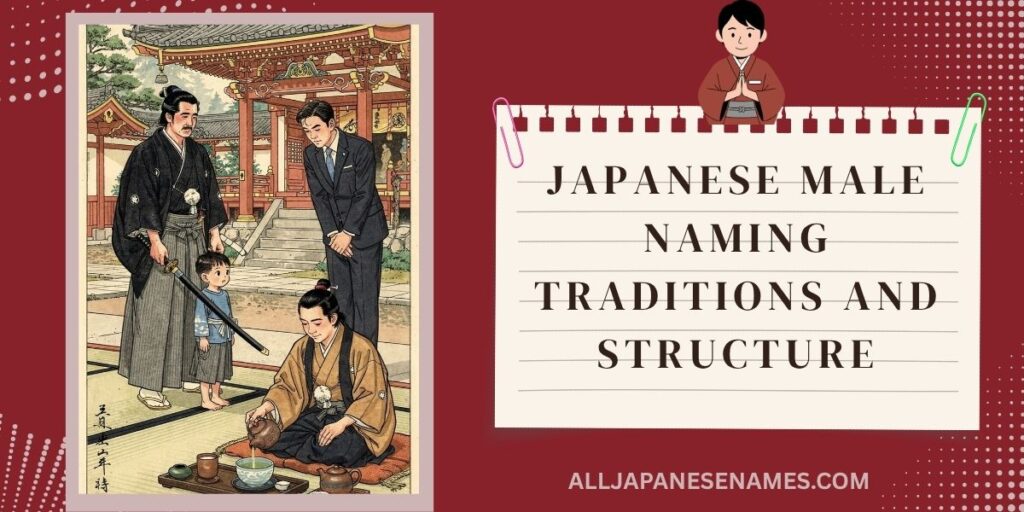
Japanese male names in the Japanese language aren’t constructed as English names are. In English, the majority of people choose names because they sound good. In Japanese, the naming is a complete process because each kanji character carries meaning, and parents can spend weeks picking the perfect combination.
How Japanese Full Names Are Structured
Japanese full names, male and female, use the same format: surname first and given name second. For example, if a person’s family name is Tanaka and his name is Yuki, the name is presented as Tanaka Yuki, not Yuki Tanaka. This is a common tradition for Japanese names that is used in Japan, although the order can change as written in English.
Kanji, Hiragana, and How Names Are Written
The majority of Japanese male names are based on kanji as characters, which originated from Chinese. Each kanji character has its own significance. For example, the name Makoto (誠) means truth or honesty. One Character, one message.
Hiragana is a different Japanese writing system, which is sometimes used to spell names that parents wish to be more soft or familiar to Japanese speech.
Sound and Syllables Matter Too
Japanese pronunciation works in units known as Japanese morae. These are basically beats that sound. Names such as Ichi (one beat, short) and Yuki (two beats) are common in Japanese culture due to this rhythm. The majority of old-fashioned Japanese guy names and the earliest Japanese male names follow the clean flow of sound.
A Living, Changing Tradition
The older Japanese names were heavily influenced by the natural world and its virtues. Modern Japanese names may draw on foreign words, Western names, and combine native words with new spellings. It is true that the Japanese way of making names has changed over time however, the reverence for it remains the same.
Looking for beautiful and meaningful Japanese girl names inspired by nature, culture, and modern elegance? Explore the complete Japanese girl names collection .
Japanese Male First Names
The search for the correct Japanese male first name could be like navigating through a vast library that has no map. There are a couple of choices, and each is different, implies something different, and is entirely different in the kanji characters.
The table includes basic Japanese gorgeous Japanese male names and some beautiful Japanese masculine names which can be used as names for a Japanese boy’s name, for a story character, or even to satisfy your curiosity. If you’re looking for some random Japanese male names to inspire you, or certain name ideas with real meanings and pronunciation, there are plenty of names here.
| Name | Meaning | Pronunciation | Kanji |
|---|---|---|---|
| Haruya | Spring arrow, moving forward with energy | hah-roo-yah | 春矢 |
| Yukiya | Happiness and the night sky | yoo-kee-yah | 幸夜 |
| Sosuke | To help and assist others | soh-soo-keh | 宗助 |
| Shinsuke | True and helpful heart | shin-soo-keh | 真介 |
| Masashi | Righteous ambition | mah-sah-shee | 雅志 |
| Harutaka | Spring that rises high | hah-roo-tah-kah | 春高 |
| Michio | Man on the path of life | mee-chee-oh | 道夫 |
| Eiji | Prosperous second son, eternal order | ay-jee | 栄二 |
| Fumito | Person of literature and knowledge | foo-mee-toh | 文人 |
| Kazuaki | Bright harmony and peace | kah-zoo-ah-kee | 和明 |
| Nobuhiro | Widespread faith and trust | noh-boo-hee-roh | 信広 |
| Ryunosuke | Spirit of the dragon | ryoo-noh-soo-keh | 龍之介 |
| Toshiaki | Clever and bright year | toh-shee-ah-kee | 俊明 |
| Wataru | To cross over, to go beyond | wah-tah-roo | 渡 |
| Isamu | Courage and bravery | ee-sah-moo | 勇 |
| Junpei | Pure and flat road ahead | joon-pay | 純平 |
| Katsuya | Victorious one, winner | kaht-soo-yah | 勝也 |
| Morihiro | Prosperous and widespread forest | moh-ree-hee-roh | 森広 |
| Naoki | Honest and upright tree | nah-oh-kee | 直樹 |
| Osamu | Discipline, order, and control | oh-sah-moo | 修 |
| Reiji | Polite and well-mannered second son | ray-jee | 礼二 |
| Satoshi | Wise, quick-minded, intelligent | sah-toh-shee | 智 |
| Takumi | Skilled craftsman, artisan at heart | tah-koo-mee | 匠 |
| Ujiro | Second son of the clan | oo-jee-roh | 氏二郎 |
| Yoshiro | Good and prosperous son | yoh-shee-roh | 良郎 |
| Akihito | Bright, compassionate person | ah-kee-hee-toh | 明仁 |
| Benjiro | One who enjoys peace | ben-jee-roh | 弁二郎 |
| Chikara | Strength and power within | chee-kah-rah | 力 |
| Daishin | Great heart and spirit | dye-shin | 大心 |
| Fumihiro | Widespread knowledge and writing | foo-mee-hee-roh | 文広 |
| Genki | Energetic, healthy, and lively | gen-kee | 元気 |
| Hiroshi | Generous and tolerant spirit | hee-roh-shee | 寛 |
| Ikuto | One who lives with purpose | ee-koo-toh | 生人 |
| Jiro | Second son, next in line | jee-roh | 二郎 |
| Kenji | Strong and healthy second son | ken-jee | 健二 |
| Leiko | Arrogant or confident one | lay-koh | 麗子 |
| Masato | Righteous and just person | mah-sah-toh | 正人 |
| Norio | Man of law and principle | noh-ree-oh | 典夫 |
| Okito | One who rises from the sea | oh-kee-toh | 沖人 |
| Raiden | Thunder and lightning, raw power | rye-den | 雷電 |
| Seiji | Lawful and well-governed second son | say-jee | 政二 |
| Tadashi | Loyal, correct, and honest | tah-dah-shee | 忠 |
| Ushio | Tide of the ocean, flowing energy | oo-shee-oh | 潮 |
| Yukinari | One who achieves happiness | yoo-kee-nah-ree | 幸成 |
| Zenji | Good meditation, zen-like wisdom | zen-jee | 善二 |
| Akifumi | Autumn literature, scholarly season | ah-kee-foo-mee | 秋文 |
| Bungo | Literary man, master of words | boon-goh | 文吾 |
| Chihiro | One thousand questions, endlessly curious | chee-hee-roh | 千尋 |
| Dairoku | Sixth great one, strong legacy | dye-roh-koo | 大六 |
| Fumiyuki | Written happiness, snowy wisdom | foo-mee-yoo-kee | 文幸 |
A thing to keep in mind is that most of these names are usually chosen by those who are the first son in a family and carry the hopes, as well as values and traits that parents wish their child to develop into. This is what makes Japanese names very personal.
Looking for creative and catchy Japanese restaurant name ideas with cultural meaning? Explore the complete Japanese restaurant names collection .
Japanese Male Last Names
In Japan, your surname is a significant indicator of the person you are. Japanese men’s last names, sometimes referred to as family names, often point back to geography, nature, or the work that your ancestors were involved in. For example, a surname such as Yamamoto translates to “base of the mountain,” which tells you precisely the place where this family likely lived for centuries.
Japanese last names used by females and males are the same. Surnames in Japan aren’t gender-specific. What is different is the name given to them. When you look into names and surnames together, the last name will always be common to all families, which is passed through Japanese families generations after generations.
Japanese full names for males always use the surname-first form in Japan. Therefore, Fujinuma Kenji is the right Japanese version, Fujinuma being the family name. Many well-known surnames, such as Kinomoto (from the character in the film Sakura Kinomoto), follow this similar structure as part of Japanese culture.
Here are some real and culturally accurate Japanese male last names:
| Name | Meaning | Pronunciation | Kanji |
|---|---|---|---|
| Fujinuma | Wisteria at the swamp’s edge | foo-jee-noo-mah | 藤沼 |
| Kurosawa | Black swamp or dark marsh | koo-roh-sah-wah | 黒沢 |
| Arakawa | Wild or rough river | ah-rah-kah-wah | 荒川 |
| Nishimura | West village | nee-shee-moo-rah | 西村 |
| Hashimoto | Base of the bridge | hah-shee-moh-toh | 橋本 |
| Ogawa | Small river | oh-gah-wah | 小川 |
| Matsuda | Pine tree rice field | maht-soo-dah | 松田 |
| Shimizu | Clear and pure water | shee-mee-zoo | 清水 |
| Inoue | Above the well | ee-noh-oo-eh | 井上 |
| Fukuda | Fortunate rice field | foo-koo-dah | 福田 |
| Hayashi | Forest or woods | hah-yah-shee | 林 |
| Ueda | Upper rice field | oo-eh-dah | 上田 |
| Mori | Forest, wooded area | moh-ree | 森 |
| Kinoshita | Beneath the tree | kee-noh-shee-tah | 木下 |
| Tsuchiya | House made of earth | tsoo-chee-yah | 土屋 |
| Okamoto | Base of the hill | oh-kah-moh-toh | 岡本 |
| Nakagawa | Middle of the river | nah-kah-gah-wah | 中川 |
| Fujishima | Wisteria island | foo-jee-shee-mah | 藤島 |
| Harada | Field on the plain | hah-rah-dah | 原田 |
| Komuro | Small storage room or chamber | koh-moo-roh | 小室 |
| Mishima | Three islands | mee-shee-mah | 三島 |
| Ono | Small field | oh-noh | 小野 |
| Ryuzaki | Dragon cape or cliff | ryoo-zah-kee | 龍崎 |
| Shiraishi | White stone | shee-rah-ee-shee | 白石 |
| Takahashi | High bridge | tah-kah-hah-shee | 高橋 |
| Uchida | Inner rice field | oo-chee-dah | 内田 |
| Wakabayashi | Young forest | wah-kah-bah-yah-shee | 若林 |
| Yamashiro | Mountain castle | yah-mah-shee-roh | 山城 |
| Zaitsu | One who stays at the estate | zah-ee-tsoo | 在津 |
| Aoyama | Blue or green mountain | ah-oh-yah-mah | 青山 |
| Bando | East of the slope | bahn-doh | 坂東 |
| Chiba | Thousand leaves | chee-bah | 千葉 |
| Dohi | Earth and ice, cold ground | doh-hee | 土肥 |
| Eguchi | Mouth of the inlet | eh-goo-chee | 江口 |
| Furuya | Old house or old valley | foo-roo-yah | 古谷 |
| Goto | Behind the island | goh-toh | 後藤 |
| Hirano | Flat open field | hee-rah-noh | 平野 |
| Ijichi | One who rules the ground | ee-jee-chee | 伊地知 |
| Jinno | Divine field or god’s plain | jeen-noh | 神野 |
| Kawakami | Upper part of the river | kah-wah-kah-mee | 川上 |
| Maeda | Rice field out in front | mah-eh-dah | 前田 |
| Nagata | Long rice field | nah-gah-tah | 永田 |
| Ohara | Great open plain | oh-hah-rah | 大原 |
| Sakaue | Top of the slope | sah-kah-oo-eh | 坂上 |
| Tamura | Rice field village | tah-moo-rah | 田村 |
| Urushihara | Lacquer tree plain | oo-roo-shee-hah-rah | 漆原 |
| Wada | Harmonious rice field | wah-dah | 和田 |
| Yaguchi | Mouth of the arrow | yah-goo-chee | 矢口 |
| Zeniya | Coin shop, merchant house | zen-ee-yah | 銭屋 |
| Ashikaga | Leg of the deer, ancient clan name | ah-shee-kah-gah | 足利 |
Popular Japanese Male Last Names From The 2000s
Japanese last names don’t change as quickly as names given to people do. The majority of surnames in Japan remain the same for more than 100 years, and many of them go back to the Meiji period, which was when the government required every family to be registered with a surname. Before then, there were only nobles and samurai who were families names. The Meiji period altered everything, and the most contemporary Japanese households chose names that were rooted in the land, nature, and even place.
The 2000s have brought something fascinating. Japanese tradition remained strong in surnames, the way people viewed particular names changed. Some older names came back into style. Certain regional names became part of large cities. There are a few unique names that began to appear more frequently as Japan’s population grew and merged.
These are a few Japanese male last names that were frequently or prominently present in Japanese households in the 2000s. They are all new with no recurrences from previous lists.
| Name | Meaning | Pronunciation | Kanji |
|---|---|---|---|
| Kawano | Field by the river | kah-wah-noh | 川野 |
| Miyazaki | Shrine cape or temple headland | mee-yah-zah-kee | 宮崎 |
| Tanimoto | Base of the valley | tah-nee-moh-toh | 谷本 |
| Noda | Open field, flat plain | noh-dah | 野田 |
| Sekiguchi | Mouth of the barrier gate | seh-kee-goo-chee | 関口 |
| Hiramatsu | Flat pine tree | hee-rah-maht-soo | 平松 |
| Kuwahara | Mulberry tree plain | koo-wah-hah-rah | 桑原 |
| Nagase | Long swift current | nah-gah-seh | 長瀬 |
| Oishi | Big stone | oh-ee-shee | 大石 |
| Sugawara | Sedge grass plain | soo-gah-wah-rah | 菅原 |
| Tomita | Rich rice field | toh-mee-tah | 富田 |
| Ueno | Upper field | oo-eh-noh | 上野 |
| Yokota | Side rice field | yoh-koh-tah | 横田 |
| Anzai | Peaceful existence | ahn-zah-ee | 安西 |
| Baba | Horse riding grounds | bah-bah | 馬場 |
| Chono | Butterfly field | choh-noh | 蝶野 |
| Domoto | Base of the earth or clay | doh-moh-toh | 堂本 |
| Enomoto | Base of the bay tree | eh-noh-moh-toh | 榎本 |
| Furukawa | Old river | foo-roo-kah-wah | 古川 |
| Gomi | Five tastes, rich flavor | goh-mee | 五味 |
| Hoshino | Field of stars | hoh-shee-noh | 星野 |
| Ikeda | Pond rice field | ee-keh-dah | 池田 |
| Jinnai | Inside the shrine | jeen-nah-ee | 陣内 |
| Kagawa | Fragrant river | kah-gah-wah | 香川 |
| Makino | Grazing field, open meadow | mah-kee-noh | 牧野 |
| Nakanishi | Middle west area | nah-kah-nee-shee | 中西 |
| Ohashi | Great bridge | oh-hah-shee | 大橋 |
| Saeki | Prosperous inlet or river branch | sah-eh-kee | 佐伯 |
| Takenaka | Middle of the bamboo grove | tah-keh-nah-kah | 竹中 |
| Usami | Rabbit watching, gentle observer | oo-sah-mee | 宇佐美 |
Most Common & Popular Japanese Male Names
Some names just stick around. It could be because they sound fantastic or have strong meanings or just feel appropriate for an boy who grew up in contemporary Japan. Some Japanese male names continue to pop up, generation after generation.
This section is about typical Japanese male names that people use in the present. This isn’t just a list of textbook names. These are names that you’d see a teacher call out in the Japanese classroom, read on a business card, or in the Japanese American community abroad. A lot of these popular Japanese male names function just like modern-day names as they did years ago. That’s the reason they’re timeless.
A well-chosen male Japanese name is often one that has a balance between the sound and the meaning. Beautiful Japanese male names typically include clear syllables and strong words, and meanings that parents are proud of. Some names can be more fresh and light, whereas traditional names have a more feeling, with a more grounded and natural feel.
You may be looking at Japanese boy names for your character, baby, or just to build your knowledge of Japanese; this list of names will have something for every person.
| Name | Meaning | Pronunciation | Kanji |
|---|---|---|---|
| Kaito | Sea and sky together | kah-ee-toh | 海斗 |
| Akira | Bright, clear, and intelligent | ah-kee-rah | 明 |
| Ichiro | Firstborn son, number one | ee-chee-roh | 一郎 |
| Yuki | Happiness or snow, depending on kanji | yoo-kee | 幸 / 雪 |
| Makoto | Sincerity and truth | mah-koh-toh | 誠 |
| Kenshin | Humble heart, sword of the heart | ken-shin | 謙信 |
| Haruto | Sun flying high, soaring spring | hah-roo-toh | 陽斗 |
| Ren | Lotus flower, love | ren | 蓮 |
| Sota | Sudden big sound, energetic person | soh-tah | 颯太 |
| Yuto | Gentle, flying person | yoo-toh | 優斗 |
| Riku | Land, the earth beneath you | ree-koo | 陸 |
| Hayato | Fast-flying person, swift hawk | hah-yah-toh | 隼人 |
| Sora | Sky, open air above | soh-rah | 空 |
| Tsubasa | Wings, freedom to fly | tsoo-bah-sah | 翼 |
| Hinata | Sunny place, facing the sun | hee-nah-tah | 陽向 |
| Ryota | Big and refreshing, cool strength | ryoh-tah | 涼太 |
| Koki | Shining and radiant light | koh-kee | 光輝 |
| Shota | Big soaring spirit, great flight | shoh-tah | 翔太 |
| Yuma | Gentle truth, kind reality | yoo-mah | 悠真 |
| Taiga | Great river, mighty flow | tah-ee-gah | 大河 |
| Nao | Honest and straightforward person | nah-oh | 直 |
| Soshi | Strong will, determined spirit | soh-shee | 壮志 |
| Tomoya | Wise and friendly person | toh-moh-yah | 智也 |
| Hiroaki | Broad and bright, wide light | hee-roh-ah-kee | 広明 |
| Kazuki | Shining peace, harmonious hope | kah-zoo-kee | 和輝 |
| Takeru | Fierce and brave warrior | tah-keh-roo | 武 |
| Shinya | True and real night | shin-yah | 真夜 |
| Kohei | Wide and flat, open peace | koh-hay | 広平 |
| Daigo | Great enlightenment, large wisdom | dah-ee-goh | 大悟 |
| Yusei | Gentle star, kind planet | yoo-say | 優星 |
| Kengo | Strong and sturdy man | ken-goh | 健吾 |
| Itsuki | Timber tree, standing tall | ee-tsoo-kee | 樹 |
| Masaru | Victory, to surpass others | mah-sah-roo | 勝 |
| Tetsuya | Iron and shining night | tet-soo-yah | 鉄也 |
| Noboru | To climb, to rise upward | noh-boh-roo | 昇 |
| Yuya | Gentle and peaceful person | yoo-yah | 優也 |
| Shoichi | First soaring one, top flier | shoh-ee-chee | 翔一 |
| Kiyoshi | Pure, clean, and clear | kee-yoh-shee | 清 |
| Daiki | Great radiance, big shining light | dah-ee-kee | 大輝 |
| Fumio | Literary man, lover of writing | foo-mee-oh | 文雄 |
| Minoru | To bear fruit, to succeed | mee-noh-roo | 実 |
| Yasuhiro | Peaceful and widespread calm | yah-soo-hee-roh | 康広 |
| Toru | To pass through, transparent clarity | toh-roo | 徹 |
| Shuji | Disciplined second son, trained mind | shoo-jee | 修二 |
| Koichi | Bright and shining first son | koh-ee-chee | 光一 |
| Ryohei | Cool and calm flat ground | ryoh-hay | 涼平 |
| Takaaki | High brightness, elevated light | tah-kah-ah-kee | 高明 |
| Susumu | To advance, to move forward | soo-soo-moo | 進 |
| Yoshiki | Good and radiant tree | yoh-shee-kee | 良樹 |
| Haruki | Spring radiance, shining new season | hah-roo-kee | 春輝 |
Looking for beautiful and meaningful Japanese baby names with cultural depth? Explore the complete Japanese baby names collection .
Cool Japanese Male Names
Some names just hit different. They sound cool and stunning in kanji, and have the weight of a name that causes you to take a moment to think. Cool Japanese male names aren’t only about sounding tough, they are about style, power, and, sometimes, a touch of mysterious all in one.
If you’re looking for hot male Japanese names to play a villain in the story, or stunning Japanese male names for a leading character, or simply stylish Japanese male names that feel elegant and strong, this has everything. Also, you’ll find Japanese male ninja names, Japanese dragon names male, and names that have the sharp, powerful passion that makes names truly memorable.
Many of them can be used in Japanese nicknames. Certain male names naturally shorten into stylish 2-syllable nicknames with names that match name style perfectly, for example, Kenshin changes to “Ken” or Reiji becomes “Rei.” The flexibility of nicknames is the reason these names are so well-known.
Here are some awesome choices, all fresh and completely original:
| Name | Meaning | Pronunciation | Kanji |
|---|---|---|---|
| Kenshin | Sword heart, humble spirit | ken-shin | 剣心 |
| Kaito | Ocean and sky, boundless freedom | kah-ee-toh | 海翔 |
| Renji | Lotus second son, fierce and pure | ren-jee | 蓮二 |
| Reiji | Zero o’clock, the darkest hour | ray-jee | 零時 |
| Shuji | Disciplined and trained warrior mind | shoo-jee | 朱二 |
| Ryuken | Dragon fist, striking power | ryoo-ken | 龍拳 |
| Zantetsu | Iron-cutting blade, unstoppable edge | zahn-tet-soo | 斬鉄 |
| Kagehiko | Shadow prince, boy of the dark | kah-geh-hee-koh | 影彦 |
| Raiju | Thunder beast, lightning creature | rah-ee-joo | 雷獣 |
| Fujin | Wind god, ruler of the air | foo-jin | 風神 |
| Kurogane | Black steel, hard as iron | koo-roh-gah-neh | 鉄 |
| Shirogane | Silver, pure white metal | shee-roh-gah-neh | 白銀 |
| Ryujin | Dragon god, ruler of the sea | ryoo-jin | 龍神 |
| Raizen | Thunder and lightning combined | rah-ee-zen | 雷禅 |
| Kazan | Volcano, burning mountain force | kah-zahn | 火山 |
| Musashi | Warrior of the plains, legendary swordsman | moo-sah-shee | 武蔵 |
| Fuma | Wind demon, fearless spirit | foo-mah | 風魔 |
| Hayabusa | Peregrine falcon, fastest of all birds | hah-yah-boo-sah | 隼 |
| Shiryu | White dragon, pure power | shee-ryoo | 白龍 |
| Kairyu | Sea dragon, ocean’s raw force | kah-ee-ryoo | 海龍 |
| Jotaro | Pure and thick third son | joh-tah-roh | 承太郎 |
| Kuroh | The black one, dark strength | koo-roh | 黒 |
| Tenka | Ruler under heaven, supreme one | ten-kah | 天下 |
| Raido | Thunder road, path of storms | rah-ee-doh | 雷道 |
| Goken | Strong fist, iron will | goh-ken | 剛拳 |
| Shinra | Divine net, all-encompassing force | shin-rah | 神羅 |
| Kuro | Black, darkness as strength | koo-roh | 黒 |
| Byakuya | White night, endless pale sky | byah-koo-yah | 白夜 |
| Sogetsu | Moon grass, calm but wild | soh-get-soo | 草月 |
| Tenryu | Heavenly dragon, sky ruler | ten-ryoo | 天龍 |
| Arashi | Storm, wild and unstoppable | ah-rah-shee | 嵐 |
| Gekko | Moonlight, silver night glow | gek-koh | 月光 |
| Koga | Old river fang, ancient bite | koh-gah | 古牙 |
| Raito | Light and thunder mixed | rah-ee-toh | 雷斗 |
| Hyoga | Glacier, frozen unstoppable force | hyoh-gah | 氷河 |
| Zanku | Cutting the air, slicing silence | zahn-koo | 斬空 |
| Kokuo | Black king, ruler of shadows | koh-koo-oh | 黒王 |
| Mugen | Infinity, no limits at all | moo-gen | 無限 |
| Fudo | Immovable, unshakeable presence | foo-doh | 不動 |
| Rasetsu | Demon warrior, fierce protector | rah-set-soo | 羅刹 |
| Kurenai | Crimson red, burning intensity | koo-reh-nah-ee | 紅 |
| Garyuu | Reclining dragon, hidden power | gah-ryoo | 臥龍 |
| Shinku | Deep crimson, passionate red | shin-koo | 深紅 |
| Bakugo | Explosion, raw bursting energy | bah-koo-goh | 爆豪 |
| Kenzan | Sword mountain, towering strength | ken-zahn | 剣山 |
| Fuyuki | Winter tree, cold and enduring | foo-yoo-kee | 冬樹 |
| Raiga | Thunder fang, striking force | rah-ee-gah | 雷牙 |
| Kuramas | Dark hemp, wild and sharp | koo-rah-mah | 蔵馬 |
| Jinrai | Thunderclap, sudden shocking strike | jin-rah-ee | 迅雷 |
| Tategami | Standing mane, lion-like pride | tah-teh-gah-mee | 立髪 |
Unique And Rare Japanese Male Names
The majority of people who search for Japanese names find the same 20 names that appear on each list. Haruto. Sota. Ren are excellent names, but if you are looking for something that really is distinctive, you need to take a deeper look at Japanese history in addition to Japanese mythology.
The rare Japanese male names are typically from earlier times in Japan. Their names are era-appropriate names that were common in the imperial courts of the past, Shinto religious traditions, or certain historical periods that modern-day parents have simply shifted away from. That’s why they are unique.
Unusual Japanese male names are also shown in Japanese mythology. They are male traditions, gods, heroes, and other gods whose names had significant meaning. Japanese god names for males, especially, are often characterized by a majestic and untouchable quality. Strong sounds, powerful Kanji, meanings that link to fate, nature, or even the universe.
If you are looking for something that no one else has, something that’s rooted in the real Japanese tradition but that is extremely rare in the present, this table was made to meet your needs. These exclusive and scarce Japanese male names comprise traditional names pulled from mythology, ancient imperial registers, and local Japanese culture.
Here are some name ideas that you won’t see on the mainstream lists:
| Name | Meaning | Pronunciation | Kanji |
|---|---|---|---|
| Akaji | Bright second son, red path | ah-kah-jee | 赤二 |
| Akiji | Autumn second son, crisp season | ah-kee-jee | 秋二 |
| Atsuji | Warm and passionate second son | aht-soo-jee | 篤二 |
| Amahiko | Prince of the heavens | ah-mah-hee-koh | 天彦 |
| Aiichiro | First son of love and care | ah-ee-ee-chee-roh | 愛一郎 |
| Hatsuhiko | Firstborn prince, fresh beginning | haht-soo-hee-koh | 初彦 |
| Hatsuo | First male, dawn of a new life | haht-soo-oh | 初雄 |
| Haruchika | Spring wisdom, blooming intelligence | hah-roo-chee-kah | 春親 |
| Amenohi | Heavenly sun, divine light from above | ah-meh-noh-hee | 天日 |
| Takehaya | Swift and fierce bamboo warrior | tah-keh-hah-yah | 武速 |
| Izanagi | The male who invites, creator god | ee-zah-nah-gee | 伊弉諾 |
| Susanoo | Impetuous male, storm deity | soo-sah-noh-oh | 素戔嗚 |
| Okuninushi | Master of the great land | oh-koo-nee-noo-shee | 大国主 |
| Futsunushi | God of swords, cutting divine force | foo-tsoo-noo-shee | 経津主 |
| Takemikazuchi | Brave thunder god, lightning deity | tah-keh-mee-kah-zoo-chee | 建御雷 |
| Nigihayahi | Swift and gentle sun spirit | nee-gee-hah-yah-hee | 饒速日 |
| Kotoshironushi | God of words and prophecy | koh-toh-shee-roh-noo-shee | 事代主 |
| Amenokoyane | Heavenly small roof, divine shelter | ah-meh-noh-koh-yah-neh | 天児屋 |
| Sarutahiko | Monkey field prince, earth guide | sah-roo-tah-hee-koh | 猿田彦 |
| Takeminakata | Brave warrior of the lake shore | tah-keh-mee-nah-kah-tah | 建御名方 |
| Kamunaobi | Divine correction, heavenly restoration | kah-moo-nah-oh-bee | 神直毘 |
| Mahito | True person, genuinely human | mah-hee-toh | 真人 |
| Torahiko | Tiger prince, fierce and noble boy | toh-rah-hee-koh | 寅彦 |
| Kazuhito | Harmonious and genuine person | kah-zoo-hee-toh | 和仁 |
| Michitaka | High path, elevated road of life | mee-chee-tah-kah | 道高 |
| Yorimichi | Road of trust and dependability | yoh-ree-mee-chee | 頼通 |
| Sadamichi | Definite path, steady road forward | sah-dah-mee-chee | 定道 |
| Aritomo | Existing friend, loyal companion | ah-ree-toh-moh | 有朋 |
| Kiyonaga | Pure and long-lasting clarity | kee-yoh-nah-gah | 清永 |
| Yoriyuki | Happiness through trust and loyalty | yoh-ree-yoo-kee | 頼之 |
| Hiromichi | Wide and open road ahead | hee-roh-mee-chee | 広道 |
| Munemichi | Chest of the road, core path | moo-neh-mee-chee | 宗道 |
| Tokimune | Prosperous and timely chest, brave leader | toh-kee-moo-neh | 時宗 |
| Sadayoshi | Steady goodness, reliable virtue | sah-dah-yoh-shee | 定義 |
| Norihito | Person of law and principle | noh-ree-hee-toh | 典仁 |
| Akinobu | Autumn faith, trusted in season | ah-kee-noh-boo | 秋信 |
| Harumichi | Spring road, blooming path | hah-roo-mee-chee | 春道 |
| Fuyuhiko | Winter prince, cold noble boy | foo-yoo-hee-koh | 冬彦 |
| Natsuhiko | Summer prince, warm noble son | naht-soo-hee-koh | 夏彦 |
| Yukihito | Person of snow, gentle cold soul | yoo-kee-hee-toh | 雪仁 |
| Tomomichi | Friend’s road, walking together | toh-moh-mee-chee | 友道 |
| Kanemitsu | Golden light, shining wealth | kah-neh-meet-soo | 金光 |
| Nobumichi | Faithful road, trusted path | noh-boo-mee-chee | 信道 |
| Masanori | Righteous law, just principle | mah-sah-noh-ree | 正則 |
| Yorimasa | Righteous trust, dependable justice | yoh-ree-mah-sah | 頼政 |
| Kunitaka | High nation, elevated country spirit | koo-nee-tah-kah | 国高 |
| Takanori | High principle, elevated law | tah-kah-noh-ree | 高典 |
| Munetaka | High chest, towering core strength | moo-neh-tah-kah | 宗高 |
| Sadaharu | Steady spring, reliable new growth | sah-dah-hah-roo | 定治 |
| Yoshinori | Good law, virtuous principle | yoh-shee-noh-ree | 義則 |
Cute And Pretty Japanese Male Names
The names of every person do not have to sound powerful or ferocious. The most stunning Japanese male names happen to be ones that are comfortable, warm, and truly pleasing to pronounce. Beautiful male Japanese names have a softness to them and flow effortlessly, sound nice, and hold meanings related to light, nature, and joy.
Beautiful Japanese male names are ideal for names that are beautiful and Japanese, especially for a boy who you wish to have an energizing, positive spirit about his name. In Japanese culture, parents usually pick gorgeous Japanese male names with a purpose, choosing kanji that create an image of the person they wish their son to become as a person.
A gorgeous Japanese male name in the category isn’t extravagant. They’re elegant. Think soft sounds, delicate meanings, and kanji that appear gorgeous printed on paper. A male who has a name like Haruyoshi or Yutaka has something warm every time he travels.
Here are some adorable, gorgeous, beautiful, and pretty choices, all new and original:
| Name | Meaning | Pronunciation | Kanji |
|---|---|---|---|
| Haruyoshi | Good spring, kind new season | hah-roo-yoh-shee | 春良 |
| Yoshio | Good, righteous, and joyful man | yoh-shee-oh | 良雄 |
| Yutaka | Abundant, rich, and full of life | yoo-tah-kah | 豊 |
| Haruichi | First spring, fresh beginning | hah-roo-ee-chee | 春一 |
| Aoi | Blue sky, hollyhock flower | ah-oh-ee | 葵 |
| Koharu | Small spring, little warm season | koh-hah-roo | 小春 |
| Haruma | Spring truth, gentle reality | hah-roo-mah | 春真 |
| Natsu | Summer, warmth and sunshine | naht-soo | 夏 |
| Asahi | Morning sun, first light of day | ah-sah-hee | 朝陽 |
| Kirara | Glittering, sparkling light | kee-rah-rah | 雲母 |
| Ruito | Flowing, gentle waterway person | roo-ee-toh | 流斗 |
| Hiro | Wide, generous, open-hearted | hee-roh | 寛 |
| Sachi | Child of bliss, blessed one | sah-chee | 幸 |
| Mizuki | Beautiful moon, water and moon together | mee-zoo-kee | 瑞樹 |
| Taiyo | The sun, bright and warm energy | tah-ee-yoh | 太陽 |
| Hana | Flower, blooming beauty | hah-nah | 花 |
| Tsuki | Moon, soft glowing night light | tsoo-kee | 月 |
| Niji | Rainbow, colorful hope after rain | nee-jee | 虹 |
| Rinto | Dignified and cold like frost | rin-toh | 凜斗 |
| Haruki | Spring brightness, shining new season | hah-roo-kee | 春輝 |
| Yori | Trust, to lean on someone | yoh-ree | 依 |
| Sena | World of peace, calm existence | seh-nah | 世那 |
| Reon | Sound of the bell, gentle chime | reh-on | 玲音 |
| Haku | White, pure, and clean | hah-koo | 白 |
| Towa | Eternal, lasting forever | toh-wah | 永遠 |
| Mio | Beautiful thread, delicate connection | mee-oh | 澪 |
| Riku | Land, solid ground beneath feet | ree-koo | 陸 |
| Yuito | Gentle flying person, kind spirit | yoo-ee-toh | 結斗 |
| Seiro | Pure and clear road ahead | say-roh | 清朗 |
| Haruna | Spring vegetables, fresh and natural | hah-roo-nah | 春菜 |
| Amane | Heavenly sound, divine melody | ah-mah-neh | 天音 |
| Kouki | Shining happiness, glowing joy | koh-kee | 光希 |
| Ritsu | Law and rhythm, steady beat | reet-soo | 律 |
| Suisei | Comet, swift and bright in sky | soo-ee-say | 彗星 |
| Souma | Genuine truth, real and honest | soh-mah | 蒼真 |
| Hiroto | Great flying person, wide soar | hee-roh-toh | 大翔 |
| Kanata | Far away place, distant horizon | kah-nah-tah | 彼方 |
| Tomoki | Wise and shining friend | toh-moh-kee | 智輝 |
| Ibuki | Breath of life, living energy | ee-boo-kee | 息吹 |
| Rokuro | Sixth son, steady and grounded | roh-koo-roh | 六郎 |
| Shion | Aster flower, gentle purple bloom | shee-on | 紫苑 |
| Yuichi | Gentle first son, kind leader | yoo-ee-chee | 優一 |
| Fuyuto | Winter person, calm cold spirit | foo-yoo-toh | 冬斗 |
| Koto | Harp sound, musical and gentle | koh-toh | 琴 |
| Natsuki | Summer hope, warm shining wish | naht-soo-kee | 夏希 |
| Akito | Bright autumn person, clear season | ah-kee-toh | 秋人 |
| Yukito | Snow person, gentle winter soul | yoo-kee-toh | 雪人 |
| Haruto | Spring and sun flying high | hah-roo-toh | 春翔 |
| Reito | Cool and refreshing flying one | reh-ee-toh | 冷斗 |
| Kiyoto | Pure and clear flying person | kee-yoh-toh | 清人 |
Looking for beautiful Japanese flower names with deep meanings? Explore the complete Japanese flower names collection .
Japanese Male Names By Length
The thing that people do not always consider when using Japanese names is the extent to which length really matters. In Japanese pronunciation, names aren’t measured using letters, but rather in syllables and, more specifically, Japanese morae. Moras are basically one sound unit. Thus, “Ken” is one mora, “Kenji” is two, and “Heiichiro” is five.
This is because Japanese names are naturally rhythmic. Short names are quick and strong. Long names are formal, historic, and rich with significance. Both are equally effective, but they create different perceptions. Knowing the difference can help to choose the best name for the proper purpose.
Short Japanese Male Names
The short Japanese male names can be snazzy, clean, and simple to use by anyone, even for people who live outside Japan. The simple Japanese male names that only have 1 or 2 syllables are often modern and confident. They’re simple to remember, simple to pronounce, and carry the weight of a name without needing a lot of characters.
Names such as Ichi, Shiro, and Eiji show that sometimes just one or two sounds suffice.
Here are a few quick selections you might consider:
| Name | Meaning | Pronunciation | Kanji |
|---|---|---|---|
| Ichi | One, the very first | ee-chee | 一 |
| Shiro | Fourth son, white and pure | shee-roh | 四郎 |
| Eiji | Prosperous order, eternal second | ay-jee | 永二 |
| Makoto | Sincerity, genuine truth | mah-koh-toh | 誠 |
| Shuji | Disciplined and trained mind | shoo-jee | 修二 |
| Ryo | Cool, refreshing, clear | ryoh | 涼 |
| Kei | Blessed, respectful, lucky | kay | 慶 |
| Jin | Benevolence, kindness at heart | jin | 仁 |
| Taro | Great first son, eldest boy | tah-roh | 太郎 |
| Sho | Soaring, flying high above | shoh | 翔 |
| Kai | Ocean, shell, restoration | kah-ee | 海 |
| Rui | Flowing, kind-hearted, beautiful | roo-ee | 塁 |
| Tei | Firm, steady, established ground | tay | 定 |
| Yuu | Gentle, superior, kind person | yoo | 優 |
| Kou | Light, shining, glowing bright | koh | 光 |
| Sei | Pure, clean, correct | say | 清 |
| Nao | Honest, straight, direct person | nah-oh | 直 |
| Ren | Lotus, love, bond | ren | 蓮 |
| Ken | Strong, healthy, firm | ken | 健 |
| Sou | Blue sky, vast and open | soh | 蒼 |
Long Japanese Male Names
The long Japanese male names have distinct energy. They typically come from a more formal, older tradition of naming where parents sought to incorporate as much significance as they could into one name. A lot of them span four, five, as well as six or more, and every syllable is a part of something to the meaning of the name.
Names such as Heiichiro and Heihachiro are like they’re a bit ceremonial. Their names are used by the samurai clan, high-ranking officials from the Imperial Court, or even firstborn sons from highly regarded Japanese household names. These names are now rare, which makes them more fascinating.
Here are some names that are long Japanese male names that are worth knowing:
| Name | Meaning | Pronunciation | Kanji |
|---|---|---|---|
| Heiichiro | Peaceful and prosperous first son | hay-ee-chee-roh | 平一郎 |
| Heihachiro | Peaceful eighth son, calm lineage | hay-hah-chee-roh | 平八郎 |
| Hatsutaro | First and great eldest son | haht-soo-tah-roh | 初太郎 |
| Hachiro | Eighth son, final and complete | hah-chee-roh | 八郎 |
| Yoshinobu | Good faith, righteous and trusted | yoh-shee-noh-boo | 義信 |
| Masahiro | Righteous and widely known person | mah-sah-hee-roh | 正広 |
| Toshimitsu | Clever light, sharp and shining | toh-shee-meet-soo | 俊光 |
| Michitoshi | Clever road, wise path ahead | mee-chee-toh-shee | 道俊 |
| Kazuhiro | Wide harmony, broadly peaceful | kah-zoo-hee-roh | 和広 |
| Nobuyoshi | Faithful goodness, trusted virtue | noh-boo-yoh-shee | 信義 |
| Katsuhiro | Victorious and widespread glory | kaht-soo-hee-roh | 勝広 |
| Teruhiko | Shining prince, glowing noble boy | teh-roo-hee-koh | 照彦 |
| Masatoshi | Righteous and clever, just mind | mah-sah-toh-shee | 正俊 |
| Yoshitaka | Good and high, virtuous elevation | yoh-shee-tah-kah | 義高 |
| Hirotoshi | Broadly clever, wide sharp mind | hee-roh-toh-shee | 広俊 |
| Kiyotaka | Pure and elevated, clean heights | kee-yoh-tah-kah | 清高 |
| Nobutoshi | Faithful and clever, trusted wisdom | noh-boo-toh-shee | 信俊 |
| Mitsuhiro | Shining and widespread light | meet-soo-hee-roh | 光広 |
| Yasutoshi | Peaceful cleverness, calm sharp mind | yah-soo-toh-shee | 康俊 |
| Sadatoshi | Steady cleverness, reliable wisdom | sah-dah-toh-shee | 定俊 |
Old And Traditional Japanese Male Names
There’s something compelling about the ancient Japanese male names. They convey centuries of history in a couple of syllables. These aren’t names that were invented for fashion or style and were conceived with a lot of thought, founded on values such as dedication, courage, loyalty, and respect.
Traditions of Japanese male names dating back to the Edo period and during the Meiji period, as well as earlier feudal Japan, reveal many things about the culture that created them. A samurai wasn’t just an appealing name. The name was an expression of Japanese samurai male names typically were a reference to righteousness, strength, or birth order due to the fact that during the feudal Japanese society, the people you were a member of your family was the determining factor in your course of life.
The ancient Japanese male names from 1845, and the older Japanese male names of 1960, are at two different points in the history of Japan. The names of 1845 originate from the late Edo period Japan, which was deeply feudal, with samurai-era names in many cases. In the year 1960, Japan was rapidly modernizing following World War II, but certain families continued to hold onto traditional names as a way of protecting Japanese traditions.
You’ll see patterns in these names. A lot of them end with “-ro” marking a first son or second son, and then on. Other kanji represent justice and truth, or even prosperity, which is what parents want their children to become. A name such as Ichiro signifies “righteous man, firstborn.” It’s more than only a name, but an expectation that is written in the kanji.
Japanese warrior names for males on the list are real name conventions that were employed by samurai noble houses, clans, and military families from ancient Japanese historical times. They’re not fictional. They’re real names from the past that people wore.
Here are some names that are old as well as classic Japanese men’s names.
| Name | Meaning | Pronunciation | Kanji |
|---|---|---|---|
| Ichiro | Firstborn son, number one son | ee-chee-roh | 一郎 |
| Heisuke | Peaceful helper, calm assistant | hay-soo-keh | 平助 |
| Heita | Peaceful and thick, calm strength | hay-tah | 平太 |
| Akitaro | Bright and great first son | ah-kee-tah-roh | 明太郎 |
| Akiyoshi | Autumn goodness, seasonal virtue | ah-kee-yoh-shee | 秋義 |
| Genjiro | Second son of the source, original line | gen-jee-roh | 源二郎 |
| Sanjiro | Third son, steady middle child | sahn-jee-roh | 三二郎 |
| Tokugawa | Virtuous river, flowing righteousness | toh-koo-gah-wah | 徳川 |
| Shigeru | To grow thick and lush, flourishing | shee-geh-roo | 茂 |
| Yoshimune | Righteous and prosperous chest, noble core | yoh-shee-moo-neh | 吉宗 |
| Katsumoto | Victorious origin, winning foundation | kaht-soo-moh-toh | 勝元 |
| Shigemori | Prosperous forest, growing and thriving | shee-geh-moh-ree | 重盛 |
| Yoriyasu | Peaceful trust, calm dependability | yoh-ree-yah-soo | 頼康 |
| Motonari | Prosperous and accomplished origin | moh-toh-nah-ree | 元就 |
| Ujiyasu | Peaceful clan, calm family order | oo-jee-yah-soo | 氏康 |
| Takanobu | High faith, elevated trust | tah-kah-noh-boo | 隆信 |
| Harumasa | Spring righteousness, blooming justice | hah-roo-mah-sah | 春正 |
| Sadanobu | Steady faith, reliable trust | sah-dah-noh-boo | 定信 |
| Muneharu | Prosperous spring chest, thriving core | moo-neh-hah-roo | 宗春 |
| Terumoto | Shining origin, glowing foundation | teh-roo-moh-toh | 輝元 |
| Yoshiaki | Righteous brightness, good clear light | yoh-shee-ah-kee | 義明 |
| Nagamasa | Long-lasting righteousness, enduring justice | nah-gah-mah-sah | 長政 |
| Kiyomasa | Pure righteousness, clean justice | kee-yoh-mah-sah | 清正 |
| Mitsunari | Shining accomplishment, glowing achievement | meet-soo-nah-ree | 三成 |
| Yukimura | Snow village, cold and resilient home | yoo-kee-moo-rah | 幸村 |
| Masamune | Righteous and prosperous, just abundance | mah-sah-moo-neh | 政宗 |
| Nobunaga | Long-lasting faith, enduring trust | noh-boo-nah-gah | 信長 |
| Ieyasu | Household peace, family calm | ee-eh-yah-soo | 家康 |
| Hideyoshi | Excellent goodness, superior virtue | hee-deh-yoh-shee | 秀吉 |
| Ujinao | Honest clan leader, direct family head | oo-jee-nah-oh | 氏直 |
| Shigenaga | Long-lasting prosperity, enduring growth | shee-geh-nah-gah | 重長 |
| Naomasa | Honest righteousness, direct justice | nah-oh-mah-sah | 直政 |
| Tadakatsu | Loyal and victorious, faithful winner | tah-dah-kaht-soo | 忠勝 |
| Yoshitsugu | Righteous succession, good continuation | yoh-shee-tsoo-goo | 義継 |
| Muneshige | Prosperous and growing core strength | moo-neh-shee-geh | 宗茂 |
| Kanetsugu | Golden succession, shining continuation | kah-neh-tsoo-goo | 兼続 |
| Yoshihiro | Righteous and widespread, broadly good | yoh-shee-hee-roh | 義弘 |
| Shimazaki | Island cape, coastal strength | shee-mah-zah-kee | 島崎 |
| Harushige | Spring prosperity, blooming growth | hah-roo-shee-geh | 春茂 |
| Toramasa | Tiger righteousness, fierce justice | toh-rah-mah-sah | 虎政 |
| Masashige | Righteous and flourishing, just growth | mah-sah-shee-geh | 正成 |
| Yorimoto | Trusted origin, dependable foundation | yoh-ree-moh-toh | 頼元 |
| Kageyasu | Shadow of peace, calm shade | kah-geh-yah-soo | 景保 |
| Ujimasa | Clan righteousness, family justice | oo-jee-mah-sah | 氏政 |
| Norimasa | Principled righteousness, lawful justice | noh-ree-mah-sah | 憲政 |
| Harutomo | Spring friend, warm loyal companion | hah-roo-toh-moh | 春友 |
| Shigenobu | Prosperous faith, growing trust | shee-geh-noh-boo | 重信 |
| Yorinaga | Long-lasting trust, enduring dependability | yoh-ree-nah-gah | 頼長 |
| Katsushige | Victorious prosperity, winning growth | kaht-soo-shee-geh | 勝重 |
| Tomoshige | Prosperous friendship, growing loyalty | toh-moh-shee-geh | 友茂 |
Strong And Powerful Japanese Male Names
Certain names seem like they’re meant to be business. The most powerful male Japanese names carry an underlying weight. They are heavy and are easy to remember, and their meanings are in perfect harmony with the energy. When you’re choosing the name of a character or looking for strong Japanese male names to use in the plot of a novel, or would like to know the most powerful names from Japanese history, the list below is designed to meet your needs.
Japanese name for warriors and samurai have a lot of similarity. The names that are the most effective from feudal Japan were chosen to symbolize the traits that a man had to bring in battle: dedication, courage, physical determination, and unshakeable determination. Samurai’s names weren’t just for show. It was an indication of who you are.
A strong Japanese male names of today are influenced by the same tradition. Even parents of today who select strong names for their children are often dipping back, whether they realize it or not, to that similar warrior-based culture which has shaped Japan for many centuries.
A strong male name doesn’t need to sound threatening, either. A few of the powerful names in this list are calm and subdued in their voice, because true power isn’t always loud. Sometimes, a man who has an unassuming name has the most weight on the scene. This balance is Japanese.
Here are some powerful and powerful selections, all new, and all distinctive:
| Name | Meaning | Pronunciation | Kanji |
|---|---|---|---|
| Kenshin | Sword of the heart, humble warrior spirit | ken-shin | 剣心 |
| Reiji | Zero hour, the moment before battle | ray-jee | 零時 |
| Akiyoshi | Autumn righteousness, seasonal virtue | ah-kee-yoh-shee | 秋義 |
| Harutaka | Spring that rises high, elevated season | hah-roo-tah-kah | 春高 |
| Shinsuke | True helpful heart, genuine warrior aid | shin-soo-keh | 真介 |
| Takehiko | Bamboo prince, strong and flexible noble | tah-keh-hee-koh | 武彦 |
| Gorou | Fifth son, enduring and persistent | goh-roh | 五郎 |
| Ryusei | Shooting star dragon, blazing power | ryoo-say | 龍星 |
| Tetsurou | Iron and clear road, strong path ahead | tet-soo-roh | 鉄郎 |
| Kagehiro | Widespread shadow, far-reaching darkness | kah-geh-hee-roh | 影広 |
| Takeharu | Spring warrior, blooming strength | tah-keh-hah-roo | 武春 |
| Genshiro | Original clear son, source of truth | gen-shee-roh | 源四郎 |
| Tsuyoshi | Strong, powerful, and sturdy man | tsoo-yoh-shee | 剛 |
| Isshiki | One color, single focused purpose | ees-shee-kee | 一色 |
| Katsurou | Victorious and clear son, winning path | kaht-soo-roh | 勝郎 |
| Kenichi | Strong and healthy first son | ken-ee-chee | 健一 |
| Takehide | Warrior excellence, superior fighting spirit | tah-keh-hee-deh | 武秀 |
| Hiroyuki | Widespread happiness, broadly joyful strength | hee-roh-yoo-kee | 広幸 |
| Masahide | Righteous excellence, just superiority | mah-sah-hee-deh | 正秀 |
| Nobutaka | Faithful and high, trusted elevation | noh-boo-tah-kah | 信高 |
| Yorihisa | Long-lasting trust, enduring dependability | yoh-ree-hee-sah | 頼久 |
| Shigetaka | Prosperous and high, elevated growth | shee-geh-tah-kah | 重高 |
| Katsunori | Victorious principle, winning law | kaht-soo-noh-ree | 勝則 |
| Takenori | Warrior principle, fighter’s law | tah-keh-noh-ree | 武則 |
| Masatake | Righteous warrior, just fighter | mah-sah-tah-keh | 正武 |
| Yoriharu | Spring trust, dependable new growth | yoh-ree-hah-roo | 頼春 |
| Katsuharu | Victorious spring, winning new season | kaht-soo-hah-roo | 勝春 |
| Takenobu | Warrior faith, fighter’s trust | tah-keh-noh-boo | 武信 |
| Masanao | Righteous honesty, just directness | mah-sah-nah-oh | 正直 |
| Nobutake | Faithful warrior, trusted fighter | noh-boo-tah-keh | 信武 |
| Katsunobu | Victorious faith, winning trust | kaht-soo-noh-boo | 勝信 |
| Shigeharu | Prosperous spring, thriving new season | shee-geh-hah-roo | 重春 |
| Takenaga | Long warrior, enduring fighter strength | tah-keh-nah-gah | 武長 |
| Yorishige | Trusted prosperity, dependable growth | yoh-ree-shee-geh | 頼重 |
| Masaharu | Righteous spring, just new beginning | mah-sah-hah-roo | 正春 |
| Katsushiro | Victorious fourth son, winning lineage | kaht-soo-shee-roh | 勝四郎 |
| Taketoshi | Warrior wisdom, fighter’s sharp mind | tah-keh-toh-shee | 武俊 |
| Nobushige | Faithful prosperity, trusted growth | noh-boo-shee-geh | 信重 |
| Masashiro | Righteous fourth son, just lineage | mah-sah-shee-roh | 正四郎 |
| Kageharu | Shadow of spring, strength beneath calm | kah-geh-hah-roo | 影春 |
| Takemichi | Warrior road, fighter’s path of life | tah-keh-mee-chee | 武道 |
| Yorimune | Trusted core, dependable strength | yoh-ree-moo-neh | 頼宗 |
| Masateru | Righteous shine, glowing light | mah-sah-teh-roo | 正輝 |
| Katsumichi | Victorious road, winning path forward | kaht-soo-mee-chee | 勝道 |
| Shigehide | Prosperous excellence, thriving superiority | shee-geh-hee-deh | 重秀 |
| Taketaka | High warrior, elevated fighter strength | tah-keh-tah-kah | 武高 |
| Nobuharu | Faithful spring, trusted new beginning | noh-boo-hah-roo | 信春 |
| Katsutaka | Victorious and high, winning elevation | kaht-soo-tah-kah | 勝高 |
| Masanaga | Righteous and long-lasting, enduring justice | mah-sah-nah-gah | 正長 |
| Takehiro | Warrior widespread, broad strength | tah-keh-hee-roh | 武広 |
Dark Japanese Male Names
The purpose of every name is not to make you feel warm and welcome. Certain names are sombre. Japanese dark male names draw from a different part of Japanese culture, one based on mythology, folklore, terror, and the supernatural.
Evil Japanese names for males and Japanese male demon names typically originate from Shinto as well as Buddhist mythology, in which spirits, demons, and dark gods weren’t simply terrifying monsters; they were complicated characters with a real backstory and a purpose. The demon of Japanese mythology isn’t just an evil being, but is evil. It typically represents something like sadness, anger, or betrayal. This depth is exactly the reason why darker Japanese male names are appealing to writers, game developers, and any other person who is building a character with a lot of significance behind their names.
The most frightening Japanese male names are effective because Japanese phonetics can change from soft to sharp quickly. When you add kanji that mean shadow or curse, destruction, or even blood, and even a name with two letters can be really disturbing.
Japanese villain names for males, in addition to Japanese vampire names male specifically can benefit greatly from the list. Vampires from Japanese folklore, known as Kyuketsuki, as well as demons known as oni, have given rise to many of the most dark names of the dark in the language. The person named after these characters has a different presence.
Here are some sinister, vile Japanese male names that have real meanings:
| Name | Meaning | Pronunciation | Kanji |
|---|---|---|---|
| Renji | Lotus blade, fierce and cutting purity | ren-jee | 蓮刃 |
| Shuji | Crimson second son, blood lineage | shoo-jee | 朱二 |
| Akaji | Red path, blood-stained road | ah-kah-jee | 赤路 |
| Atsuji | Burning second son, scorching intensity | aht-soo-jee | 熱二 |
| Kuroshi | Black death, dark ending | koo-roh-shee | 黒死 |
| Yamiko | Child of darkness, born of shadows | yah-mee-koh | 闇子 |
| Jashin | Evil god, wicked divine force | jah-shin | 邪神 |
| Akuma | Devil, demon of pure evil | ah-koo-mah | 悪魔 |
| Noroi | Curse, dark binding hex | noh-roh-ee | 呪い |
| Oni | Demon, fearsome supernatural creature | oh-nee | 鬼 |
| Yamitaro | Firstborn son of darkness | yah-mee-tah-roh | 闇太郎 |
| Shinigami | God of death, death spirit | shee-nee-gah-mee | 死神 |
| Kageoni | Shadow demon, dark supernatural creature | kah-geh-oh-nee | 影鬼 |
| Meian | Light and darkness combined, duality | may-ahn | 明暗 |
| Jaaku | Wicked, evil at the core | jah-ah-koo | 邪悪 |
| Kuroyami | Pitch black darkness, total void | koo-roh-yah-mee | 黒闇 |
| Ryoiki | Dark territory, forbidden domain | ryoh-ee-kee | 領域 |
| Mazoku | Demon clan, race of dark beings | mah-zoh-koo | 魔族 |
| Onimaru | Demon circle, complete dark power | oh-nee-mah-roo | 鬼丸 |
| Jigoku | Hell, the lowest dark realm | jee-goh-koo | 地獄 |
| Kurayami | Deep darkness, heavy shadow void | koo-rah-yah-mee | 暗闇 |
| Tatari | Curse or divine punishment | tah-tah-ree | 祟り |
| Magatsuhi | God of sin and calamity | mah-gaht-soo-hee | 禍津日 |
| Yokai | Supernatural creature, spirit monster | yoh-kah-ee | 妖怪 |
| Enma | King of hell, judge of the dead | en-mah | 閻魔 |
| Yamawaro | Mountain demon child, wild dark spirit | yah-mah-wah-roh | 山童 |
| Rasetsubo | Demon warrior’s hollow, dark fighter | rah-set-soo-boh | 羅刹坊 |
| Jaryuu | Evil dragon, wicked serpent force | jah-ryoo | 邪龍 |
| Kokuyou | Black sunlight, twisted radiance | koh-koo-yoh | 黒曜 |
| Maboroshi | Illusion, ghost-like apparition | mah-boh-roh-shee | 幻 |
| Ankoku | Darkness, total absence of light | ahn-koh-koo | 暗黒 |
| Jaen | Wicked flame, evil burning fire | jah-en | 邪炎 |
| Kurohane | Black feather, dark wings above | koo-roh-hah-neh | 黒羽 |
| Yamikage | Shadow of darkness, layered black | yah-mee-kah-geh | 闇影 |
| Akuryo | Evil spirit, malicious supernatural being | ah-koo-ryoh | 悪霊 |
| Jaken | Wicked sword, evil blade edge | jah-ken | 邪剣 |
| Meikyo | Dark mirror, twisted reflection | may-kyoh | 冥鏡 |
| Jasei | Evil star, dark celestial force | jah-say | 邪星 |
| Konton | Chaos, total disorder and confusion | kon-ton | 混沌 |
| Yamikiri | Darkness cutter, slicing through shadow | yah-mee-kee-ree | 闇切り |
| Kyuuketsuki | Blood-sucking demon, vampire spirit | kyoo-ket-soo-kee | 吸血鬼 |
| Jaho | Evil law, wicked principle of darkness | jah-hoh | 邪法 |
| Meifumado | Road of hell, path of the damned | may-foo-mah-doh | 冥府魔道 |
| Kurohoshi | Black star, dark celestial body | koo-roh-hoh-shee | 黒星 |
| Yamikumo | Dark cloud, shadow covering the sky | yah-mee-koo-moh | 闇雲 |
| Jasoku | Evil speed, wicked swift movement | jah-soh-koo | 邪速 |
| Kokuen | Black smoke, dark rising vapor | koh-koo-en | 黒煙 |
| Yamimaru | Dark circle, complete shadow realm | yah-mee-mah-roo | 闇丸 |
| Jaryoku | Evil power, wicked supernatural force | jah-ryoh-koo | 邪力 |
| Ankokuji | Temple of darkness, shrine of shadow | ahn-koh-koo-jee | 暗黒寺 |
Japanese Anime Male Names
Animation and manga have exposed millions of people all over the globe to Japanese names for characters they would have otherwise. A character such as Shinji Ikari in Neon Genesis Evangelion made the name Shinji instantly recognizable across the globe. Sakura Kinomoto from Cardcaptor Sakura was the same with the name, and then suddenly everyone was looking at the way Japanese names sound, what they mean, and the way they’re written.
This is the true power of anime. It transforms Japanese anime names for males into something that is personal. It’s not just a name, but you also know the persona and their story, as well as their struggles. This is what helps to make names stick.
Japanese anime male names draw from the real Japanese tradition of naming. The majority of manga as well as anime writers select names thoughtfully, selecting names that suggest the character’s power, personality, or destiny prior to you know what their background is. A character named Akira carries brightness. Kaito symbolizes the sky and ocean. Sosuke has the concept to help others. They’re not randomly picked. They’re specially selected.
No matter if you’re a fan of traditional anime, modern manga, or just creating the charactersans looking for names with authentic Japanese origins, the following list of names will satisfy your needs.
| Name | Meaning | Pronunciation | Kanji |
|---|---|---|---|
| Shinji | true second son, genuine faith | shin-jee | 真二 |
| Akira | bright and intelligent, clear mind | ah-kee-rah | 明 |
| Kaito | ocean and soaring sky, boundless | kah-ee-toh | 海翔 |
| Sosuke | to help and assist, reliable support | soh-soo-keh | 宗助 |
| Kenshin | sword heart, humble warrior spirit | ken-shin | 剣心 |
| Natsu | summer, warm and fiery energy | naht-soo | 夏 |
| Goku | aware of emptiness, sky above | goh-koo | 悟空 |
| Naruto | roaring gate, whirlpool of strength | nah-roo-toh | 鳴門 |
| Sasuke | one who helps in the shadows | sah-soo-keh | 佐助 |
| Itachi | weasel, swift and cunning creature | ee-tah-chee | 鼬 |
| Ryuji | dragon second son, fierce lineage | ryoo-jee | 龍二 |
| Izuku | one who comes from a spring | ee-zoo-koo | 出久 |
| Shouto | burning frozen path, fire and ice | shoh-toh | 焦凍 |
| Killua | adapted Western origin, dark silver | kee-roo-ah | キルア |
| Lelouch | adapted French name used in anime | leh-loo-sh | ルルーシュ |
| Giyu | righteous courage, firm kindness | gee-yoo | 義勇 |
| Tanjiro | charcoal burner’s eldest prosperous son | tahn-jee-roh | 炭治郎 |
| Zenitsu | good thunder, virtuous lightning strike | zen-ee-tsoo | 善逸 |
| Inosuke | boar-like helper, wild assistant | ee-noh-soo-keh | 伊之助 |
| Edward | adapted Western name, used in Fullmetal | ed-wah-do | エドワード |
| Alphonse | noble and ready, adapted for anime | ah-ru-fon-su | アルフォンス |
| Ryoma | dragon and truth, fierce reality | ryoh-mah | 龍馬 |
| Yusuke | courageous helper, brave supporter | yoo-soo-keh | 勇助 |
| Hiei | flying shadow, dark swift spirit | hee-eh-ee | 飛影 |
| Kurama | dark hemp tree, wild sharp spirit | koo-rah-mah | 蔵馬 |
| Inuyasha | dog demon, wild supernatural creature | ee-noo-yah-shah | 犬夜叉 |
| Sesshoumaru | killing perfection, death in full circle | ses-shoh-mah-roo | 殺生丸 |
| Miroku | Buddhist future god, Maitreya | mee-roh-koo | 弥勒 |
| Spike | adapted Western name, used in Bebop | su-pai-ku | スパイク |
| Vash | adapted name meaning wanderer | vah-sh | ヴァッシュ |
| Rurouni | wandering swordsman, rootless warrior | roo-roh-nee | 流浪人 |
| Sanosuke | third helpful son, loyal supporter | sah-noh-soo-keh | 左之助 |
| Yahiko | arrow prince, sharp noble boy | yah-hee-koh | 弥彦 |
| Aoshi | blue lion, cool and commanding strength | ah-oh-shee | 蒼紫 |
| Soujiro | pure and clear second son | soh-jee-roh | 宗次郎 |
| Tomura | mourning, longing for the lost | toh-moo-rah | 弔 |
| Dabi | cremation, burning the past to ash | dah-bee | 荼毘 |
| Hawks | adapted name, sharp-eyed predator | hoh-kusu | ホークス |
| Endeavor | adapted, burning effort and ambition | en-de-bah | エンデヴァー |
| Levi | joined, attached, loyal to the end | reh-vee | リヴァイ |
| Erwin | friend of the army, noble warrior | eh-ru-win | エルヴィン |
| Armin | whole, universal, all-encompassing | ah-ru-min | アルミン |
| Reiner | counsel warrior, strong advisor | rye-nah | ライナー |
| Bertholdt | bright strength, shining power | beh-ru-to-ru-to | ベルトルト |
| Light | illumination, adapted for Death Note | rah-ee-to | ライト |
| Ryuk | adapted name, dark playful spirit | ryoo-ku | リューク |
| Near | close, sharp and observant mind | nee-ah | ニア |
| Mello | adapted name, intense driven person | mel-roh | メロ |
| Kaneki | golden tree, rooted but transforming | kah-neh-kee | 金木 |
| Hideyoshi | excellent goodness, superior bright virtue | hee-deh-yoh-shee | 秀良 |
Looking for legendary and creative Japanese sword names with powerful meanings and historical inspiration? Explore the complete Japanese sword names collection .
Famous Japanese Male Names Throughout History
Japan has produced many of the most extraordinary individuals in the world as warriors, artists, leaders, scientists, and visionaries, with names that were forever linked with their heritage. The most famous male Japanese names have that weight. When you hear those words, you don’t only think of a person, you will imagine an entire period in Japanese culture and history.
The most fascinating thing about the most famous names of Japanese times is the fact that a lot of them are still in use in the present. Japanese people continue to name their sons after historical figures that they are awed by, passing on not only a name, but a link to the traditional names and the values that these names represent. This is Japanese tradition in its most personal way.
From the legendary samurai from legendary samurai to Nobel Prize winners, here are some names that have been famously used by ancient Japanese men:
| Name | Meaning | Pronunciation | Kanji |
|---|---|---|---|
| Ichiyo | one generation, singular legacy | ee-chee-yoh | 一葉 |
| Kensho | seeing truth, enlightened vision | ken-shoh | 見性 |
| Akiro | bright and clear son, shining clarity | ah-kee-roh | 明郎 |
| Yoshio | righteous man, good and virtuous | yoh-shee-oh | 義雄 |
| Soseki | gargling stones, poetic nature reference | soh-seh-kee | 漱石 |
| Ryonosuke | dragon helper son, fierce supporter | ryoh-noh-soo-keh | 龍之介 |
| Yasunari | peaceful accomplishment, calm achievement | yah-soo-nah-ree | 康成 |
| Kenzaburo | strong third prosperous son | ken-zah-boo-roh | 健三郎 |
| Yukichi | happy wisdom, joyful intelligence | yoo-kee-chee | 諭吉 |
| Shigefumi | prosperous literary man, thriving writer | shee-geh-foo-mee | 重文 |
| Hirobumi | broadly literary, widely educated man | hee-roh-foo-mee | 博文 |
| Aritomo | existing friend, loyal companion figure | ah-ree-toh-moh | 有朋 |
| Taisuke | great helpful assistant, large supporter | tah-ee-soo-keh | 大輔 |
| Tsuyoshi | strong and powerful, unyielding man | tsoo-yoh-shee | 毅 |
| Shunsuke | spring helper son, seasonal supporter | shoon-soo-keh | 春介 |
| Motoori | returning to origin, root foundation | moh-toh-oh-ree | 本居 |
| Yamagata | mountain shape, strong earth form | yah-mah-gah-tah | 山形 |
| Saigo | western village, frontier spirit | sah-ee-goh | 西郷 |
| Toshimichi | clever road, sharp path of life | toh-shee-mee-chee | 俊道 |
| Ryoma | dragon horse, fierce swift power | ryoh-mah | 龍馬 |
| Shintaro | new and great first son | shin-tah-roh | 新太郎 |
| Kaishu | sea boat, ocean navigator spirit | kah-ee-shoo | 海舟 |
| Mutsuhito | harmonious and genuine person | moot-soo-hee-toh | 睦仁 |
| Yoshinobu | righteous faith, good and trusted | yoh-shee-noh-boo | 慶喜 |
| Tokugawa | virtuous river, flowing righteousness | toh-koo-gah-wah | 徳川 |
| Mitsuhito | shining genuine person, glowing truth | meet-soo-hee-toh | 光仁 |
| Saneatsu | genuine and warm, real kindness | sah-neh-aht-soo | 実篤 |
| Torahiko | tiger prince, fierce noble character | toh-rah-hee-koh | 寅彦 |
| Kitaro | yellow spirit boy, supernatural child | kee-tah-roh | 鬼太郎 |
| Ogai | sea gull, free-flying literary spirit | oh-gah-ee | 鴎外 |
| Shozan | pine mountain, strong elevated nature | shoh-zahn | 松山 |
| Tessai | iron talent, strong artistic ability | tes-sah-ee | 鉄斎 |
| Bokushi | literary teacher, master of words | boh-koo-shee | 牧之 |
| Kinko | golden lake, precious still water | keen-koh | 金湖 |
| Bunchō | literary bird, cultured flying spirit | boon-choh | 文鳥 |
| Taikan | great view, broad perspective above | tah-ee-kahn | 大観 |
| Sōtatsu | reaching enlightenment, arriving at truth | soh-taht-soo | 宗達 |
| Kenzan | sword mountain, towering sharp strength | ken-zahn | 乾山 |
| Korin | light forest, glowing wooded place | koh-reen | 光琳 |
| Jakuchu | living within emptiness, peaceful void | jah-koo-choo | 若冲 |
| Sharaku | free enjoyment, unbound pleasure | shah-rah-koo | 写楽 |
| Hiroshige | broad prosperity, widespread thriving | hee-roh-shee-geh | 広重 |
| Hokusai | northern studio, northern creative space | hoh-koo-sah-ee | 北斎 |
| Utamaro | song circle, complete musical round | oo-tah-mah-roh | 歌麿 |
| Harunobu | spring faith, trusted new season | hah-roo-noh-boo | 春信 |
| Moronobu | various faith, many-sided trust | moh-roh-noh-boo | 師宣 |
| Sesshu | snow boat, calm floating spirit | ses-shoo | 雪舟 |
| Josetsu | removing clumsiness, refining art | joh-set-soo | 如拙 |
| Tankei | exploring brightness, searching for light | tahn-kay | 湛慶 |
| Unkei | cloud brightness, sky-high radiance | oon-kay | 運慶 |
Japanese Male Name Generator
Not finding the perfect fit in the above lists? The Japanese man name generator will help you in generating some random Japanese male names quickly, ideal for those who need new name ideas fast.
The majority of Japanese name generators allow you to sort names by length, style or meaning so that they can match name style to exactly what you’re seeking.
If you require many names for characters, an idea, or are looking for names for names, a great Japanese name generator will save you many hours and make things fascinating.
Conclusion
Japanese male names are truly unique. Every name included in this guide, whether it’s a unique Japanese names male or a traditional Japanese male name, all has real significance as well as a real story and the real weight of culture to back it.
We covered all the bases. Short names as well as long names, dark names, cute names, as well as names of samurai, names of anime, Rare names from the past of Japan, and famous names that have shaped the course of the history of the world. Every name comes with meanings, kanji, and pronunciation to help you understand the meaning behind your choice and the reason for it.
The word “name” in Japan isn’t just a thing people refer to you by, it’s something that you carry around with you. It doesn’t matter if you need Japanese boys names for your baby, a character from a story, or simply a desire to know more about Japan. Perhaps one of these names felt perfectly right.
The best names stick. They certainly will.
Frequently Asked Questions
Q1: What Are the Most Common Japanese Male Names?
A: The most well-known Japanese male names of the moment include Kaito, Akira, and Ichiro. These well-known Japanese male names, as well as Japanese boy names, remain consistent throughout the generations due to their strong and great meanings.
Q2: What Do Japanese Male Names Mean?
A: The majority of Japanese male names originate from kanji Original Chinese characters, and each character has its own significance. A single name may contain two syllables and have two totally different meanings. Japanese male surnames and names all follow a similar system, which means that pronunciation, along with kanji spelling, is equally important.
Q3: How Do You Write Japanese Male Names in Kanji?
A: Japanese male name in Japanese language are written with kanji characters. Each kanji has a significance and sound. Some names use hiragana (あ) to give more of a soft feeling. The same name may have several kanji spellings and, therefore, two people who are named “Kaito” might write it entirely differently.
Q4: What Are Unique and Rare Japanese Male Names?
A: Unique Japanese male names such as Amahiko, Hatsuhiko, Haruchika, and Akiji are rare Japanese male names derived from more traditional names. Today, most people use modern names or Western names, and that’s exactly why these names really distinguish themselves.
