
Japanese flower names contain secrets that only a few people get to know. It’s possible to recognize the name of a cherry blossom when you see one, but do you understand the meaning behind it? In Japan, flowers don’t stand in vases looking beautiful, they also speak.
Japan is home to its very own flower language called Hanakotoba (花言葉), which literally refers to “flower words.” Each Japanese flower carries a hidden message: love, grief, loyalty, and goodbye. If someone gives you blossoms in Japan, they’re not simply doing their best to be polite. They’re trying to tell you something.
There’s also the system of naming. Japanese flower names have been written with Kanji, Hiragana, or Katakana, and the choice of script plays a role. Kanji names usually have profound poetic meaning that is that are rooted in Japanese culture. Katakana is used mostly to refer to foreign or borrowed words in Japanese. Hiragana provides names with a gentle, traditional look that is tied in with Japanese aesthetics.
It doesn’t matter if you’re interested in floral symbolism, learning the language of flowers, or simply want to know the meaning behind what sakura is more than just pink petals, this guide will cover it all. From famous Japanese flowers to rare flowers, every Japanese name in this guide has a meaning worth learning about.
What Is The Japanese Word For Flower?
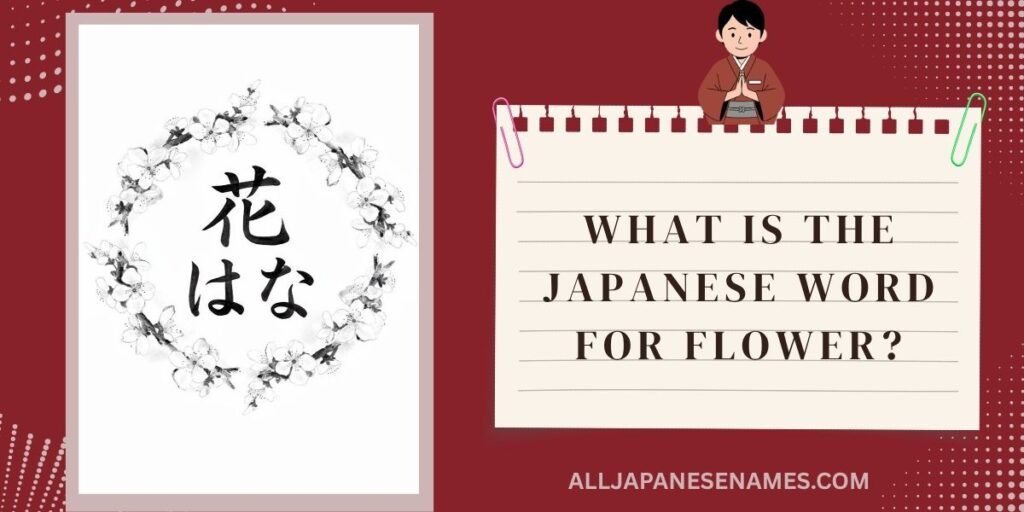
The most basic Japanese word for “flower” is 花 (hana). That’s it. Simple, concise, and stunning as the things it describes.
Japanese people use hana in everyday life each and every time. It can be found in songs and poems, and seen hidden in many compound words. This is one word that makes you feel warm when you speak it aloud.
However, there’s an interesting fact about flower vocabulary in Japanese: the word “hana” doesn’t necessarily refer to just one flower. It could refer to flowers from all over the world or can be a symbol of beauty itself in a wider culture-specific sense. In Japan, flowers aren’t just flowers. They are a source of the weight of their surroundings. They are full of meaning.
In today’s world, the Japanese people also discuss flowers formally or botanically; they often make use of 花卉 (kaki), however, that’s typically reserved for academic or gardening contexts. For everyday use, hana is a word that is widely used and loved by everyone.
Naming traditions in Japan usually build upon the root word. A lot of flower names that are used in Japanese are compounds that begin with the letter hana and contain characters that suggest the season, color, or form. For example, Hanako (花子) is a popular girl’s name, which literally means “flower child.”
Next time, when you see something like “花” written on an advertising sign, gift bags, or even a work of art, you’ll know exactly what it is. It’s a fact that knowing this one little word can tell you many possibilities for the way flowers in Japan are integrated into everyday life and their culture.
Popular Japanese Flower Names With Meanings
Japan is home to one of the most stunning floral names in the world. Each one is more than just a sound that’s appealing to the ears. They also carry stories about seasons, seasons along with cultural significance that goes back to the past.
The below Japanese flower names list includes some of the most popular flowers in Japan, together with the hanakotoba meanings and what makes them unique. If you’re looking at nature-inspired names, learning about floral meanings, or just interested in beautiful flowers and unique flowers that are a part of Japanese culture, you’re at the right spot.
Looking for unique Japanese sword names with legendary meanings and traditional inspiration? Explore the complete Japanese sword names collection .
1. Sakura, Japanese Cherry Blossom
花 (Hana) / 桜 (Sakura) Hanakotoba Meaning: Fleeting beauty, new beginnings, the beauty of life
Sakura is possibly the most well-known Japanese flower around the globe, and with good reason. The delicate pink petals falling gently in the breeze are basically Japan in one picture.
In early spring, millions of people walk to the streets to enjoy flower viewing, a tradition known as the hanami. Families, friends, and coworkers set up blankets in the shade of the cherry blossom trees and… just enjoy the beauty.
However, sakura isn’t all about beautiful pink blossoms. It is a symbol of an understanding of the fleeting nature of life. The blossom will last from two to three weeks. This short bloom is precisely what you want; Japanese culture teaches that beauty is more valuable because it’s not long-lasting.
The cherry blossoms are also connected to new beginnings as the academic year in Japan begins in April, just as the blooms start to appear.
2. Ume, Japanese Plum Blossom
梅 (Ume) Hanakotoba Meaning: Elegance, loyalty, perseverance
While sakura is the main focus, the plum blossom quietly steals the show and is earlier. Ume blooms in the winter months and is among the very early winter blooms to show up before spring is even thinking about bringing it.
The Japanese Plum tree can be a tough tree. It blossoms even in cold weather and sometimes in snow. That’s the main reason plum blossoms in Japan symbolize strength and endurance, as well as beauty that is evident even in the midst of hardship.
When it comes to early spring, you’ll find ume festivals all over Japan in which people rejoice at the first sign of warm weather. Many refer to it as the Japanese Apricot due to its botanical connection to both plum and apricot trees.
3. Tsubaki, Japanese Camellia
椿 (Tsubaki) Hanakotoba Meaning: Love, admiration, but also death (in some contexts)
Tsubaki camellia is an attractive flower that has two different personality types. Camellias are red flowers of the camellia family that are stunningly beautiful and bold. In the tea ceremony tradition, camellia is considered the most elegant flower, without being loud.
Here’s the new twist. Since tsubaki blossoms drop off the stem completely, not petal by petal, some people in Japan believed that it was a sign of sudden death. This is why it was sometimes omitted in hospitals and offered to soldiers.
Yet, floral symbolism around tsubaki is largely positive in the present. It’s a bloom that pops up on kimono designs, pottery, kimono patterns, and Japanese artwork often.
4. Kiku, Japanese Chrysanthemum
菊 (Kiku) Hanakotoba Meaning: Longevity, rejuvenation, nobility
Kiku can be described as the national flower of Japan, and the country doesn’t take its title lightly. The chrysanthemum symbols of Japan are everywhere, including on the official seal of the Imperial Family as well as in Japanese passports, and even on government buildings.
There’s even a “Chrysanthemum Throne”, which is also known as the seat of the Emperor’s power. So yeah, this flower is at the highest in Japanese symbols.
Kiku symbolizes longevity and health. This is the reason it’s featured in every year’s Chrysanthemum Festival (Kiku Matsuri) every year in autumn.
5. Fuji, Japanese Wisteria
藤 (Fuji) Hanakotoba Meaning: Welcome, steadfast love, poets’ flower
When wisteria blossoms in Japan, it appears like something straight from a novel. The long, drooping clusters of purple flowers hang from wooden Trellises, like a frozen waterfall in time.
Japanese gardens throughout the nation produce fuji specifically to make stunning flower fields that go viral on the internet every spring. Ashikaga Flower Park is probably the most well-known place, and people come from all over the world to stroll through it.
Fuji also influenced the well-known Japanese surname Fujiwara, which means “wisteria plain.”
6. Hasu, Japanese Lotus
蓮 (Hasu) Hanakotoba Meaning: Purity, spiritual awakening, rising above
The lotus flower is a result of the muddy water, but emerges neat and perfect. The image alone is enough to explain everything. In Buddhism, which is a major part of Japan, lotus flowers represent the human capacity to conquer obstacles and attain something that is pure.
Japan has been cultivating lotus in temple ponds for over 1,000 years. You can find lotus blooms in nearly each tradition Buddhist temple garden throughout the nation.
7. Ajisai, Japanese Hydrangea
紫陽花 (Ajisai) Hanakotoba Meaning: Heartfelt emotion, gratitude, apology
Ajisai can be described as the floral symbol that blooms during the season of rain. As June approaches and the rain starts to fall, blue flowers and tiny purple flowers appear all over Japan.
The thing that makes ajisai unique is the fact that it changes color depending on the acidity of the soil. You might see blue flowers in one yard, and purple flowers bloom next door.
This change in nature has made the ajisai a symbol of changing emotions and heartfelt, sometimes complicated feelings.
8. Himawari, Japanese Sunflower
向日葵 (Himawari) Hanakotoba Meaning: Adoration, loyalty, bright energy
The kanji of himawari literally is “facing the sun.” This is the most important thing you can learn about the personality of this flower.
Himawari sunflowers provide huge, powerful vitality in Japanese summers. A field filled with yellow flowers and bright orange flowers spread across the landscape, and festivals celebrating sunflowers are an important event in the countryside of Japan.
Contrary to the West, where sunflowers are generally decorative and decorative, in Japan, they also hold emotional significance, indicating an individual who is always looking toward the positive, regardless of what.
9. Yuri, Japanese Lily
百合 (Yuri) Hanakotoba Meaning: Purity, majesty, innocence
The flowers of the Lily have a peaceful type and power that’s prevalent in Japan. White flowers, like White yuris, are associated with purity and are frequently used for religious ceremonies and funerals.
Although not all yuris are white. Japan has a variety of native species of lilies. They include the Oni, the yuri (tiger flower), which is a bright orange. It is also known as the Yamayuri (mountain flower), a big flower that is fragrant and considered to be one of Japan’s finest native flowers.
Yuri can also be a well-known girl’s name in Japan, gentle, classy, and easy to pronounce.
10. Bara, Japanese Rose
薔薇 (Bara) Hanakotoba Meaning: Love, passion, beauty (varies by color)
The roses didn’t need an introduction in Japan however, Japan provided them with one. Bara has the same general significance as roses around the world, but Hanakotoba includes color-specific layers.
The red roses (aka bara) symbolize intense love and passion. Yellow roses represent jealousy or the loss of love, so be cautious when to give them. White bara symbolizes innocence and purity.
The bara kanji (薔薇) is famously one of the most difficult characters to write in Japanese. It is not surprising that many Japanese adults do not write the kanji by hand and instead choose to use hiragana.
11. Asagao, Japanese Morning Glory
朝顔 (Asagao) Hanakotoba Meaning: Love, bonds that never break, fleeting moments
The word “asagao” means “morning face”, which is exactly the way this flower functions. Asagao morning glory appears every morning and then fades away by afternoon.
Elementary school pupils across Japan cultivate asagao in their first gardening venture. For the majority of Japanese people, the flower is a link to memories of childhood. The blooms are plain trumpet-shaped, usually purple or blue, but the flowering is always a joyous spring morning.
12. Botan, Japanese Peony
牡丹 (Botan) Hanakotoba Meaning: Bravery, good fortune, nobility
If sakura is the flower of spring, botan is its bold cousin that was fashionable late. Peony flowers are huge with layers and are difficult to miss. That is the reason Japanese people call them Hyakka no O, meaning “King of a Hundred Flowers.”
The most beautiful flowers aren’t much more spectacular than the botan. They bloom in the late spring and have been embroidered, painted, and tattooed in Japanese art for hundreds of years. The botanical design on a Kimono indicates that you are serious about your business.
13. Sumire, Japanese Violet
菫 (Sumire) Hanakotoba Meaning: Sincerity, modesty, small but genuine love
Sumire violet is a tiny color, and it’s easy to overlook. That’s the purpose.
Japanese violets are a delicate flower that grows close to the ground, usually in odd places, such as the cracks of sidewalks, the floors of forest borders of gardens. In Japan, there’s something beautifully odd about it. They are small flowers that bloom peacefully and without asking for attention.
Sumire can also be a popular girls’ name in Japan, soft, sweet, and full of quiet significance.
14. Higanbana, Japanese Red Spider Lily
彼岸花 (Higanbana) / 曼珠沙華 (Manjushage) Hanakotoba Meaning: Lost memory, farewell, grief, and also reunion
Higanbana is among the most stunning flowers that you can find in Japan. Higanbana is a red spider lily with long, webbed petals that spread outwards like flames. The flowers bloom during Ohigan, which is the Buddhist fall equinox, and that is the reason for the name.
The Japanese manjushage word is derived directly from the Sanskrit Buddhist language, where it refers to a heaven-bound flower. However, in Japan, autumn spider lilies are associated with death, the afterlife, and graveyards. Red spider lilies in fields are found around burial grounds.
However, in recent times, higanbana has become almost legendary in anime, art, and modern Japanese aesthetics. The beautiful dark beauty has a huge following.
15. Tsukimisou, Japanese Moon Flower
月見草 (Tsukimisou) Hanakotoba Meaning: Fleeting love, loneliness, nocturnal beauty
A moon flower Japanese name, tsukimisou literally means “moon-viewing grass.” The name is perfect for the moon.
The moon flower only opens at the time of night. In the daytime, it’s shut down. As the sun sets and the moon rises, night blooms quietly, appearing delicate, soft, and even glowing in the darkness.
It’s among the most poetic flowers of Japanese culture. The notion that something like this can only exist when there is no one looking? Very Japanese. Very wabi-sabi.
Japanese Flower Names By Color
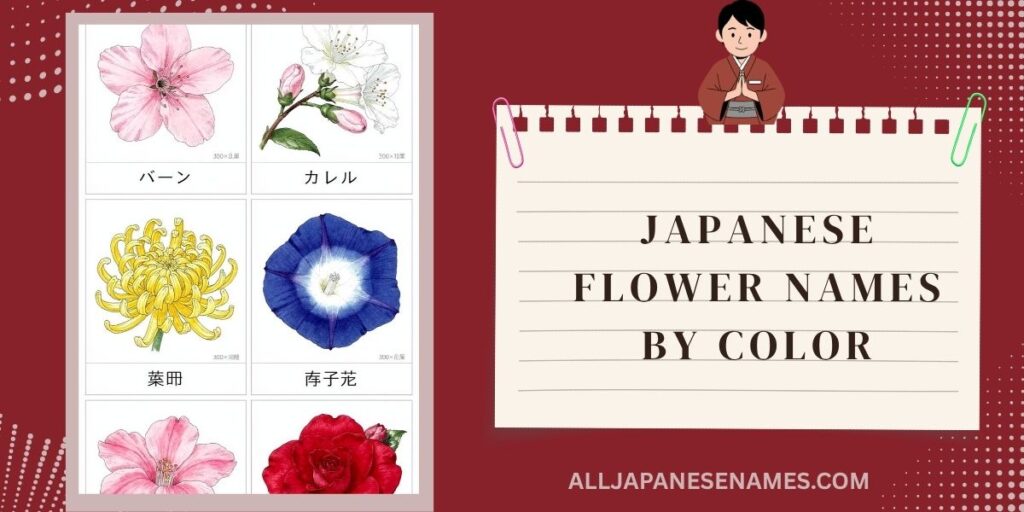
In Japan, colors aren’t just colors, they are an emotion. Japanese colors have meanings, and when you combine flowers with colors, the meaning gets more powerful. The significance of a colored blossom in Japan isn’t selected by chance. The color is just as important as the actual flower.
Look at these Japanese names of flowers sorted according to their most well-known different colors.
Japanese Red Flower Names
Red in Japan has been a symbol of courage, passion, and love for a long time. However, it could also signify danger or goodbye, based on the type of flower. Red Roses symbolize romantic love, but the red rose of a different type could carry a completely distinct message for Hanakotoba. Certain red blooms, like the spider lily, are linked with death as well as the afterlife.
Here are some Japanese red flower names worth knowing:
| Name | Meaning | Pronunciation | Kanji |
|---|---|---|---|
| Beni Bara | Crimson rose, deep, consuming love | beh-nee bah-rah | 紅薔薇 |
| Kōkabana | Safflower; red dye flower used in ancient Japan | koh-kah-bah-nah | 紅花 |
| Himeyuri | Princess lily; a slender, vivid red-orange native lily | hee-meh-yoo-ree | 姫百合 |
| Benitsutsuji | Crimson azalea; first love, restraint | beh-nee-tsoo-tsoo-jee | 紅躑躅 |
| Hanashobu | Japanese iris in deep red-purple; good news, trust | hah-nah-shoh-boo | 花菖蒲 |
| Momijiaoi | Scarlet rosemallow; gentle strength, warmth | moh-mee-jee-ah-oh-ee | 紅葉葵 |
| Karanadeshiko | Chinese pink; bold love, pure affection | kah-rah-nah-deh-shee-koh | 唐撫子 |
| Benizakura | Deep pink-red cherry blossom variant; intense fleeting beauty | beh-nee-zah-koo-rah | 紅桜 |
| Hamanadeshiko | Coastal pink; resilience by the sea, quiet love | hah-mah-nah-deh-shee-koh | 浜撫子 |
| Chōjugiku | Marigold; longevity, health, bright orange flowers shading into red | choh-joo-gee-koo | 長寿菊 |
Looking for unique Japanese restaurant names with cultural charm and creative inspiration? Explore the complete Japanese restaurant names collection .
Japanese Blue Flower Names
Blue flowers are rare in nature, making these flowers unique in Japan. Bluish-purple flowers appear more frequently than true blue. In Hanakotoba, blue flowers typically are a symbol of calm, confidence, and the things that seem far away.
Here are some Japanese blue flower names:
| Name | Meaning | Pronunciation | Kanji |
|---|---|---|---|
| Rindō | Japanese gentian; sadness, justice, sincerity | reen-doh | 竜胆 |
| Kikyo | Balloon flower; eternal love, honesty, return | kee-kyoh | 桔梗 |
| Rurikarakusa | Blue phacelia; trust, open-heartedness | roo-ree-kah-rah-koo-sah | 瑠璃唐草 |
| Aoi | Hollyhock; ambition, fruitfulness, used in imperial crests | ah-oh-ee | 葵 |
| Rurihyogo | Blue spiderwort; momentary happiness | roo-ree-hyoh-goh | 瑠璃兵庫 |
| Nezumimochi | Privet tree flower with soft blue-white blooms; quiet perseverance | neh-zoo-mee-moh-chee | 鼠黐 |
| Aioi | Twin-growing blue herb; togetherness, long-lasting bonds | ah-ee-oh-ee | 相生 |
| Ruriko | Blue borage; courage, cheerfulness | roo-ree-koh | 瑠璃子 |
| Hanashōbu Ao | Blue Japanese iris variety; belief, good tidings | hah-nah-shoh-boo ah-oh | 花菖蒲青 |
| Yagurumagiku | Cornflower; happiness, delicacy, a symbol of hope | yah-goo-roo-mah-gee-koo | 矢車菊 |
Japanese Purple Flower Names
Purple was always considered to be a color of nobility and royalty in Japan. In the past, only the most affluent individuals were permitted to wear it. It’s no wonder that purple flowers carry meaning tied to elegance, respect, and awe. Some purple flowers also feature bluish-purple petals that shift depending on the light and season.
Here are some Japanese purple flower names, which include some that can be used as the Japanese name for purple flower or even a Japanese name for pink flower, depending on the type of flower:
| Name | Meaning | Pronunciation | Kanji |
|---|---|---|---|
| Fujibakama | Thoroughwort; hesitation, pleasant delay, autumn elegance | foo-jee-bah-kah-mah | 藤袴 |
| Kakitsubata | Rabbit-ear iris; luck will come, noble beauty | kah-kee-tsoo-bah-tah | 杜若 |
| Murasaki | Purple gromwell; love, nobility; also the Japanese word for purple itself | moo-rah-sah-kee | 紫 |
| Haruジョオン | Spring fleabane; naivety, simple joy | hah-roo-joh-on | 春女苑 |
| Okera | Atractylodes; protection, healing, quiet strength | oh-keh-rah | 朮 |
| Shion | Tatarian aster; “I won’t forget you,” remembrance | shee-on | 紫苑 |
| Fujiutsurogi | Purple deutzia; humble grace, understated elegance | foo-jee-oo-tsoo-roh-gee | 藤空木 |
| Noji Sumire | Wild field violet; modest love, sincerity in small things | noh-jee-soo-mee-reh | 野路菫 |
| Chōsenasagao | Datura; caution, dreaming, sacred ritual use | choh-sen-ah-sah-gah-oh | 朝鮮朝顔 |
| Hanabishisō | California poppy grown in Japan; restful sleep, hope | hah-nah-bee-shee-soh | 花菱草 |
Japanese Pink Flower Names
The pink hue is all over Japan. It’s indeed difficult to picture the country without thinking of it. The pink sakura that falls from the tree branches, pink blossoms lining the streets, and the iconic light pink color that is seen in every spring picture. Pink symbolizes youth, tenderness, and the type of beauty that will make you stop and look at.
Here are some Japanese pink flower names:
| Name | Meaning | Pronunciation | Kanji |
|---|---|---|---|
| Kobushi | Magnolia kobus; friendship, nature’s greeting in early spring | koh-boo-shee | 辛夷 |
| Nadeshiko | Fringed pink / Dianthus; pure love, the idealized Japanese woman | nah-deh-shee-koh | 撫子 |
| Hana Momo | Flowering peach; longevity, good luck, bridal beauty | hah-nah-moh-moh | 花桃 |
| Shirobana Hananira | Pink-white spring starflower; gentle beginnings | shee-roh-bah-nah-hah-nah-nee-rah | 白花花韮 |
| Kakuo | Cuckoo flower; arriving spring, softness, delicate transitions | kah-koo-oh | 郭公 |
| Niwazakura | Garden cherry; domestic peace, quiet joy at home | nee-wah-zah-koo-rah | 庭桜 |
| Haruran | Spring orchid; elegance, refinement in simplicity | hah-roo-rahn | 春蘭 |
| Shakuyaku | Chinese peony (grown widely in Japan); bashfulness, shy love | shah-koo-yah-koo | 芍薬 |
| Tokinasou | Perpetual summer pink; endless warmth, cheerful energy | toh-kee-nah-soh | 常夏草 |
| Momosaki | Peach blossom opening; new love, soft optimism, fresh starts | moh-moh-sah-kee | 桃咲 |
Japanese National Flower, What Is Japan’s Official Flower?
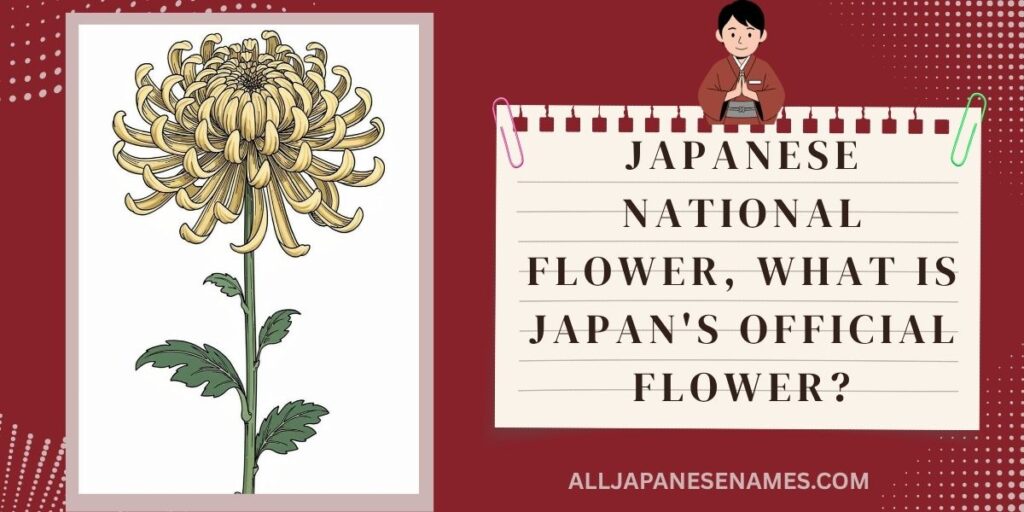
This is something that most people are incorrect about: Japan actually has two flowers associated with its national flower identity. They serve very different functions.
No law defines the officially recognized Japanese national flower name, the two cherry blossom and chrysanthemum are widely recognized, but with different names.
Kiku, Japan’s Imperial Flower
菊 (Kiku)
Kiku flowers are the symbol of Kiku, the flower of the Japanese Emperor. The 16-petal golden chrysanthemum known as Kikumon is the official flower of the Emperor. Kikumon is affixed to Japanese passports and is carved into buildings of the government, and serves as the seal of official use by the Imperial Family.
Chrysanthemum-related symbols are found in traditional Japanese fashion, art, and even architecture that dates back more than 1000 years. The throne of the Emperor is known as”The Chrysanthemum Throne.
Every year in the autumn, chrysanthemum festivals called Kiku Matsuri are celebrated throughout Japan. They create and elaborate displays, with some even sculpting whole human figures from Kiku flowers that are blooming. It’s a serious art.
As a Japanese symbol, Kiku symbolizes longevity, dignity, and the unshakeable power of the nation.
Sakura, Japan’s Cultural Symbol
桜 (Sakura)
Sakura has no title of imperial significance however, it is all the hearts of the Japanese people. There is no other flower more closely associated with Japanese culture than the cherry blossom.
It is believed that the cultural significance of sakura runs very deep. The blossoms bloom for a mere about a week each spring, and then the entire nation stops celebrating. School starts, friendships are formed, and goodbyes take place under the fallen cherry blossom petals.
While kiku symbolizes the power of permanence and strength, sakura represents something more emotional and beautiful, the joy of the moment, as well as accepting change and the Japanese spirit itself.
Together, they tell the entire history of Japan.
Pretty Japanese Flower Names For Girls
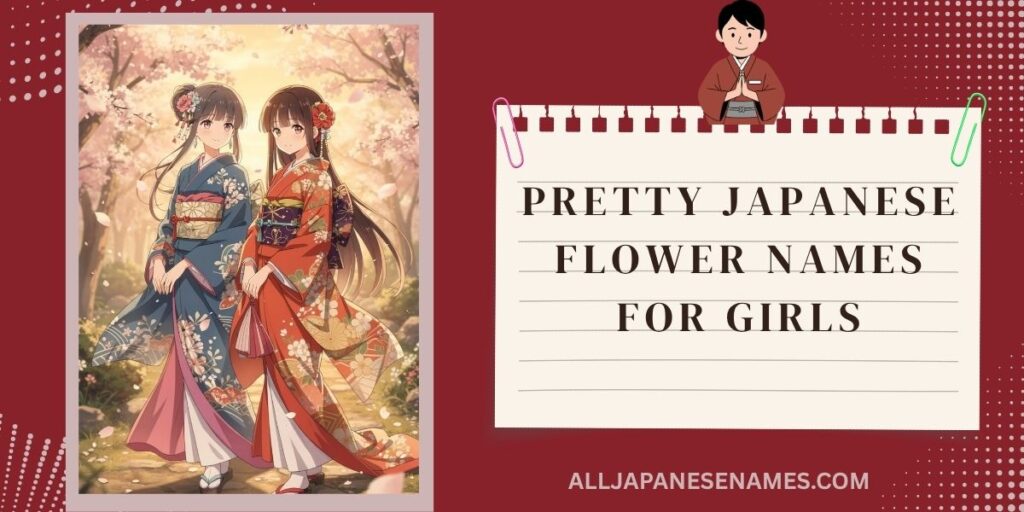
If you’re searching for a name that’s gorgeous as well as meaningful and rooted in nature, Japanese flowers for girl names could be just the thing you’re looking for. These names don’t just have attractive sounds. Each of them has an underlying story, a time, or even a feeling that is behind it.
Japanese female flower names are names that have been utilized for a long time. Parents pick flower-based names because they want their daughters to have an element of timeless beauty, a connection to nature, beauty, and the peace and force that flowers embody in Japanese the Japanese culture.
They are beautiful Japanese flower names are inexplicably tied to nature-inspired name traditions in Japan. Some carry good news meanings like new beginnings, pure love, or even lasting happiness. If you’re considering naming an infant, a person, or simply looking for floral names from Japan, this list contains something truly unique.
Here are 50 Japanese names inspired by flowers:
| Name | Meaning | Pronunciation | Kanji |
|---|---|---|---|
| Hanae | Flower branch; graceful and rooted in nature | hah-nah-eh | 花枝 |
| Kikuna | Chrysanthemum green; freshness and longevity | kee-koo-nah | 菊菜 |
| Sakino | Blooming field; a girl who brings life wherever she goes | sah-kee-noh | 咲野 |
| Rinko | Little bell flower; delicate and cheerful | reen-koh | 鈴子 |
| Fujiha | Wisteria leaf; graceful, flowing, and calm | foo-jee-hah | 藤葉 |
| Momoka | Peach blossom; sweetness and good fortune | moh-moh-kah | 桃花 |
| Nanaho | Rapeseed flower and grain; abundance and warmth | nah-nah-hoh | 菜々穂 |
| Azumino | Eastern field of flowers; wide open beauty | ah-zoo-mee-noh | 東野 |
| Shiori | Poem woven with flowers; artistic and sensitive soul | shee-oh-ree | 詩織 |
| Haruka | Spring flower; fresh beginnings and gentle warmth | hah-roo-kah | 春花 |
| Nozomi | Flower of hope; bright future ahead | noh-zoh-mee | 望花 |
| Kohana | Little flower; modest, sweet, quietly beautiful | koh-hah-nah | 小花 |
| Suzuran | Lily of the valley; pure happiness, returning joy | soo-zoo-rahn | 鈴蘭 |
| Ayaka | Colorful flower; vibrant and full of life | ah-yah-kah | 彩花 |
| Tsubame | Swallow flower; freedom and a light spirit | tsoo-bah-meh | 燕 |
| Miyo | Beautiful generation flower; timeless and noble | mee-yoh | 美代花 |
| Renge | Lotus flower; spiritual purity and rising above | rehn-geh | 蓮花 |
| Kasumi | Misty flower; soft, dreamy, and ethereal | kah-soo-mee | 霞 |
| Hotaru | Firefly flower; rare beauty that lights up the dark | hoh-tah-roo | 蛍花 |
| Fumika | Written flower; a girl with a poetic heart | foo-mee-kah | 文花 |
| Yukiha | Snow flower; quiet beauty in the cold | yoo-kee-hah | 雪花 |
| Asuka | Flying flower; free spirit, bold and daring | ah-soo-kah | 飛花 |
| Nagomi | Harmony flower; peaceful and calming presence | nah-goh-mee | 和花 |
| Tamae | Jewel flower; precious and rare | tah-mah-eh | 珠花 |
| Wakana | Young green herb flower; new life, fresh energy | wah-kah-nah | 若菜 |
| Ichika | One flower; unique, singular, irreplaceable | ee-chee-kah | 一花 |
| Kokoa | Heart flower; someone who loves deeply and genuinely | koh-koh-ah | 心花 |
| Setsuka | Snow blossom; pure, still, and breathtaking | seh-tsoo-kah | 雪花 |
| Mizuki | Auspicious flower; good fortune and blessings | mee-zoo-kee | 瑞花 |
| Nobana | Wild field flower; untamed, natural, free | noh-bah-nah | 野花 |
| Teruko | Shining flower; radiant, warm, lights up any room | teh-roo-koh | 照花 |
| Sakurako | Cherry blossom child; gentle, beloved, full of grace | sah-koo-rah-koh | 桜子 |
| Umeka | Plum blossom flower; strength in hardship, early beauty | oo-meh-kah | 梅花 |
| Haname | Flower bud; potential, something beautiful about to bloom | hah-nah-meh | 花芽 |
| Yoruha | Night flower; mysterious, calm, quietly enchanting | yoh-roo-hah | 夜花 |
| Tsuyuko | Dewy flower; freshness, a new morning feeling | tsoo-yoo-koh | 露花 |
| Kanoha | Flower and leaf together; balance, wholeness | kah-noh-hah | 花の葉 |
| Amaha | Rain flower; someone who blooms even in difficult times | ah-mah-hah | 雨花 |
| Shinoka | Bamboo grass flower; flexible strength and quiet grace | shee-noh-kah | 篠花 |
| Ruriko | Lapis lazuli flower; rare, deep, and strikingly beautiful | roo-ree-koh | 瑠璃花 |
| Hanabi | Flower fire / fireworks; explosive joy and celebration | hah-nah-bee | 花火 |
| Tomoka | Friend’s flower; loyal, warm, always there for others | toh-moh-kah | 友花 |
| Yayoi | Ancient name for March; the month when flowers return | yah-yoh-ee | 弥生 |
| Minaho | Water flower spike; calm, flowing, graceful | mee-nah-hoh | 水花穂 |
| Kiraha | Gleaming flower; dazzling and full of quiet elegance | kee-rah-hah | 綺花 |
| Saorika | Small lily flower; gentle, refined, softly beautiful | sah-oh-ree-kah | 小百合花 |
| Hoshika | Star flower; someone who shines from a distance | hoh-shee-kah | 星花 |
| Fumiha | Written flower leaf; thoughtful, creative, expressive | foo-mee-hah | 文花葉 |
| Kanae | Flower seedling; full of promise and early potential | kah-nah-eh | 花苗 |
| Akiha | Autumn flower; someone who brings warmth when things cool down | ah-kee-hah | 秋花 |
Looking for beautiful and meaningful Japanese girl names with cultural charm and modern inspiration? Explore the complete Japanese girl names collection .
Japanese Flower Names for Boys
Many people believe that names for flowers are only for girls. In Japan, it’s not how things work. Japanese male flower names have been around for centuries, and they have just the same power and significance as any other name that is inspired by warriors.
Within Japanese naming traditions, nature has always played a major part. The name that is associated with the flower does not make it easy. It is solid. It implies that the person is carrying something alive, something seasonal, something that lasts.
Japanese boy flower names are usually based around themes of resilience, growth, and natural beauty. A lot of nature-related names for boys use flowers that represent power, such as the plum flower that blooms in the snow or the lotus that springs up from the mud.
Here are some Japanese names for boys inspired by flowers and nature:
| Name | Meaning | Pronunciation | Kanji |
|---|---|---|---|
| Souhei | Blue-green expanse; calm strength like a field in bloom | soh-heh-ee | 蒼平 |
| Rintaro | Dignified and strong son; crisp like a winter bloom | reen-tah-roh | 凛太郎 |
| Fujio | Wisteria man; graceful strength, flowing and steady | foo-jee-oh | 藤雄 |
| Kikuo | Chrysanthemum man; noble, long-lasting, dignified | kee-koo-oh | 菊雄 |
| Banji | Ten thousand flowers; abundance, richness of spirit | bahn-jee | 万花 |
| Umeo | Plum blossom man; resilient, blooms even in hardship | oo-meh-oh | 梅雄 |
| Haruto | Spring fighter; someone who pushes forward with warmth | hah-roo-toh | 春斗 |
| Kazahana | Wind flower; free-spirited, moves with quiet confidence | kah-zah-hah-nah | 風花 |
| Renji | Second lotus; pure heart, rising above difficulty | rehn-jee | 蓮二 |
| Shōhei | Pine peace; steady, evergreen, never breaks under pressure | shoh-heh-ee | 松平 |
| Tōka | Peach blossom; good fortune, warmth, quiet optimism | toh-kah | 桃花 |
| Yukio | Snow man; pure strength, calm under cold pressure | yoo-kee-oh | 雪雄 |
| Kōhei | Light and peace; someone who brings calm like morning flowers | koh-heh-ee | 光平 |
| Noboru | Rising flower; always moving upward, never giving up | noh-boh-roo | 昇花 |
| Takehana | Bamboo flower; rare strength — blooms once in a lifetime | tah-keh-hah-nah | 竹花 |
| Isamu | Brave flower; courage that blooms even in hard conditions | ee-sah-moo | 勇花 |
| Ryūka | Dragon flower; fierce beauty, powerful and rare | ryoo-kah | 竜花 |
| Aohana | Blue flower; calm, honest, rare like true blue blooms | ah-oh-hah-nah | 青花 |
| Kaito | Sea fighter with floral spirit; vast, brave, constantly moving | kah-ee-toh | 海斗 |
| Matsurika | Jasmine; pure, gentle strength hidden beneath a soft exterior | mah-tsoo-ree-kah | 茉莉花 |
| Sōma | Blue blossom; vast and serene like a clear sky in bloom | soh-mah | 蒼花 |
| Noriaki | Bright and upright like a standing bloom; principled and clear | noh-ree-ah-kee | 則明花 |
| Hanaichi | First flower; the one that leads, the first to bloom | hah-nah-ee-chee | 花一 |
| Tsubakio | Camellia man; bold, proud, never fades quietly | tsoo-bah-kee-oh | 椿雄 |
| Kazuki | Flower and moon; someone who is both bright and poetic | kah-zoo-kee | 花月 |
| Natsuoki | Summer awakening; energy of summer flowers in full bloom | nah-tsoo-oh-kee | 夏起 |
| Rinpei | Sharp and peaceful; like a crisp flower standing tall in frost | reen-peh-ee | 凛平 |
| Fumihana | Written flower; thoughtful, expressive, carries meaning | foo-mee-hah-nah | 文花 |
| Takahana | High flower; someone who rises above, reaches for more | tah-kah-hah-nah | 高花 |
| Shigeharu | Flourishing flowers; life full of growth | shee-geh-hah-roo | 繁花 |
| Akihana | Autumn flower; mature, grounded, quiet beauty | ah-kee-hah-nah | 秋花 |
| Hanashiro | White flower; honesty, simplicity, clean purpose | hah-nah-shee-roh | 花白 |
| Seiryu | Blue dragon flower; protective strength with grace | seh-ee-ryoo | 青竜花 |
| Makoto | Sincere flower; honest in every action | mah-koh-toh | 誠花 |
| Hisahana | Everlasting flower; loyal and constant | hee-sah-hah-nah | 久花 |
| Yūka | Brave blossom; courage wrapped in beauty | yoo-kah | 勇花 |
| Tomoha | Friend flower; grows alongside others | toh-moh-hah | 友花 |
| Asahana | Morning flower; fresh starts and promise | ah-sah-hah-nah | 朝花 |
| Takaaki | Tall and bright like a sunflower | tah-kah-ah-kee | 高明 |
| Haruomi | Spring retainer; faithful and warm | hah-roo-oh-mee | 春臣 |
| Riku | Land flower; grounded and strong | ree-koo | 陸花 |
| Nobuhana | Trustworthy flower; reliable and genuine | noh-boo-hah-nah | 信花 |
| Hanao | Flower cord; connects people together | hah-nah-oh | 花緒 |
| Shimizu | Clear water flower; pure intentions | shee-mee-zoo | 清水花 |
| Yoshihana | Righteous flower; strong moral values | yoh-shee-hah-nah | 義花 |
| Tsuruhana | Crane flower; elegance and long life | tsoo-roo-hah-nah | 鶴花 |
| Masahana | Correct flower; naturally does right | mah-sah-hah-nah | 正花 |
| Koryu | Small dragon flower; quiet but powerful | koh-ryoo | 小竜花 |
| Hirohana | Wide flower; open-hearted and generous | hee-roh-hah-nah | 広花 |
| Izumihana | Spring water flower; refreshing presence | ee-zoo-mee-hah-nah | 泉花 |
Looking for meaningful and unique Japanese male names with cultural depth and modern inspiration? Explore the complete Japanese male names collection .
Japanese Baby Flower Names And Their Meanings
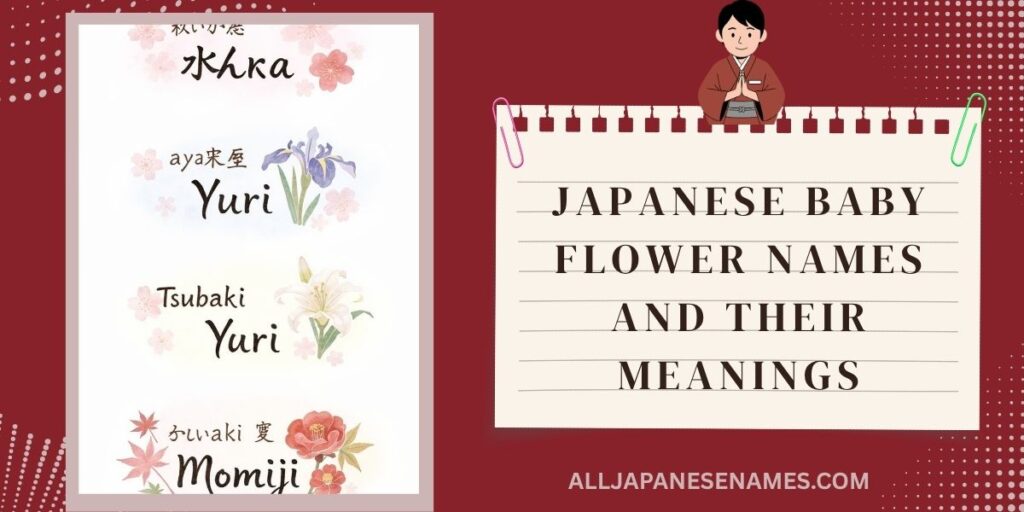
The choice of the right name for your child is among the most personal things you’ll make. If you’re looking for an appealing name that has significance and connects to something more than a fashion statement, Japanese baby flower names need a careful look.
The Japanese have a strict approach to naming their children. In Japan, naming isn’t random. Parents carefully consider the meaning of a name, how it sounds, and what type of life it could symbolize. The traditional naming choices in Japan tend to be more natural and flowers, particularly since flowers symbolize the seasons, growth, and the peaceful beauty of life as it moves forward.
There are many Japanese flower baby girl names that include names based on soft sounds as well as poetic interpretations. However, baby names inspired by flowers aren’t just reserved for girls from Japan. Boys can also get them. The difference lies in the character chosen: similar sound, distinct character, completely different style.
In the process of how Japanese households interpret names, they look at the kanji and not only the pronunciation. Two children called “Hana” could have totally different names in their records according to the characters that their parents picked. This depth is what makes these names so unique.
Here are some fresh Japanese baby flower names:
| Name | Meaning | Pronunciation | Kanji |
|---|---|---|---|
| Koharu | Little spring; warm, gentle, full of soft energy | koh-hah-roo | 小春 |
| Hanatsuki | Flower moon; born under something beautiful and rare | hah-nah-tsoo-kee | 花月 |
| Iroha | Colors of flowers; vibrant, expressive, one of a kind | ee-roh-hah | 色花 |
| Satsuki | Fifth month flower; May blooms, fresh and full of life | sah-tsoo-kee | 皐月 |
| Hanami | Flower viewing; a life worth stopping to appreciate | hah-nah-mee | 花見 |
| Kikuha | Chrysanthemum leaf; steady, noble, quietly strong | kee-koo-hah | 菊葉 |
| Natsume | Jujube flower; sweet, nourishing, full of natural goodness | nah-tsoo-meh | 棗 |
| Haruna | Spring vegetable blossom; fresh, healthy, full of growth | hah-roo-nah | 春菜 |
| Himeka | Princess flower; delicate, elegant, quietly regal | hee-meh-kah | 姫花 |
| Rinka | Crisp, dignified flower; sharp beauty with a calm center | reen-kah | 凛花 |
| Tōka | Lantern flower; a light that guides others gently | toh-kah | 灯花 |
| Sumika | Clear flower; pure heart, transparent and honest | soo-mee-kah | 澄花 |
| Hanayo | Flower generation; someone who carries beauty forward | hah-nah-yoh | 花代 |
| Miaka | Beautiful flower; simple, timeless, genuinely lovely | mee-ah-kah | 美花 |
| Yūha | Gentle flower; kind-natured, soft-spoken, warmly present | yoo-hah | 優花 |
| Nanaka | Seven flowers; luck, abundance, and a colorful life | nah-nah-kah | 七花 |
| Tsukiha | Moon flower; someone who shines brightest at night | tsoo-kee-hah | 月花 |
| Kotoka | Harp flower; musical soul, harmonious and expressive | koh-toh-kah | 琴花 |
| Sakiho | Blooming grain spike; life that grows and gives abundantly | sah-kee-hoh | 咲穂 |
| Hanae | Flower blessing; a child who feels like a gift | hah-nah-eh | 花恵 |
| Chiha | A thousand flowers; endless beauty, limitless potential | chee-hah | 千花 |
| Shizuka | Quiet flower; still, peaceful, never needs to be loud | shee-zoo-kah | 静花 |
| Mihana | Flower of depth; more layers than you first expect | mee-hah-nah | 深花 |
| Naraha | Ancient city flower; rooted in history and tradition | nah-rah-hah | 奈良花 |
| Ruiha | Lapis flower; rare, precious, deeply colored | roo-ee-hah | 瑠花 |
| Hiyori | Fair weather flower; someone who brings calm, clear days | hee-yoh-ree | 日和花 |
| Kanaho | Wish-fulfilling flower; dreams that actually come true | kah-nah-hoh | 叶花 |
| Yukiha | Happiness flower; pure joy | yoo-kee-hah | 幸花 |
| Aika | Love flower; someone born to give and receive genuine love | ah-ee-kah | 愛花 |
| Mitsuka | Light flower; radiant, warm, hard to ignore | mee-tsoo-kah | 光花 |
| Haruka | Faraway flower; dreamy, free-spirited, always reaching further | hah-roo-kah | 遥花 |
| Naho | Rapeseed blossom; bright yellow fields, cheerful and open | nah-hoh | 菜花 |
| Kotoha | Words and flowers; a child who expresses beautifully | koh-toh-hah | 言花 |
| Fumiha | Abundant flower; richness not in money but in spirit | foo-mee-hah | 富花 |
| Shioha | Tidal flower; moves with rhythm, never forced | shee-oh-hah | 汐花 |
| Hinaho | Sunny flower spike; warm, upright, always facing the light | hee-nah-hoh | 陽花穂 |
| Tomika | Prosperous flower; a life full of good things, naturally earned | toh-mee-kah | 富花 |
| Reika | Lovely flower; graceful from the inside out | reh-ee-kah | 麗花 |
| Kazuha | Harmony flower; keeps the peace, holds things together | kah-zoo-hah | 和花 |
| Sōka | Imagined flower; a dreamer, creative and quietly inspired | soh-kah | 想花 |
| Hinaka | Sunny day flower; cheerful, dependable, always bright | hee-nah-kah | 日花 |
| Tokoha | Eternal flower; something that never fully fades | toh-koh-hah | 常花 |
| Mahana | True flower; genuine, honest, no pretending | mah-hah-nah | 真花 |
| Naruha | Becoming flower; a child still growing into their full beauty | nah-roo-hah | 成花 |
| Sakuha | Blooming flower; always in the act of opening up | sah-koo-hah | 咲花 |
| Ōka | Cherry blossom flower; classic, beloved, timeless in Japan | oh-kah | 桜花 |
| Fuyuha | Winter flower; strong enough to bloom in the cold | foo-yoo-hah | 冬花 |
| Izuha | Spring water blossom; refreshing, clear, naturally calming | ee-zoo-hah | 泉花 |
| Mikaho | Three flower spikes; balance, harmony, triple blessings | mee-kah-hoh | 三花穂 |
| Noriha | Ceremonial flower; born with purpose and graceful presence | noh-ree-hah | 典花 |
Looking for beautiful and meaningful Japanese baby names with cultural inspiration? Explore the complete Japanese baby names collection .
Japanese Flower Names For Tattoos
Tattoos have meaning. If you’re planning to apply something permanent to your body, you’d like it to convey how you feel and not appear cool.
This is exactly the reason Japanese flower tattoos are so well-known worldwide. Japanese tattoos have always seen the flowers as more than just decoration. It is believed that in Japanese aesthetics, each flower and every stem hue conveys a particular emotion. The floral imagery of Japanese art spans millennia, from woodblock prints, kimono patterns, and temple art. The same symbols that were featured in earlier Japanese art can be seen on the skin, carrying those similar meanings layered on top.
The most appealing aspect? It doesn’t require tattooing the entire scene. A simple name, in kanji, has the potential to carry immense weight. One character or two-character combo becomes a cherished part of Japanese aesthetics in your appearance.
Here are some Japanese flower names perfect for tattoos, each one meaningful, visually striking, and rooted in real Japanese culture:
| Name | Meaning | Pronunciation | Kanji |
|---|---|---|---|
| Hanagokoro | Heart of a flower; someone who feels everything deeply | hah-nah-goh-koh-roh | 花心 |
| Reimei | Beautiful life force; the quiet power that makes flowers grow | reh-ee-meh-ee | 麗命 |
| Kagetsu | Flower and moon together; beauty that exists in contrast | kah-geh-tsoo | 花月 |
| Enshō | Flame flower; passion that burns steady, not reckless | en-shoh | 炎花 |
| Fujimoto | Wisteria origin; rooted in grace, growing with purpose | foo-jee-moh-toh | 藤本 |
| Seiran | Blue orchid; rare beauty, calm strength | seh-ee-rahn | 青蘭 |
| Kokuhana | Black flower; mystery, elegance, quiet rebellion | koh-koo-hah-nah | 黒花 |
| Reimu | Spirit dream flower; something between the real and the sacred | reh-ee-moo | 霊夢 |
| Tōbana | Faraway flower; longing, distance, something just out of reach | toh-bah-nah | 遠花 |
| Kageyuri | Shadow lily; beauty that lives in the quiet, overlooked places | kah-geh-yoo-ree | 影百合 |
| Shōka | Rising flower; growth that cannot be stopped | shoh-kah | 昇花 |
| Mugen | Infinite dream flower; endless imagination, boundless spirit | moo-gen | 夢幻花 |
| Arashi | Storm flower; blooms hardest when conditions are roughest | ah-rah-shee | 嵐花 |
| Byakudan | Sandalwood blossom; sacred, grounding, quietly powerful | byah-koo-dahn | 白檀花 |
| Kōka | Radiant flower; impossible to dim, naturally luminous | koh-kah | 光花 |
| Zangetsu | Lingering moon flower; beauty that stays with you long after it’s gone | zahn-geh-tsoo | 残月花 |
| Hakunen | White year flower; pure time, a life lived cleanly | hah-koo-nen | 白年 |
| Sōran | Blue-green orchid; wild beauty, untamed and honest | soh-rahn | 蒼蘭 |
| Hibana | Spark flower; a moment of brilliance that changes everything | hee-bah-nah | 火花 |
| Fūrin | Wind chime flower; delicate sound, movement with the breeze | foo-reen | 風鈴花 |
| Getsuka | Moonlit flower; only fully seen in the dark | geh-tsoo-kah | 月花 |
| Rekkō | Fierce light flower; strength that shines even when it burns | rek-koh | 烈光花 |
| Shirogane | Silver flower; rare, precious, catches light differently | shee-roh-gah-neh | 白銀花 |
| Yōka | Enchanting flower; mysterious, a little otherworldly | yoh-kah | 妖花 |
| Meigetsu | Bright moon flower; clarity that comes after long darkness | meh-ee-geh-tsoo | 明月花 |
| Kakuran | Crane orchid; longevity and elegance paired together | kah-koo-rahn | 鶴蘭 |
| Kurohana | Dark blossom; strength found in shadow, not in light | koo-roh-hah-nah | 黒花 |
| Tōgetsu | See-through moon flower; honesty, nothing hidden | toh-geh-tsoo | 透月花 |
| Inazuma | Lightning flower; fast, electric, never forgotten | ee-nah-zoo-mah | 稲妻花 |
| Ryōka | Cool breeze flower; refreshing presence, calm in every room | ryoh-kah | 涼花 |
| Kenpō | Sword fragrance flower; sharp beauty, elegant edge | ken-poh | 剣芳 |
| Yamabuki | Mountain rose; resilience and golden beauty on rough terrain | yah-mah-boo-kee | 山吹 |
| Kasagake | Hat flower; protective, covering, quietly sheltering others | kah-sah-gah-keh | 笠花 |
| Zanei | Lingering shadow flower; what stays after someone is gone | zahn-eh-ee | 残影花 |
| Rōka | Bright and cheerful flower; honest joy, no pretense | roh-kah | 朗花 |
| Tensui | Heavenly water flower; something pure that fell from above | ten-soo-ee | 天水花 |
| Yamiha | Darkness flower; bloom that finds a way even without light | yah-mee-hah | 闇花 |
| Kūka | Sky flower; boundless, open, free above everything | koo-kah | 空花 |
| Senkō | Flash of light flower; a brilliant moment that defines everything | sen-koh | 閃光花 |
| Maboroshi | Phantom flower; something beautiful that feels almost unreal | mah-boh-roh-shee | 幻花 |
| Fukamidori | Deep forest green flower; ancient, grounded, full of life | foo-kah-mee-doh-ree | 深緑花 |
| Reion | Spirit sound flower; something felt before it’s ever heard | reh-ee-on | 霊音花 |
| Kazeshiro | White wind flower; moves freely, leaves no trace, stays pure | kah-zeh-shee-roh | 風白花 |
| Utsuroi | Changing flower; embraces transformation instead of fearing it | oo-tsoo-roh-ee | 移ろい花 |
| Akatsuki | Dawn flower; the first bloom of a new beginning | ah-kah-tsoo-kee | 暁花 |
| Tsurugi | Sword flower; disciplined beauty, sharp and purposeful | tsoo-roo-gee | 剣花 |
| Shizenka | Nature’s own flower; untouched, raw, perfectly imperfect | shee-zen-kah | 自然花 |
| Murasame | Passing rain flower; temporary, tender, quietly moving | moo-rah-sah-meh | 村雨花 |
| Byakuya | White night flower; blooms in the midnight sun, rare and striking | byah-koo-yah | 白夜花 |
| Eikyū | Eternal flower; what lasts long after everything else fades | eh-ee-kyoo | 永久花 |
Most Popular Japanese Flower Tattoo Names And Symbolism
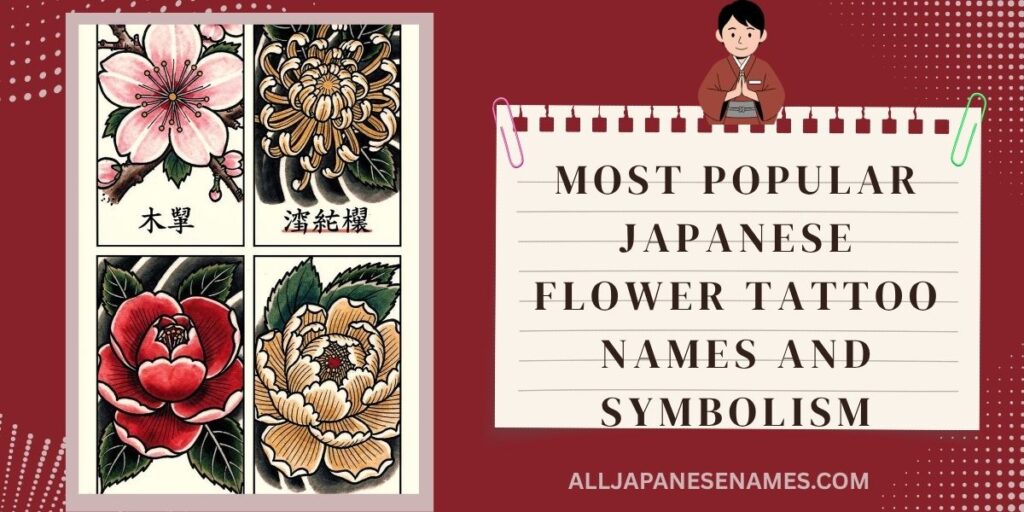
There’s a difference between the look of a tattoo and one that is meant to mean something. Japanese flower tattoos fall into this second category, and that’s the reason why they’ve remained in fashion.
Japan is among the finest flower languages around the globe. Hanakotoba has meanings that go beyond “this flower is pretty.” Every bloom tells a story. Every flower combination sends an individual message. If you put the Japanese floral design on your body, it will carry a long-standing message in your body, regardless of whether the people in your vicinity know about it or not.
This is the power of quiet floral symbolism in Japanese culture. Japanese symbols don’t shout. They whisper. People who are able to know them feel they are whispering deeply.
This list is focused on names that are connected to actual hanakotoba meanings and floral symbolism names that merit tattooing, as they convey a message that is true.
Here are some popular Japanese flower tattoo names with their symbolism:
| Name | Meaning | Pronunciation | Kanji |
|---|---|---|---|
| Kanshōka | Gratitude flower; worn by people who carry thankfulness as a value | kahn-shoh-kah | 感謝花 |
| Meika | Life flower; the belief that life itself is the most beautiful thing | meh-ee-kah | 命花 |
| Fukuen | Blessed connection flower; fate bringing the right people together | foo-koo-en | 福縁 |
| Shinpū | Divine wind flower; strength that comes from something greater than yourself | sheen-poo | 神風花 |
| Kanoka | Granted wish flower; a dream that finally came true | kah-noh-kah | 叶花 |
| Taiyo | Sun flower (Japanese version); warmth that radiates outward to everyone | tah-ee-yoh | 太陽花 |
| Kizuna | Bond flower; ties between people that cannot be broken | kee-zoo-nah | 絆花 |
| Seiryū | Clear stream flower; a pure path, moving forward without getting muddy | seh-ee-ryoo | 清流花 |
| Fukuran | Fortune orchid; rare luck, the kind that only comes to those who wait | foo-koo-rahn | 福蘭 |
| Jōnetsu | Passion flower (Japanese symbol); burning feeling that never fully cools | joh-neh-tsoo | 情熱花 |
| Chinkon | Soul-soothing flower; rest, peace, comfort after great pain | cheen-kon | 鎮魂花 |
| Eika | Prosperity flower; a life that grows richer over time | eh-ee-kah | 栄花 |
| Mukyū | Endless flower; something that keeps going no matter what | moo-kyoo | 無窮花 |
| Kanpū | Cold wind flower; beauty that endures harsh conditions | kahn-poo | 寒風花 |
| Shōmei | Illumination flower; the moment something becomes suddenly clear | shoh-meh-ee | 照明花 |
| Yuishō | Lineage flower; honoring where you came from, carrying it proudly | yoo-ee-shoh | 由緒花 |
| Honoka | Grain blossom; quiet abundance, the reward of patience | hoh-noh-kah | 穂花 |
| Tamashii | Soul flower; the core of who someone truly is | tah-mah-shee-ee | 魂花 |
| Shūka | Autumn blossom symbol; maturity, harvest, and earned wisdom | shoo-kah | 秋花 |
| Reiwa | Beautiful harmony flower; named after Japan’s current imperial era — order and peace | reh-ee-wah | 令和花 |
| Kaihō | Freedom flower; the feeling of finally letting something go | kah-ee-hoh | 解放花 |
| Shinjitsu | Truth flower; worn by people who value honesty above everything | sheen-jee-tsoo | 真実花 |
| Nagare | Flowing flower; going with life instead of fighting it | nah-gah-reh | 流花 |
| Kōfuku | Happiness flower; the hanakotoba symbol for genuine, lasting joy | koh-foo-koo | 幸福花 |
| Ikusa | Battle flower; strength and grace existing side by side | ee-koo-sah | 戦花 |
| Hakanasa | Fleeting flower; the beauty in knowing something won’t last forever | hah-kah-nah-sah | 儚花 |
| Meiyo | Honor flower; living in a way you’d never be ashamed of | meh-ee-yoh | 名誉花 |
| Fumetsu | Immortal flower; the spirit that outlives the body | foo-meh-tsoo | 不滅花 |
| Odayaka | Gentle calm flower; a person who makes every room quieter and better | oh-dah-yah-kah | 穏花 |
| Tenshō | Heaven-shining flower; connected to Amaterasu, the Japanese sun goddess | ten-shoh | 天照花 |
| Kioku | Memory flower; holding someone close even after they’re gone | kee-oh-koo | 記憶花 |
| Yuuki | Courage flower; not the absence of fear — acting anyway | yoo-kee | 勇気花 |
| Kaname | Core flower; the essential part — what holds everything together | kah-nah-meh | 要花 |
| Chinmoku | Silence flower; the floral symbolism of saying everything without words | cheen-moh-koo | 沈黙花 |
| Unmei | Destiny flower; the path that was always meant for you | oon-meh-ee | 運命花 |
| Kokoro | Heart flower; pure feeling, unfiltered emotion, the truest self | koh-koh-roh | 心花 |
| Hōsha | Repayment flower; giving back what was given to you with love | hoh-shah | 報謝花 |
| Sōzō | Creation flower; the spark behind every new thing made | soh-zoh | 創造花 |
| Mikoto | Sacred life flower; used in Shinto contexts — a name with divine weight | mee-koh-toh | 命花 |
| Kirameki | Glittering flower; a moment of brilliance that makes everything worth it | kee-rah-meh-kee | 煌花 |
| Aware | Bittersweet flower; the Japanese concept of mono no aware — beauty mixed with sadness | ah-wah-reh | 哀愁花 |
| Furusato | Hometown flower; the ache of missing where you came from | foo-roo-sah-toh | 故郷花 |
| Satori | Enlightenment flower; the moment of sudden understanding in Zen Buddhism | sah-toh-ree | 悟花 |
| Mirai | Future flower; hope pointed forward, not backward | mee-rah-ee | 未来花 |
| Kanpeki | Perfection flower; the pursuit of excellence, not flawlessness | kahn-peh-kee | 完璧花 |
| Ikigai | Reason-for-being flower; the Japanese concept of finding your true purpose | ee-kee-gah-ee | 生き甲斐花 |
| Shizen | Natural flower; living in harmony with the world, not against it | shee-zen | 自然花 |
| Omoiyari | Empathy flower; caring for others before yourself — a core Japanese value | oh-moh-ee-yah-ree | 思いやり花 |
| Netsujō | Burning passion flower; a sophisticated flower language symbol for intense, focused drive | neh-tsoo-joh | 熱情花 |
| Fukaki | Profound flower; the kind of meaning that takes years to fully understand | foo-kah-kee | 深花 |
How To Choose The Right Japanese Flower for Your Tattoo
The process of selecting the right flowers for a tattoo isn’t about just what looks nice on skin. It’s about how it feels to you.
Begin with the meaning. Consider what you desire to carry always. Do you want strength? Loss? Love? New beginnings? When you feel the emotion that you are experiencing, finding that appropriate flower becomes much easier.
Here’s an easy approach to consider it:
- Are you looking to symbolize the strength of your character? Ume (plum blossom) blooms in winter when snow falls. It’s designed for this meaning.
- A way to mark a goodbye or loss? Higanbana (red web lily) is the most common choice in Japanese tradition.
- Looking to make a new start? Sakura is a great choice, but Kobushi magnolia is well too.
- Expressing deep, lasting love? Tsubaki (camellia) can carry this weight without shouting about it.
It is also important to know that certain flowers carry heavier cultural baggage than others. For example, Higanbana is closely associated with funerals as well as graveyards throughout Japan. It’s not an issue for tattoos, but it’s important to know the tattoo you’re going to choose.
Contact a tattoo artist who can understand Japanese aesthetics. The correct flower and the perfect location tell a full story. No words are required.
Conclusion
Japanese flower names aren’t simply names. Every flower in Japan is a tale of a time and a mood, as well as an item with cultural significance that goes back to the past.
Beginning with the fleeting nature of sakura falling in the early spring months or the peaceful strength of plum blossoms bursting through the cold winter months, flowers in Japan are a real thing. It is the cherry blossom alone that has shaped the way that a nation views beauty and time, as well as the ability to let go.
If you’re here to find pretty Japanese flower names for babies, tattoos, or just to get a better understanding of floral symbolism, Japan offers more than an idea. It offers a complete feeling that is wrapped in the word.
Traditional Japanese culture created something unique, that is, a place where flowers communicate. You now know the meaning behind what flowers are saying.
This is the appeal in Japanese flower names. It’s simple on the outside. Unending beneath.
Frequently Asked Questions
Q1: What Is the Most Popular Flower in Japan?
A: Sakura is considered to be the most popular flower in Japan by a large distance. It is believed that the cherry blossom is so deeply associated with Japanese culture that the whole nation follows its annual blossom on national forecasts of the weather.
Every year, millions of people gather in the shade of cherry blossom trees for hanami celebrations, which are flower viewing events. There is no other flower in Japan that can even come close to that amount of love for culture.
Q2: What Flower Symbolizes Love in Japanese Culture?
A: Numerous flowers symbolise love in Japanese tradition, roses have the most romantic significance. Red roses, aka bara, mean deep, passionate love, just like in Western culture.
However, the Japanese flower language Hanakotoba gives more depth through the color. Red roses symbolize love and passion, white roses symbolize pure love, and yellow roses are actually a sign of jealousy. Therefore, if you’re planning to gift roses in Japan, the color you choose is important.
Q3: What Flower Symbolizes Death in Japan?
A: Higanbana, the red spider lily, has become the flower that is most strongly associated with a symbol of death within Japan. It blooms in the fall Buddhist equinox and is typically found in graveyards and burial grounds.
This plant’s Japanese name literally means “flower of the other shore,” which refers to the afterlife. Therefore, gifting an individual higanbana as a present is considered to be a sin in Japanese tradition.
Q4: How Do You Say Beautiful Flower in Japanese?
A: The expression “beautiful flower” in Japanese is 美しい花 that is pronounced utsukushii hana. In daily flower vocabulary, Japanese speakers may also use 綺麗な花 (kirei na hana), which means “pretty flower” and is typically spoken in casual conversation.
Both are true, however the kirei na Hana pronunciation is more natural in everyday conversation, and utsukushii has the same, but with a more poetic meaning.
Q5: Can Japanese Flower Names Be Used as Baby Names?
A: Yes, they are often used in Japan. The flower-themed Japanese names rank among the most enduring and well-loved baby names in the country.
Names such as Sakura, Yuri, Sumire, and Renge have been handed down to children over the years. These names are great since they sound soothing, carry positive meanings, and bring the child closer to the natural world. Modern and traditional Japanese names are heavily influenced by flowers, which makes these names a timeless and significant selection.
