
Japanese girl names have something magical that’s difficult to explain. They are calming, meaningful, and gorgeous at the same time. If you’re browsing through endless lists, being more confused than at the beginning, you’re not alone. Finding the perfect Japanese names for girls is not about sounding pretty, it’s about finding a name that has meaning or has an interesting story to it.
Japan is home to one of the largest naming traditions in the world. Japanese traditions treat names like poems. Names can be a source of words, such as the moon, blossoms of cherry, as well as inner strength, according to the kanji character the parents pick. This is the reason why baby names from Japan are so different from others.
This guide includes many popular names, with definitions, so that you don’t have to guess and begin to make your choices instantly.
Understanding Japanese Girl Names: Culture, Kanji, And Meaning
One thing that is surprising to many people with Japanese girls names is the amount of thought that is put into them. It’s more than just picking names that sound nice. In Japan, names are something like a message which is carefully chosen, with an actual purpose behind every character.
This is the place where it becomes interesting. Japanese writing applies different methods, and names are often written with the kanji characters. Every kanji is a symbol with its specific significance. Therefore, two girls might be identical in Japanese pronunciation, such as “Hana”, but their names can mean different things based on the kanji script the parents chose. One kanji may be a reference to “flower,” another might be a reference to “happiness,” and yet another might mean “bright.” Same sound, completely different meaning.
This is the reason short Japanese girl names can seem so multi-layered. There’s always more happening under the surface than you can hear on the surface.
Certain names are also written in hiragana, which is a more simple Japanese style of writing that concentrates more on sound than. Parents may opt for hiragana to create a softer looking, more delicate appearance, giving the name the appearance of a soft touch.
The majority of Japanese female names consist of two to three syllables, which is why they are so easy and rhythmic to hear. Also, foreign words sometimes get adapted to Japanese names by comparing them to syllables that naturally fit into the Japanese language.
Knowing this process makes picking names much more straightforward and, in all honesty, much more enjoyable.
Looking for more meaningful Japanese boy names? Explore the complete Japanese male names collection .
Most Popular Japanese Girl Names in 2026
If you’re putting together lists for your baby name lists and want something modern yet still has a strong connection to traditions, this section is perfectly suitable for you. The most popular Japanese girl names for 2026 tend to be names that are gentle with strong kanji significance and are more timeless than fashionable.
Japanese parents are today selecting names for their little girls that balance beauty with depth. You’ll see a mixture of these names, some are classic Japanese names for females, which have been loved for years, others include more traditional Japanese girl names that have been passed over generations, and there are a few that are well-known Japanese girl names of the 2000s, which are getting a makeover. If you’re looking for a classic name to name your daughter or something new, the list below has it covered.
These are some of the popular girl names trending in Japan in the present:
| Name | Meaning | Pronunciation | Kanji |
|---|---|---|---|
| Himari | Sunflower, light and warmth | hee-mah-ree | 陽葵 |
| Sakura | Cherry blossom | sah-koo-rah | 桜 |
| Aoi | Blue, hollyhock flower | ah-oh-ee | 葵 |
| Yui | Bind, tie together | yoo-ee | 結衣 |
| Rin | Dignified, cold, companion | reen | 凛 |
| Koharu | Small spring, warm autumn sky | koh-hah-roo | 小春 |
| Ichika | One thousand flowers, graceful | ee-chee-kah | 一花 |
| Misaki | Beautiful bloom, cape | mee-sah-kee | 美咲 |
| Yuna | Gentle, kindness | yoo-nah | 優奈 |
| Akari | Light, brightness | ah-kah-ree | 明里 |
| Noa | My love, affection | noh-ah | 乃愛 |
| Hana | Flower, blossom | hah-nah | 花 |
| Sora | Sky | soh-rah | 空 |
| Mei | Bright, beautiful | meh-ee | 芽依 |
| Riko | Child of truth, jasmine child | ree-koh | 理子 |
| Tsuki | Moon | tsoo-kee | 月 |
| Kokoa | Heart, love | koh-koh-ah | 心愛 |
| Miyu | Beautiful, gentle, superior | mee-yoo | 美夕 |
| Emi | Beautiful blessing, smile | eh-mee | 恵美 |
| Kaho | Summer fragrance, flower step | kah-hoh | 夏帆 |
| Risa | Village of truth, beautiful sand | ree-sah | 里沙 |
| Nanami | Seven seas, beautiful wave | nah-nah-mee | 七海 |
| Ayaka | Colorful flower, fragrant | ah-yah-kah | 彩花 |
| Kotone | Sound of a harp | koh-toh-neh | 琴音 |
| Shiori | Bookmark, poem, bending branches | shee-oh-ree | 栞 |
| Yuina | Gentle, beautiful | yoo-ee-nah | 結奈 |
| Mio | Beautiful thread, waterway | mee-oh | 澪 |
| Hinata | Sunny place, facing the sun | hee-nah-tah | 陽向 |
| Momoka | Peach blossom, fragrant flower | moh-moh-kah | 桃花 |
| Haruka | Distant, spring flower | hah-roo-kah | 春花 |
| Natsumi | Beautiful summer | nah-tsoo-mee | 夏美 |
| Kirara | Sparkling, glittering light | kee-rah-rah | 煌 |
| Sumire | Violet flower | soo-mee-reh | 菫 |
| Asahi | Morning sun | ah-sah-hee | 朝陽 |
| Tomoka | Wise, friendly flower | toh-moh-kah | 友花 |
| Wakana | Young greens, harmonious | wah-kah-nah | 若菜 |
| Suzume | Little sparrow | soo-zoo-meh | 雀 |
| Konomi | This beauty, favorite things | koh-noh-mee | 好美 |
| Amane | Heaven’s sound, peaceful sky | ah-mah-neh | 天音 |
| Fuuka | Wind flower, gentle fragrance | foo-kah | 風花 |
| Kokomi | Heart and beauty | koh-koh-mee | 心美 |
| Yuzuki | Gentle moon, citrus moon | yoo-zoo-kee | 柚月 |
| Hazuki | Leaf moon, August moon | hah-zoo-kee | 葉月 |
| Satsuki | May, fifth month | sah-tsoo-kee | 皐月 |
| Uzuki | April moon, deutzia flower | oo-zoo-kee | 卯月 |
| Mizuki | Beautiful moon, water moon | mee-zoo-kee | 水月 |
| Kotomi | Beautiful harp sound | koh-toh-mee | 琴美 |
| Ruriko | Lapis lazuli child | roo-ree-koh | 瑠璃子 |
| Sayuri | Small lily | sah-yoo-ree | 小百合 |
| Mahiro | True, calm, serene | mah-hee-roh | 真尋 |
| Kanon | Flower sound, gentle melody | kah-nohn | 花音 |
Looking for cute and meaningful Japanese baby names? Explore the complete Japanese baby names collection .
Cute Japanese Girl Names And What They Mean
Certain names make you smile every time you hear them. This is the eternal beauty of cute Japanese girl names. They have a soft and light feel that is also warm at the same time. The reason for this is due to the way they’re constructed. Short names, vowel sounds that are open, and repeated syllables make an organic rhythm that’s difficult not to love.
Take Mei, for example. Two letters. One syllable. It signifies “bright” or “beautiful,” and it sounds exactly as it is. It could also mean Yumi, meaning “reason and beauty”, is a pretty name that feels both elegant and sweet. Names that are melodic are effective because they’re simple to pronounce, simple to recall, and are enriched with meaning.
If you’re in search of a cute name or a pretty name that doesn’t feel difficult or complicated, the list below of beautiful Japanese girl names is a good place to begin.
| Name | Meaning | Pronunciation | Kanji |
|---|---|---|---|
| Yumi | Reason and beauty | yoo-mee | 由美 |
| Mei | Bright, beautiful bud | meh-ee | 芽衣 |
| Momo | Peach | moh-moh | 桃 |
| Koko | Here, this place, heart | koh-koh | 心々 |
| Nana | Seven, greens | nah-nah | 奈々 |
| Ruru | Gentle, flowing | roo-roo | 瑠々 |
| Mika | Beautiful fragrance, new moon | mee-kah | 美香 |
| Suki | Beloved, liked | soo-kee | 好き |
| Haru | Spring, sunshine | hah-roo | 春 |
| Nami | Wave, beauty | nah-mee | 波 |
| Yaya | Abundance, joyful | yah-yah | 弥々 |
| Remi | Lovely, beautiful example | reh-mee | 麗美 |
| Kana | Powerful, beautiful added | kah-nah | 佳奈 |
| Suzu | Little bell | soo-zoo | 鈴 |
| Yoko | Positive, sunshine child | yoh-koh | 陽子 |
| Mari | True, mari ball, genuine | mah-ree | 真理 |
| Chibi | Small, tiny one | chee-bee | 小々 |
| Tomo | Friend, wisdom | toh-moh | 友 |
| Sae | Talented, clear, pure | sah-eh | 冴 |
| Niko | Smiling, sunshine | nee-koh | 二子 |
| Fumi | History, writing, beauty | foo-mee | 文美 |
| Kiku | Chrysanthemum | kee-koo | 菊 |
| Yuri | Lily flower | yoo-ree | 百合 |
| Nene | Peaceful, gentle sound | neh-neh | 寧々 |
| Hina | Young bird, sunshine greens | hee-nah | 陽菜 |
| Rena | Lovely, peaceful, reborn | reh-nah | 麗奈 |
| Sana | Brilliant, bright blossom | sah-nah | 咲奈 |
| Kira | Shining, glittery light | kee-rah | 綺良 |
| Mana | Love, affection, truth | mah-nah | 愛奈 |
| Yua | Tie with love, bound gently | yoo-ah | 結愛 |
| Moe | Budding, sprouting | moh-eh | 萌 |
| Riko | Child of logic and beauty | ree-koh | 梨子 |
| Aina | Love and affection, gentle | ah-ee-nah | 愛奈 |
| Yuyu | Gentle, free-spirited | yoo-yoo | 悠々 |
| Piko | Small, lively little one | pee-koh | 比子 |
| Chika | Scattered flowers, near and dear | chee-kah | 千花 |
| Yuna | Moonlit evening, gentle night | yoo-nah | 夕奈 |
| Miku | Beautiful sky, future beauty | mee-koo | 美空 |
| Tsumugi | Spun thread, woven silk | tsoo-moo-gee | 紬 |
| Kohana | Little flower | koh-hah-nah | 小花 |
| Sachi | Happiness, good fortune | sah-chee | 幸 |
| Natsu | Summer | nah-tsoo | 夏 |
| Yome | Young bride, gentle woman | yoh-meh | 嫁 |
| Koe | Voice, sound | koh-eh | 声 |
| Miu | Beautiful feather, gentle sea | mee-oo | 美羽 |
| Rika | True flower, fragrant blossom | ree-kah | 梨花 |
| Sayo | Small night, evening born | sah-yoh | 小夜 |
| Yoko | Ocean child, positive one | yoh-koh | 洋子 |
| Runa | Moon, gentle, bond | roo-nah | 月奈 |
| Tama | Jewel, precious gem | tah-mah | 玉 |
| Noa | Gentle movement, tranquil | noh-ah | 和奏 |
Unique And Rare Japanese Girl Names Nobody Else Has
If you’d like your daughter to be named in a way that is different, this section is worth reading. Many people are unaware that unique Japanese girl names do not always require a totally different sound. Sometimes all it takes is selecting different kanji to write the same name, and suddenly it’s got a completely new significance and feeling.
It’s among the most intriguing aspects of Japanese names. Two girls could be referred to as “Saki,” but one name may be a reference to “blossoming hope”, while the other is “early radiance”, just because parents choose different characters. Different kanji, the same pronunciation, but completely different identities. This is a degree of personal significance that you don’t find in other languages.
This list includes the rare Japanese girl names that you don’t come across in every playground. Some are soft and poetic. A few of them fall in that category called deep Japanese girl names, with significance that is tied to darkness, night, or mystery. A few parents love it because of the depth they bring to it. These are names that are unique and have distinct character.
If unique girl names with a powerful story appeal to you, then the following list will give you many options to choose from.
| Name | Meaning | Pronunciation | Kanji |
|---|---|---|---|
| Yoruha | Leaf of the night | yoh-roo-hah | 夜葉 |
| Kagemi | Reflection, mirror beauty | kah-geh-mee | 影美 |
| Kumoha | Cloud leaf, sky petal | koo-moh-hah | 雲葉 |
| Tomoshiro | White light of a friend | toh-moh-shee-roh | 友白 |
| Izayoi | Sixteenth night moon | ee-zah-yoh-ee | 十六夜 |
| Kurohana | Black flower | koo-roh-hah-nah | 黒花 |
| Yomiko | Child of reading, night child | yoh-mee-koh | 夜見子 |
| Shiragiku | White chrysanthemum | shee-rah-gee-koo | 白菊 |
| Kasumi | Mist, haze over water | kah-soo-mee | 霞 |
| Akeno | Bright shining field | ah-keh-noh | 明野 |
| Nuiko | Sewn child, delicate thread | noo-ee-koh | 縫子 |
| Tobari | Curtain of night, veil | toh-bah-ree | 帳 |
| Mikaze | Wind of the gods | mee-kah-zeh | 神風 |
| Ruruna | Lapis lazuli wave | roo-roo-nah | 瑠々奈 |
| Kagtsuki | Moon reflection | kah-geh-tsoo-kee | 影月 |
| Shinonome | Dawn light breaking through | shee-noh-noh-meh | 東雲 |
| Yamabiko | Mountain echo | yah-mah-bee-koh | 山彦 |
| Tatoe | Parable, story, metaphor | tah-toh-eh | 譬 |
| Fubuki | Snowstorm, blizzard | foo-boo-kee | 吹雪 |
| Tamazusa | Jeweled letter, rare message | tah-mah-zoo-sah | 玉章 |
| Miroku | Future blessing, inner light | mee-roh-koo | 弥勒 |
| Kurotsuki | Dark moon | koo-roh-tsoo-kee | 黒月 |
| Honoho | Flame, fire spirit | hoh-noh-hoh | 炎 |
| Nagomi | Harmony, peaceful feeling | nah-goh-mee | 和み |
| Shizuku | Water droplet | shee-zoo-koo | 雫 |
| Yukikaze | Snow wind | yoo-kee-kah-zeh | 雪風 |
| Tamayori | Soul gathering, spirit caller | tah-mah-yoh-ree | 玉依 |
| Seiryu | Blue-green dragon | seh-ee-ryoo | 青龍 |
| Hotaruko | Firefly child | hoh-tah-roo-koh | 蛍子 |
| Arashi | Storm, tempest | ah-rah-shee | 嵐 |
| Kizuna | Bond, deep connection | kee-zoo-nah | 絆 |
| Tomoyo | Friend of the world, wise | toh-moh-yoh | 友世 |
| Yashiro | Shrine, sacred white space | yah-shee-roh | 社 |
| Mizuiro | Water color, light blue | mee-zoo-ee-roh | 水色 |
| Ukifune | Floating boat | oo-kee-foo-neh | 浮舟 |
| Nowaki | Autumn gale, wild wind | noh-wah-kee | 野分 |
| Kamikaze | Divine wind | kah-mee-kah-zeh | 神風 |
| Yoiyami | Evening darkness, dusk | yoh-ee-yah-mee | 宵闇 |
| Tamaire | Jewel keeper | tah-mah-ee-reh | 玉入 |
| Shiranui | Unknown fire, sea fire | shee-rah-noo-ee | 不知火 |
| Kuroyuri | Black lily | koo-roh-yoo-ree | 黒百合 |
| Oboro | Misty, hazy moon | oh-boh-roh | 朧 |
| Hasekura | Long dark storehouse | hah-seh-koo-rah | 支倉 |
| Tsukiakari | Moonlight glow | tsoo-kee-ah-kah-ree | 月明り |
| Tamashii | Soul, spirit | tah-mah-shee-ee | 魂 |
| Yorimichi | Path of the night | yoh-ree-mee-chee | 夜道 |
| Kageroza | Shadow garden | kah-geh-roh-zah | 影薔薇 |
| Mizuhara | Water field, flowing plain | mee-zoo-hah-rah | 水原 |
| Yuugure | Twilight, end of day | yoo-oo-goo-reh | 夕暮れ |
| Kogarashi | Cold winter wind | koh-gah-rah-shee | 木枯らし |
| Kaerizaki | Flower that blooms again | kah-eh-ree-zah-kee | 返り咲き |
The name you pick isn’t required to be a unique idea or a strange-sounding name. This list demonstrates that it’s as easy as combining different characters, say, using the kanji meaning “shadow” instead of “light”, using the same base sound, can give the name a different persona.
This is the reason why unique girl names from Japan are very individual. The sound is only the beginning. The meaning is the place where the identity of the person is.
Looking for creative and catchy Japanese restaurant names? Explore the complete Japanese restaurant names collection .
Strong, Powerful, And Elegant Japanese Girl Names
Some parents do not want to name their child with a sound that is gentle and soft. Some parents want names that are powerful, names that are spoken of. This is precisely what happens with Japanese girl names. They are strong in both sound and meaning.
Take “Akira” For example, it’s the word that translates to “bright” and “clear,” however, the character behind it demonstrates the ability to think clearly and with a sharp mind. It’s a name that is effective in a boardroom or a classroom equally. The different character that a name such as Akira has is due to its kanji. Its written form of the name has the same meaning as how it is spoken out loud.
The strong Japanese girl names typically draw from the natural world, royalty, and the warrior’s traditions. Aristocratic Japanese girl names typically mix both strength and elegance in a refined style.
If you’re looking for to have a good name for a girl who feels assured with a timeless look, this listing was made to help you.
| Name | Meaning | Pronunciation | Kanji |
|---|---|---|---|
| Akira | Bright, clear, intelligent | ah-kee-rah | 明良 |
| Tomoe | Friend, blessing, wisdom | toh-moh-eh | 巴 |
| Masako | Righteous child, proper | mah-sah-koh | 雅子 |
| Noriko | Law, order, child of principles | noh-ree-koh | 典子 |
| Yoshiko | Good child, righteous | yoh-shee-koh | 良子 |
| Kazuha | Harmonious, thousand leaves | kah-zoo-hah | 和葉 |
| Reiko | Gracious child, elegant | reh-ee-koh | 麗子 |
| Sachiko | Child of happiness and fortune | sah-chee-koh | 幸子 |
| Fumiko | Child of literature, history | foo-mee-koh | 文子 |
| Hiroko | Generous child, broad minded | hee-roh-koh | 広子 |
| Teruko | Shining child, radiant | teh-roo-koh | 照子 |
| Kazuko | Harmonious child, peaceful one | kah-zoo-koh | 和子 |
| Midori | Green, fresh growth | mee-doh-ree | 緑 |
| Yukiko | Snow child, lucky child | yoo-kee-koh | 幸子 |
| Fumika | Beautiful writing, fragrance | foo-mee-kah | 文香 |
| Keiko | Blessed child, respectful | keh-ee-koh | 敬子 |
| Setsu | Seasonal, faithful, loyal | seh-tsoo | 節 |
| Tsubaki | Camellia flower, noble beauty | tsoo-bah-kee | 椿 |
| Izumi | Spring, fountain, flowing source | ee-zoo-mee | 泉 |
| Yoshino | Good field, righteous plain | yoh-shee-noh | 吉野 |
| Tokiko | Child of time, eternal | toh-kee-koh | 時子 |
| Mineko | Child of the peaks, strong summit | mee-neh-koh | 峰子 |
| Haruyo | Spring generation, new era | hah-roo-yoh | 春代 |
| Takara | Treasure, precious thing | tah-kah-rah | 宝 |
| Masumi | True clarity, pure beauty | mah-soo-mee | 真澄 |
| Shizuka | Quiet strength, calm | shee-zoo-kah | 静香 |
| Tsuruko | Crane child, noble bird | tsoo-roo-koh | 鶴子 |
| Nobuko | Faithful child, trust | noh-boo-koh | 信子 |
| Kimiko | Noble child, queen-like | kee-mee-koh | 君子 |
| Haruno | Spring field, open strength | hah-roo-noh | 春野 |
| Tamiko | Child of many beauties | tah-mee-koh | 多美子 |
| Yukiho | Snow step, graceful walk | yoo-kee-hoh | 雪歩 |
| Sadako | Chaste child, pure loyalty | sah-dah-koh | 貞子 |
| Kinuko | Silk child, smooth and refined | kee-noo-koh | 絹子 |
| Michiko | Child on the righteous path | mee-chee-koh | 道子 |
| Tokiwa | Eternal, everlasting rock | toh-kee-wah | 常磐 |
| Ayano | My colorful design, woven path | ah-yah-noh | 彩乃 |
| Sumiko | Child of clarity, pure one | soo-mee-koh | 澄子 |
| Yoshie | Righteous branch, good direction | yoh-shee-eh | 良枝 |
| Harue | Spring branch, growing strength | hah-roo-eh | 春枝 |
| Ikuko | Nurturing child, life giver | ee-koo-koh | 郁子 |
| Toshiko | Talented child, clever year | toh-shee-koh | 俊子 |
| Shigeko | Prosperous child, growing strong | shee-geh-koh | 茂子 |
| Katsuko | Victorious child, winner | kah-tsoo-koh | 勝子 |
| Ryoko | Refreshing child, dragon child | ryoh-koh | 龍子 |
| Kazuyo | Harmonious generation, peace | kah-zoo-yoh | 和代 |
| Taeko | Blessed child, many blessings | tah-eh-koh | 多恵子 |
| Fumino | Field of writing, scholarly plain | foo-mee-noh | 文野 |
| Kiyoko | Pure child, clean and clear | kee-yoh-koh | 清子 |
| Harumi | Spring beauty, clear season | hah-roo-mee | 春美 |
| Terumi | Shining beauty, radiant sea | teh-roo-mee | 照美 |
What separates these names is their enduring power. Names such as Michiko or Masako do more than sound great. It has the sort of character that lasts. These aren’t names that appear fashionable for a while and then disappear. They are dependable throughout the entire life span, starting from a young girl playing in the backyard to a woman in charge of an entire room.
Names are what they’re made of. They change with the person who wears them.
Popular Anime Girl Names And Their Real Japanese Meanings
If you’ve seen anime, you’ve likely been captivated by the name of a character at some moment. This is how many people get drawn to Japanese characters names in the anime. However, there’s a thing to know before you write your name on your birth certificate: anime names aren’t always formed the same way real Japanese names are.
Kanji is a common word used by writers in anime with a purpose that is poetic or dramatic. The name could be written using the Kanji for “star child”, but read in a different manner than what you’d think. Some characters have nicknames instead of their known names. Sometimes, two totally different characters share the same name but with totally different kanji, which can change the meaning completely.
This doesn’t mean that anime names aren’t good choices in real life. A lot of the names are based on real, everyday Japanese names. It’s important to know what the meaning of the name is in actual Japanese and not only what the show wanted it to appear to be.
Here are some most popular Japanese anime girl names with their actual meanings:
| Name | Meaning | Pronunciation | Kanji |
|---|---|---|---|
| Usagi | Rabbit, gentle moon spirit | oo-sah-gee | 兎 |
| Rukia | Flowing water, flowing beauty | roo-kee-ah | 流花 |
| Erza | Scarlet armor, warrior spirit | eh-roo-zah | 鎧 |
| Tohru | Passing through, transparent | toh-roo | 透 |
| Nagisa | Waterside, calm shore | nah-gee-sah | 渚 |
| Madoka | Circle, round and complete | mah-doh-kah | 円 |
| Homura | Flame, blaze | hoh-moo-rah | 焔 |
| Yashiro | Eight cities, shrine keeper | yah-shee-roh | 八尋 |
| Touka | Winter flower, passing petal | toh-kah | 冬花 |
| Rize | Beautiful understanding, wise | ree-zeh | 利世 |
| Nino | Second, gentle sound | nee-noh | 二乃 |
| Mitsuri | Three waters, flowing love | mee-tsoo-ree | 蜜璃 |
| Shinobu | Endurance, patience, to bear | shee-noh-boo | 忍 |
| Kanao | Flower tail, blooming end | kah-nah-oh | 花奈緒 |
| Nezuko | Snowball flower, red child | neh-zoo-koh | 禰豆子 |
| Makima | True island, real space | mah-kee-mah | 真島 |
| Power | Strength written in katakana | pah-wah | パワー |
| Nobara | Wild rose, field thorn | noh-bah-rah | 野薔薇 |
| Maki | True hope, rare flower | mah-kee | 真希 |
| Utaha | Song leaf, poetic voice | oo-tah-hah | 詩羽 |
| Chisato | Thousand villages, smart person | chee-sah-toh | 千里 |
| Takina | Waterfall, strong current | tah-kee-nah | 瀧奈 |
| Bocchi | Alone, solitary one | boh-chee | ぼっち |
| Nijika | Rainbow flower, colorful song | nee-jee-kah | 虹夏 |
| Ryou | Cool, refreshing, distant | ryoh | 涼 |
| Seika | Star flower, brilliant blossom | seh-ee-kah | 星花 |
| Taiga | Large river, mighty current | tah-ee-gah | 大河 |
| Minori | Truth, harvest, natural path | mee-noh-ree | 実り |
| Kushina | Long-lasting beauty, red hair | koo-shee-nah | 久志奈 |
| Konan | Small south, gentle direction | koh-nahn | 小南 |
| Temari | Hand ball, round and precise | teh-mah-ree | 手毬 |
| Sakuya | Blooming night, cherry evening | sah-koo-yah | 咲夜 |
| Yukino | Snow field, cold plain | yoo-kee-noh | 雪乃 |
| Iroha | Colors of life, full spectrum | ee-roh-hah | 伊呂波 |
| Yotsuha | Four leaves, fresh clover | yoh-tsoo-hah | 四葉 |
| Mitsuha | Three leaves, woven spirit | mee-tsoo-hah | 三葉 |
| Lain | Network, connected presence | reh-een | 玲音 |
| Chihiro | Thousand questions, wide seeker | chee-hee-roh | 千尋 |
| Nausicaa | Wind rider, sky wanderer | nah-oo-shee-kah | ナウシカ |
| Sheeta | Crystal, shining stone | shee-tah | シータ |
| Fio | Small flower, delicate life | fee-oh | フィオ |
| Sosuke | Helpful, supporting element | soh-soo-keh | 宗介 |
| Ponyo | Soft and round, cheerful being | pohn-yoh | ポニョ |
| Holo | Wise wolf, ancient spirit | hoh-roh | ホロ |
| Celty | Shadow rider, headless spirit | seh-ru-tee | セルティ |
| Anri | Peace benefit, gentle profit | ahn-ree | 杏里 |
| Kanade | Play music, sound of strings | kah-nah-deh | 奏 |
| Yuri | Reason, village, gentle flow | yoo-ree | 由里 |
| Tenshi | Angel, heavenly messenger | tehn-shee | 天使 |
| Kaori | Fragrance, scent of spring | kah-oh-ree | 香り |
| Tsubasa | Wings, freedom to fly | tsoo-bah-sah | 翼 |
One thing that you’ll see with the majority of Japanese anime girl names is that certain characters have names that have the same name across different shows, but have completely different meanings.
Kaori in one show could refer to “fragrance”, while another character who has a similar name uses different kanji, which can mean “beautiful reason.” That’s the reason nicknames in anime are like a personal touch, and often suggest the meaning behind the story that the creator picked for the character even if the viewers never get to see the character’s kanji in real life.
If you’re attracted by names from anime, it’s worth knowing which kanji was actually employed. This is where the true story unfolds.
Nature & Flower-Inspired Japanese Girl Names
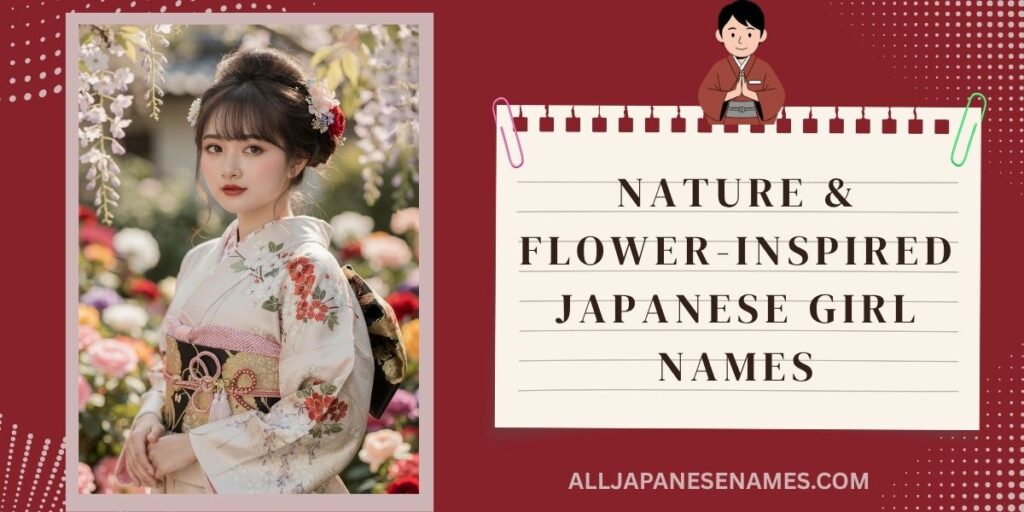
Japan is one of the strongest links in nature among any civilization around the globe. The changes in the seasons aren’t just about weather, but they’re also things that happen. People make plans for trips around cherry blossom time. Poets write about the initial frost. Artists paint exactly the color of light that reaches the lily water pond during the summer. It is therefore natural that natural-inspired Japanese girls’ names have become among the most popular names across the world.
It is said that the sakura flower, or cherry blossom, is perhaps the most famous symbol in the entire country of Japan. It blooms for only one day every spring, and that’s exactly why it holds an immense significance, meaning, and beauty that never lasts forever, making you feel more precious. Names that are associated with sakura convey the same sentiment of beauty that is gentle and fleeting.
There’s also the Japanese Iris, also known by the name of “kakitsubata,” which has been revered by Japanese poems and in art for a long time. It’s a water-loving plant and is a symbol of beauty and positive news. The lily is a symbol of pureness and rebirth. Each flower has its own unique character to the name.
Names such as Ayaka blend the concepts of colour and flower in a single word. Kozue refers to the point of a tree’s branch, that delicate point at which the first leaves appear. Additionally, Mizuki, although often associated with the moon and water, is also connected to the gorgeous water elm tree. The Japanese flower names for girls don’t only make cute names, they are real photos of the natural world within these names.
| Name | Meaning | Pronunciation | Kanji |
|---|---|---|---|
| Ayaka | Colorful flower, patterned blossom | ah-yah-kah | 彩花 |
| Kozue | Treetop, tip of a branch | koh-zoo-eh | 梢 |
| Mizuki | Water-elm tree, moon over water | mee-zoo-kee | 瑞樹 |
| Sakurako | Child of the sakura flower | sah-koo-rah-koh | 桜子 |
| Hanako | Flower child, blossom girl | hah-nah-koh | 花子 |
| Yuriko | Lily child, white flower girl | yoo-ree-koh | 百合子 |
| Kakitsubata | Japanese iris, water flower | kah-kee-tsoo-bah-tah | 燕子花 |
| Haruha | Spring leaf, seasonal petal | hah-roo-hah | 春葉 |
| Momiji | Autumn maple leaf, red foliage | moh-mee-jee | 紅葉 |
| Nadeshiko | Pink fringed carnation, ideal woman | nah-deh-shee-koh | 撫子 |
| Renka | Lotus flower, beautiful bloom | rehn-kah | 蓮花 |
| Fujiko | Wisteria child, hanging flower | foo-jee-koh | 藤子 |
| Kikuno | Chrysanthemum field | kee-koo-noh | 菊野 |
| Umenoko | Child of the plum blossom | oo-meh-noh-koh | 梅の子 |
| Tachibana | Wild orange blossom tree | tah-chee-bah-nah | 橘 |
| Shinriko | Forest child, woodland girl | sheen-ree-koh | 森里子 |
| Yamabuki | Yellow mountain rose | yah-mah-boo-kee | 山吹 |
| Nohana | Wildflower of the field | noh-hah-nah | 野花 |
| Tsubameko | Child of the swallow bird | tsoo-bah-meh-koh | 燕子 |
| Asagao | Morning glory flower | ah-sah-gah-oh | 朝顔 |
| Kurihana | Chestnut flower, autumn bloom | koo-ree-hah-nah | 栗花 |
| Tanpopo | Dandelion, bright yellow field flower | tahn-poh-poh | 蒲公英 |
| Shionagi | Swaying reed by the sea | shee-oh-nah-gee | 潮薙 |
| Kawatsuru | River crane, water bird grace | kah-wah-tsoo-roo | 川鶴 |
| Hanahime | Flower princess | hah-nah-hee-meh | 花姫 |
| Tokiwa | Evergreen, constant and steady | toh-kee-wah | 常葉 |
| Fujibana | Wisteria bloom, purple flower | foo-jee-bah-nah | 藤花 |
| Shimohana | Frost flower, winter petal | shee-moh-hah-nah | 霜花 |
| Tsutako | Child of the ivy vine | tsoo-tah-koh | 蔦子 |
| Harugiku | Spring chrysanthemum | hah-roo-gee-koo | 春菊 |
| Yomogi | Japanese mugwort, wild herb | yoh-moh-gee | 蓬 |
| Kusabana | Grass flower, meadow bloom | koo-sah-bah-nah | 草花 |
| Shidare | Weeping willow, drooping branch | shee-dah-reh | 枝垂れ |
| Kawayanagi | River willow, water branch | kah-wah-yah-nah-gee | 川柳 |
| Rengetsu | Lotus moon, water and light | rehn-geh-tsoo | 蓮月 |
| Yukibana | Snow flower, winter blossom | yoo-kee-bah-nah | 雪花 |
| Aoshiba | Green lawn, fresh turf | ah-oh-shee-bah | 青芝 |
| Higanbana | Red spider lily, equinox flower | hee-gahn-bah-nah | 彼岸花 |
| Kinmokusei | Sweet osmanthus, gold flower | keen-moh-koo-seh-ee | 金木犀 |
| Tsukikusa | Moonflower, night blooming herb | tsoo-kee-koo-sah | 月草 |
| Shirakaba | White birch tree, mountain beauty | shee-rah-kah-bah | 白樺 |
| Harukaze | Spring breeze, gentle wind | hah-roo-kah-zeh | 春風 |
| Natsuha | Summer leaf, warm season petal | nah-tsoo-hah | 夏葉 |
| Akihana | Autumn flower, fall blossom | ah-kee-hah-nah | 秋花 |
| Fuyuhana | Winter flower, cold season bloom | foo-yoo-hah-nah | 冬花 |
| Tsutsuji | Azalea, bright spring shrub | tsoo-tsoo-jee | 躑躅 |
| Hotaru | Firefly, soft summer light | hoh-tah-roo | 蛍 |
| Shirayuri | White lily, pure flower | shee-rah-yoo-ree | 白百合 |
| Nowahana | Field harmony flower | noh-wah-hah-nah | 野和花 |
| Mizuhana | Water flower, riverside bloom | mee-zoo-hah-nah | 水花 |
| Hanamichi | Flower path, blooming road | hah-nah-mee-chee | 花道 |
What is it that makes natural-inspired Japanese girl names unique is that they don’t refer to nature in a loose manner. Each name is connected to the specific species, flower, or season with its own unique culture in Japan. The sakura is more than just a beautiful flower. It is a symbol of the importance of brief, beautiful, precious moments. The lily is a symbol of pureness and new beginnings. The Japanese Iris has been used in poetry and art for more than 1,000 years.
If you choose the name from this list, it’s not just a matter of choosing an oblique sound. Your daughter will be connected to something Japan has loved for generations.
Looking for beautiful Japanese flower names with deep meanings? Explore the complete Japanese flower names collection .
Japanese Baby Girl Names: Beautiful Choices For Your Newborn
The choice of the name of your baby girl is one of the first decisions you’ll have as an adult. The name also remains in her life for the rest of time. This is a significant amount of weight for a single word. If you’re interested in Japanese baby girl names, you’re already aware that there’s something different about them. They are a sign of intention. Every name is a sign that it was picked with care and not merely because it sounded good that week.
Japanese parents contemplate what they would like their child to be when they decide on the first name. Names aren’t just a name to young children in Japanese culture. It’s more of an unspoken wish. Parents are asked: What qualities do I want my baby girl to carry through life? Strength? Kindness? Clarity? Then they search for the kanji with this meaning, and then build the name around it.
This is a great method of thinking about your perfect name.
If you’re a member of a Japanese American family, this procedure can be more meaningful. The perfect baby name that works across English-speaking and non-English-speaking areas and is respectful of Japanese roots isn’t easily found. However, many names that are soft enough to be able to function naturally as a first name in any country, without losing the Japanese character.
Here are some Japanese baby girl names worthy of taking into consideration for your baby’s name:
| Name | Meaning | Pronunciation | Kanji |
|---|---|---|---|
| Amaki | Heaven’s radiance, sky hope | ah-mah-kee | 天輝 |
| Haruka | Far away, spring brightness | hah-roo-kah | 遥 |
| Tomomi | Beautiful friend, wise and kind | toh-moh-mee | 友美 |
| Yoshimi | Good beauty, righteous charm | yoh-shee-mee | 良美 |
| Kasane | Layers, piled blessings | kah-sah-neh | 重ね |
| Narumi | Becoming beautiful, growing sea | nah-roo-mee | 成美 |
| Tamano | Jeweled field, gem plain | tah-mah-noh | 玉野 |
| Soraha | Sky leaf, open air petal | soh-rah-hah | 空葉 |
| Himeka | Princess flower, gentle noble | hee-meh-kah | 姫花 |
| Kiriko | Cut glass child, crystal clear | kee-ree-koh | 切子 |
| Yayoi | March, new growth, early spring | yah-yoh-ee | 弥生 |
| Masane | True blessing, honest layers | mah-sah-neh | 真実 |
| Yukiha | Snow petal, winter leaf | yoo-kee-hah | 雪葉 |
| Shinako | True child, sincere one | shee-nah-koh | 真奈子 |
| Amiko | Friend of heaven, sky companion | ah-mee-koh | 天友子 |
| Kohina | Small sunny greens, tiny warmth | koh-hee-nah | 小陽菜 |
| Haruno | Spring field, open bright plain | hah-roo-noh | 春乃 |
| Sunaho | Sandy step, honest walk | soo-nah-hoh | 砂歩 |
| Yotsuba | Four-leaf, lucky child | yoh-tsoo-bah | 四葉 |
| Kikuha | Chrysanthemum leaf, autumn petal | kee-koo-hah | 菊葉 |
| Akemi | Bright beauty, morning glow | ah-keh-mee | 明美 |
| Nanaho | Seven steps, flowering walk | nah-nah-hoh | 七歩 |
| Michiru | Filling up, becoming whole | mee-chee-roo | 満 |
| Tamaho | Jeweled walk, gem step | tah-mah-hoh | 玉歩 |
| Ayana | Colorful flower, woven design | ah-yah-nah | 彩奈 |
| Hinako | Sunny child, warm little one | hee-nah-koh | 陽奈子 |
| Ruriko | Lapis lazuli child, rare gem girl | roo-ree-koh | 琉璃子 |
| Sumika | Clear living, pure home | soo-mee-kah | 澄花 |
| Natsuko | Summer child, warm season girl | nah-tsoo-koh | 夏子 |
| Tomoka | Friend flower, wise blossom | toh-moh-kah | 朋花 |
| Fuyuko | Winter child, quiet season girl | foo-yoo-koh | 冬子 |
| Shinoha | Bamboo leaf, patient petal | shee-noh-hah | 篠葉 |
| Yukari | Fate, bond, connection | yoo-kah-ree | 縁 |
| Namiko | Wave child, ocean girl | nah-mee-koh | 波子 |
| Akino | Autumn field, fall plain | ah-kee-noh | 秋野 |
| Hanami | Flower viewing, blossom beauty | hah-nah-mee | 花見 |
| Moriko | Forest child, woodland girl | moh-ree-koh | 森子 |
| Tsubamena | Swallow greens, free bird | tsoo-bah-meh-nah | 燕菜 |
| Asuka | Tomorrow fragrance, flying bird | ah-soo-kah | 明日香 |
| Kanako | Flower child, graceful one | kah-nah-koh | 花奈子 |
| Suzuha | Bell petal, small ringing leaf | soo-zoo-hah | 鈴葉 |
| Harumi | Spring sea, bright tide | hah-roo-mee | 春海 |
| Kotoha | Word petal, language leaf | koh-toh-hah | 言葉 |
| Tamaiki | Jewel breath, precious life | tah-mah-ee-kee | 玉息 |
| Yukino | Snow plain, quiet white field | yoo-kee-noh | 雪野 |
| Fumika | Written flower, letter blossom | foo-mee-kah | 文花 |
| Amaha | Heaven petal, sky leaf | ah-mah-hah | 天葉 |
| Kiraha | Sparkling petal, shining leaf | kee-rah-hah | 煌葉 |
| Nagomi | Calm, soothing, gentle peace | nah-goh-mee | 和 |
| Kohaku | Amber, warm golden resin | koh-hah-koo | 琥珀 |
| Misuzu | Beautiful bell, clear chime | mee-soo-zoo | 美鈴 |
To Japanese American families, names such as Asuka, Ayana, or Kohaku are great as names that can be used as a first name in everyday American life. However, they still retain their Japanese roots. They’re easy for teachers, family members, and friends to pronounce without much practicing. The practical aspect is more important than most people realize, the child is a person’s name that they carry throughout every interaction and every day. every new place they step into.
The process of choosing the perfect name is all about finding the name that feels like it belongs to her before she’s even arrived.
Watch Beautiful Japanese Names for Girls
Discover beautiful Japanese names for girls with meanings, pronunciation, and unique name ideas in this helpful video guide.
Japanese Last Names For Girls That Sound As Beautiful As First Names
This is something that people who aren’t from Japan do not know: in Japan, the surname is given first. When you see someone introducing themselves by the name of “Tanaka Yuki,” Tanaka will be the name of the family, and Yuki will be their first name. This is the opposite of how names are used in the English-speaking world. This small change can mean the way you perceive and interpret Japanese names.
Japanese names for females, also known as surnames, are often linked to geography, nature, and family background. A lot of people describe the place the family came from, such as a mountain, a field, a river or a valley. Some point to a trade or a social standing that was passed over generations. In any case, Japanese female surnames carry just the same meaning as every first name.
| Name | Meaning | Pronunciation | Kanji |
|---|---|---|---|
| Aoyama | Blue mountain, green hill | ah-oh-yah-mah | 青山 |
| Shiratori | White bird, swan | shee-rah-toh-ree | 白鳥 |
| Miyazaki | Shrine cape, temple promontory | mee-yah-zah-kee | 宮崎 |
| Fujiwara | Wisteria plain, noble field | foo-jee-wah-rah | 藤原 |
| Hashimoto | Base of the bridge | hah-shee-moh-toh | 橋本 |
| Kinoshita | Beneath the trees | kee-noh-shee-tah | 木下 |
| Nishimura | West village, western settlement | nee-shee-moo-rah | 西村 |
| Hayashi | Forest, woodland grove | hah-yah-shee | 林 |
| Matsuda | Pine tree rice field | mah-tsoo-dah | 松田 |
| Shimizu | Clear water, clean spring | shee-mee-zoo | 清水 |
| Ogawa | Small river, little stream | oh-gah-wah | 小川 |
| Morita | Forest rice field, woodland farm | moh-ree-tah | 森田 |
| Nakagawa | Middle river, central stream | nah-kah-gah-wah | 中川 |
| Takahashi | High bridge, tall crossing | tah-kah-hah-shee | 高橋 |
| Inoue | Above the well, over the spring | ee-noh-oo-eh | 井上 |
| Miyamoto | Base of the shrine, temple root | mee-yah-moh-toh | 宮本 |
| Kawashima | River island, stream isle | kah-wah-shee-mah | 川島 |
| Noguchi | Field mouth, plain entrance | noh-goo-chee | 野口 |
| Ueda | Upper rice field, high farm | oo-eh-dah | 上田 |
| Tsuchiya | Earth house, soil home | tsoo-chee-yah | 土屋 |
| Harada | Original field, plain origin | hah-rah-dah | 原田 |
| Okamoto | Base of the hill, foot of slope | oh-kah-moh-toh | 岡本 |
| Maeda | Rice field in front, forward farm | mah-eh-dah | 前田 |
| Fujita | Wisteria rice field, flower farm | foo-jee-tah | 藤田 |
| Nakamura | Middle village, central settlement | nah-kah-moo-rah | 中村 |
| Taniguchi | Valley mouth, gorge entrance | tah-nee-goo-chee | 谷口 |
| Sakamoto | Base of the slope, hill root | sah-kah-moh-toh | 坂本 |
| Kuroda | Black rice field, dark farm | koo-roh-dah | 黒田 |
| Miyashita | Below the shrine, under the temple | mee-yah-shee-tah | 宮下 |
| Yamaguchi | Mountain mouth, hill entrance | yah-mah-goo-chee | 山口 |
| Kondo | Near the east, close to the hall | kohn-doh | 近藤 |
| Ishida | Stone rice field, rocky farm | ee-shee-dah | 石田 |
| Murata | Village rice field, hamlet farm | moo-rah-tah | 村田 |
| Kawamoto | Base of the river, stream root | kah-wah-moh-toh | 川本 |
| Uchida | Inner rice field, inside the farm | oo-chee-dah | 内田 |
| Hirano | Flat plain, wide open field | hee-rah-noh | 平野 |
| Koizumi | Small spring, little fountain | koh-ee-zoo-mee | 小泉 |
| Yamashita | Below the mountain, foot of the hill | yah-mah-shee-tah | 山下 |
| Nishida | Western rice field, sunset farm | nee-shee-dah | 西田 |
| Matsumoto | Base of the pine tree | mah-tsoo-moh-toh | 松本 |
| Takeuchi | Bamboo inside, bamboo dwelling | tah-keh-oo-chee | 竹内 |
| Naito | Inner east, inside the hall | nah-ee-toh | 内藤 |
| Yamada | Mountain rice field, hill farm | yah-mah-dah | 山田 |
| Tsukamoto | Base of the moon hill | tsoo-kah-moh-toh | 塚本 |
| Hattori | Weaver, cloth craftsperson | hah-ttoh-ree | 服部 |
| Shimazaki | Island cape, isle promontory | shee-mah-zah-kee | 島崎 |
| Kawaguchi | River mouth, stream opening | kah-wah-goo-chee | 川口 |
| Arakawa | Wild river, rough stream | ah-rah-kah-wah | 荒川 |
| Mizushima | Water island, river isle | mee-zoo-shee-mah | 水島 |
| Tanimoto | Base of the valley, gorge root | tah-nee-moh-toh | 谷本 |
| Kurosawa | Black swamp, dark marsh | koo-roh-sah-wah | 黒沢 |
Final Thoughts
Names are an extremely personal decisions parents can do. This article covers everything from cute and popular names to obscure strong, natural-inspired, and anime-loved names, along with surnames and baby names and the way in which the entire Japanese names system actually functions.
The only thing that holds everything together is the intention. Japanese parents don’t just choose an appropriate sound. They select kanji with care consider the meaning they would like their child to impart and view the entire process as something that is worth taking seriously.
No matter what name you pick among these, remember that the mindset of a person makes all the difference. A beautiful name that has an actual thought behind it will always have more meaning as compared to names picked randomly.
Be patient. The correct name is already all over the internet.
Frequently Asked Questions
Q1: What are the most popular Japanese girl names in 2026?
A: The most popular Japanese girl names in 2026 are Himari, Aoi, Koharu, Ichika, and Yui. These names are popular since they are soft and pleasant, possess significant kanji meanings and are timeless. Japanese parents are currently embracing names that blend simplicity with the depth.
Q2: What are some cute Japanese girl names with meanings?
A: Some cute Japanese girl names are Momo (peach), Hina (sunny greens), Suzu (little bell) along with Koko (heart). They are well-known because they make use of soft sounds, vowels that are open and short syllables that are naturally sweet and easy to pronounce.
Q3: What are some unique and rare Japanese girl names?
A: Unique Japanese girls names are Izayoi (sixteenth night-moon), Shinonome (breaking dawn), Fubuki (snowstorm) and Shizuku (water droplet). These names aren’t common in Japan which makes them an ideal choice for parents seeking unique.
Q4: What do Japanese girl names typically mean?
A: The majority of Japanese girl names have meanings connected to light, nature beauty, beauty, or positive qualities such as the ability to be kind and wise. The meaning of the name is dependent on the character kanji parents select, meaning two girls who share the same name could have totally different meanings behind it.
Q5: How do Japanese middle names for girls work?
A: Japanese people typically don’t have middle names. The typical person has one name given to them and one family name. There are some Japanese families living abroad include middle names for cultural or practical reasons, however japanese middle names for girls are not part of the norm of Japanese names.
Q6: Can non-Japanese families use Japanese girl names?
A: Yes, absolutely. A lot of non-Japanese families pick Japanese girl names because of their beauty in culture and the significance of Kanji. No matter if you’re from Asian roots or are an English girl with the name of a different culture, the most important thing is knowing the meaning of the name and uttering it in a respectful manner.
Q7: What are some Japanese twin girl names that pair well together?
A: A good japanese twin girl names include Haru and Natsu (spring and summer), Tsuki and Hoshi (moon and star) and Umi as well as Sora (sea and the sky). Names that are paired like these are a good choice because they share the same theme, but are solid on its individual.
Q8: Why are nature names so popular in Japan?
A: Japan is deeply rooted in its in the connection between seasons and the natural world. Names for nature are significant because they represent something tangible, flowers, seasons or the landscape. They are also well-worn and are as suitable to a child as an adult.
