
Japanese Sword Names can be difficult to locate, particularly when you are looking for something that is actually a reference to something. A majority of online lists offer identical five or six names and then call it a day. If you’ve tried searching for genuine, relevant Japanese sword names, you’ve experienced how difficult it is.
Japan is the home to one of the longest and most impressive sword-making traditions anywhere in the world. For more than 1000 years, Japanese craftsmen turned raw steel into weapons that were not just tools. They were symbols of honor, power, and identity. The swords they designed each had the name of the maker along with a story and even a soul.
When you’re naming characters or writing an essay or playing a game or just awed by Japanese culture as well as Japanese culture, a good sword name could make the world of difference. There are many kinds of Japanese swords and their names that many people don’t have the time to look at.
This list of names changes that. Each sword here has a significance, and a few of the names are ones that you’ve never seen before.
What Makes A Japanese Sword Name Special?
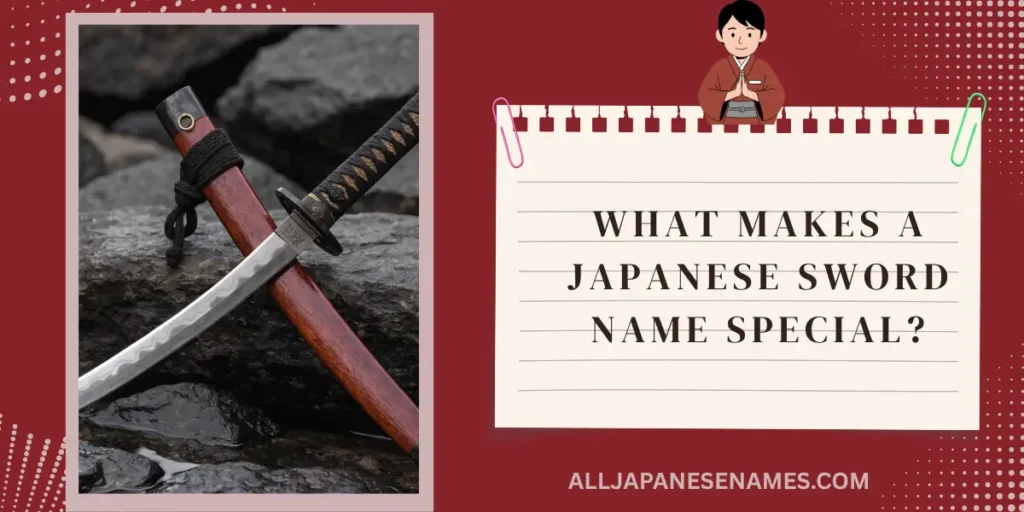
A name isn’t just a title in Japan, especially when it comes to swords. In the majority of societies, weapons are given their name for only one reason: to distinguish them from other weapons.
However, in Japan, it is totally different. The Japanese sword had an inscription that spoke to the spirit of the sword, its goal, and, sometimes, even the maker’s soul. This is what made Japanese sword-making distinct from other sword-making techniques anywhere else.
The swordsmiths of Japan weren’t only making sharp blades. They were also considered artists. Many were treated as religious figures. The entire procedure of Japanese bladesmithing was wrapped in the ritual of prayers, rites, fasting, and other strict rules before a smith even touched steel. This kind of dedication naturally influenced the way swordsmiths identified their work.
The art of making swords during the time of Japan is also connected to the Japanese culture, Japanese folklore, and Japanese myths. Names were typically drawn from nature, wind, water, and shadow.
Some were derived from legendary heroes, gods, or battles that were famous. There were also some bladed weapons that were even believed to have supernatural powers, making their names seem like a holy act.
The long sword-making history shaped a tradition in which every name was a signification for something tangible. It wasn’t just random or just cool words mixed.
This is the distinction. The art of making swords here is part craft, part religion, and part legacy. What about the names that grew from that tradition? They continue to carry the same weight even today.
Looking for beautiful Japanese flower names inspired by nature, culture, and symbolism? Explore the complete Japanese flower names collection .
Japanese Samurai Sword Names
When people think of Japanese samurai sword names, they generally imagine the same thing: the long, curved blade carried by an armored warrior dressed in silk armor, prepared to fight until the very end. This image has its roots in real history.
The samurai weren’t just fighters. They comprised a complete samurai class, a group of disciplined, highly trained people who adhered to an extremely strict code known as Bushido. Honesty, integrity, self-control, loyalty, and respect were their core values. And what about their samurai sword? It was more than just a weapon. It was a reflection of the person they were.
Every swordsman who was part of the samurai tradition was treated with reverence. Samurai swords passed down through generations and were named in honor of battles and even given names after famous samurai themselves. They weren’t just random names. Each of them had significance, importance, weight, and a sense of identity.
| Name | Meaning | Pronunciation | Kanji |
|---|---|---|---|
| Raikiri | lightning cutter | rai-kee-ree | 雷切 |
| Homura | flame, blazing fire | hoh-moo-rah | 焔 |
| Tsurugi | straight sword, blade of truth | tsoo-roo-gee | 剣 |
| Kagerou | heat haze, fleeting shadow | kah-geh-roh | 陽炎 |
| Fuujin | god of wind | foo-jin | 風神 |
| Onimaru | demon circle, demon blade | oh-nee-mah-roo | 鬼丸 |
| Rasetsu | fierce demon warrior | rah-seh-tsoo | 羅刹 |
| Byakko | white tiger | byah-koh | 白虎 |
| Kurogane | black steel, iron | koo-roh-gah-neh | 鉄 |
| Zankoku | ruthless, merciless blade | zan-koh-koo | 残酷 |
| Nenshou | burning spirit, combustion | nen-shoh | 燃焼 |
| Tesshin | iron heart, steel soul | teh-sheen | 鉄心 |
| Kamikaze | divine wind | kah-mee-kah-zeh | 神風 |
| Ankoku | darkness, pitch black | an-koh-koo | 暗黒 |
| Ryuusei | shooting star, meteor | ryoo-seh-ee | 流星 |
| Gouren | strong bond, iron chain | goh-ren | 強連 |
| Muramasa | violent or chaotic spirit | moo-rah-mah-sah | 村正 |
| Shingetsu | new moon, dark night blade | sheen-geh-tsoo | 新月 |
| Raijin | god of thunder and lightning | rah-ee-jin | 雷神 |
| Hagane | pure steel, refined blade | hah-gah-neh | 鋼 |
| Kogarashi | cold winter wind that strips leaves | koh-gah-rah-shee | 木枯らし |
| Jigoku | hell, the underworld | jee-goh-koo | 地獄 |
| Mizuchi | water dragon, river spirit | mee-zoo-chee | 蛟 |
| Tenkuu | heavenly sky, open air | ten-koo | 天空 |
| Zantetsu | iron-cutting blade | zan-teh-tsoo | 斬鉄 |
| Hibiki | echo, resonance, sound of a blade | hee-bee-kee | 響 |
| Ryuujin | dragon god, sea ruler | ryoo-jin | 龍神 |
| Akatsuki | red dawn, daybreak | ah-kah-tsoo-kee | 暁 |
| Kuurin | empty wheel, spinning void | koo-reen | 空輪 |
| Enma | king of hell, judge of souls | en-mah | 閻魔 |
| Fujin | wind god, breeze spirit | foo-jin | 風神 |
| Souken | twin swords, double blade | soh-ken | 双剣 |
| Yaiba | blade, sharp cutting edge | yah-ee-bah | 刃 |
| Seiken | holy sword, righteous blade | seh-ee-ken | 聖剣 |
| Arashi | storm, violent tempest | ah-rah-shee | 嵐 |
| Kurohana | black flower, dark blossom | koo-roh-hah-nah | 黒花 |
| Shippuu | swift wind, sudden gale | ship-poo | 疾風 |
| Tamashii | soul, spirit within the blade | tah-mah-shee | 魂 |
| Gekkou | moonlight, silver glow | geh-koh | 月光 |
| Kenshi | swordsman, blade master | ken-shee | 剣士 |
| Bakuzan | exploding mountain, violent force | bah-koo-zan | 爆山 |
| Shiden | purple lightning, violet flash | shee-den | 紫電 |
| Totsuka | ten-hands long blade, divine reach | toh-tsoo-kah | 十拳 |
| Kuroyuki | black snow, dark falling silence | koo-roh-yoo-kee | 黒雪 |
| Getsuga | moon fang, crescent slash | geh-tsoo-gah | 月牙 |
| Hayabusa | peregrine falcon, swift strike | hah-yah-boo-sah | 隼 |
| Mugen | infinite, limitless edge | moo-gen | 無限 |
| Reikon | spirit, ghost soul of the blade | reh-ee-kon | 霊魂 |
| Senkou | flash of light, sudden gleam | sen-koh | 閃光 |
| Katsujinken | sword that gives life, not takes it | kah-tsoo-jin-ken | 活人剣 |
These powerful Japanese sword names don’t simply contain cool words. Each tells a tale about the life of a warrior, a belief, or an event in the past that was important. If you’re creating an identity or just adore the tradition, the names of these characters carry the weight of every word.
Famous Japanese Sword Names
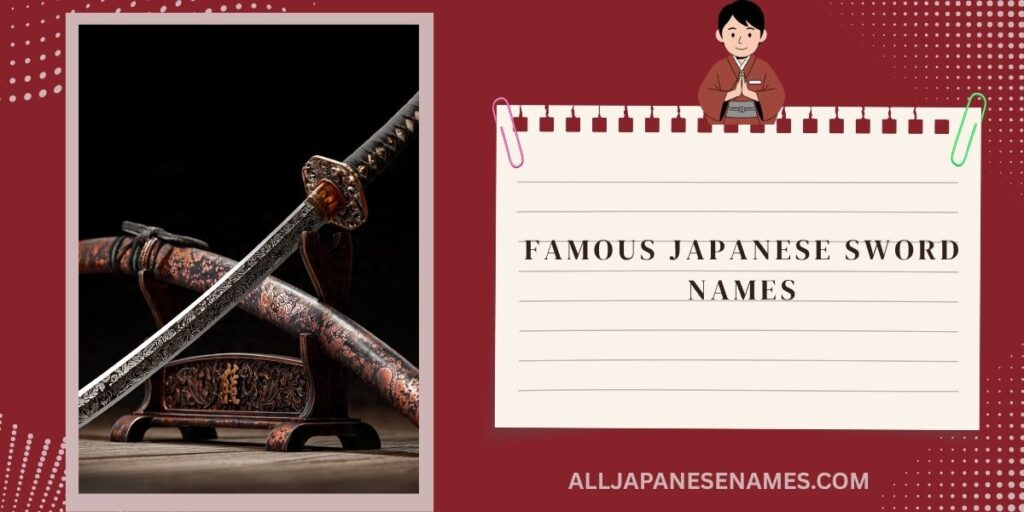
Some swords are more than simply blades. They are legends. Famous Japanese swords from the past were not just sharp pieces of steel. They were used by rulers, blessed priests, and were passed around royalty, and were sometimes believed to have a real supernatural power. Some of those famous swords ended up in shrines. Others went unnoticed into history, and people continue to search for them.
Famous Japanese sword names are usually accompanied by a detailed background. Who created it. Who carries it. What war did it witnessed. That’s the thing that separates the blades from regular ones.
The katana is possibly the most well-known style of sword around the world. When we think of Japanese swords they imagine an image of a katana, one-edged, curving, and made with tremendous ability. These famous katanas on this list include the names of katanas that were handed down through the centuries.
They are among some of the greatest swords in Japanese sword history. They were those who had earned their names and remained. If they’re linked to the legendary sword from mythology or a real sword that lasted for hundreds of years, each one is significant one.
| Name | Meaning | Pronunciation | Kanji |
|---|---|---|---|
| Kusanagi | Grass-cutter, legendary divine blade | koo-sah-nah-gee | 草薙剣 |
| Honjo Masamune | Masterpiece of Masamune, symbol of the shogunate | hon-joh mah-sah-moo-neh | 本庄正宗 |
| Juzumaru | Rosary circle, holy blade of the monk | joo-zoo-mah-roo | 数珠丸 |
| Mikazuki Munechika | Crescent moon blade | mee-kah-zoo-kee moo-neh-chee-kah | 三日月宗近 |
| Dojigiri Yasutsuna | Demon-cutter of Yasutsuna | doh-jee-gee-ree yah-soo-tsoo-nah | 童子切安綱 |
| Kogitsunemaru | Little fox circle, fox spirit blade | koh-gee-tsoo-neh-mah-roo | 小狐丸 |
| Onimaru Kunitsuna | Demon circle of Kunitsuna | oh-nee-mah-roo koo-nee-tsoo-nah | 鬼丸国綱 |
| Otenta Mitsuyo | Great heavenly sword of Mitsuyo | oh-ten-tah mee-tsoo-yoh | 大典太光世 |
| Futsunushi | Sword spirit of the gods, divine cutter | foo-tsoo-noo-shee | 経津主 |
| Totsuka no Tsurugi | Ten-span sword, blade of heaven | toh-tsoo-kah no tsoo-roo-gee | 十拳剣 |
| Amenonuhoko | Heavenly jeweled spear-blade | ah-meh-noh-noo-hoh-koh | 天沼矛 |
| Kogarasu Maru | Little crow circle, dark-winged blade | koh-gah-rah-soo mah-roo | 小烏丸 |
| Higekiri | Beard cutter, fearsome trial blade | hee-geh-kee-ree | 髭切 |
| Hizamaru | Knee cutter, battle-proven edge | hee-zah-mah-roo | 膝丸 |
| Ishikiri Tsurugi | Stone-cutting sword, unstoppable blade | ee-shee-kee-ree tsoo-roo-gee | 石切剣 |
| Futsu no Mitama | Spirit of the divine sword | foo-tsoo no mee-tah-mah | 布都御魂 |
| Nihon-go | One of Japan’s three great spear-blades | nee-hon-goh | 日本号 |
| Tonbokiri | Dragonfly cutter, impossibly sharp blade | ton-boh-kee-ree | 蜻蛉切 |
| Otoriten | Heaven’s great bird blade | oh-toh-ree-ten | 大鳥天 |
| Kagemitsu | Shadow light, blade that glows in darkness | kah-geh-mee-tsoo | 影光 |
| Sanjou Kokaji | Blade forged by the great smith of Sanjou | san-joh koh-kah-jee | 三条小鍛冶 |
| Nenekirimaru | Root-cutting circle, blade that severs evil | neh-neh-kee-ree-mah-roo | 根切丸 |
| Tachi Naganori | Long-blade of Naganori, honor sword | tah-chee nah-gah-noh-ree | 太刀長則 |
| Raikiri Tametsugu | Lightning-cutting blade of Tametsugu | rah-ee-kee-ree tah-meh-tsoo-goo | 雷切為次 |
| Nukemaru | Blade that slips free on its own | noo-keh-mah-roo | 抜丸 |
| Doujigiri | Child demon killer, monster-slaying edge | doh-jee-gee-ree | 童子切 |
| Hachiryuu | Eight dragons, multi-force blade | hah-chee-ryoo | 八龍 |
| Shinano Tousho | Shining blade from Shinano province | shee-nah-noh toh-shoh | 信濃刀匠 |
| Kitsunegasaki | Fox cape, spirit-edge from the forest | kee-tsoo-neh-gah-sah-kee | 狐崎 |
| Uguisumaru | Nightingale circle, soft yet deadly blade | oo-goo-ee-soo-mah-roo | 鶯丸 |
| Junkei Nagamitsu | Pure light of Nagamitsu, refined edge | joon-keh nah-gah-mee-tsoo | 純慶長光 |
| Myoujin | Bright god, divine glowing blade | myoh-jin | 明神 |
| Kuriikaramaru | Dragon in flames circle, unstoppable force | koo-ree-kah-rah-mah-roo | 倶利伽羅丸 |
| Tenjouji | Temple of heaven’s blade | ten-joh-jee | 天上寺 |
| Shishiou | Lion king, ruler of beasts blade | shee-shee-oh | 獅子王 |
| Kenran | Brilliant sword, dazzling radiant edge | ken-ran | 剣嵐 |
| Hishou | Flying blade, soaring cut | hee-shoh | 飛翔 |
| Kazekiri | Wind cutter, blade faster than air | kah-zeh-kee-ree | 風切 |
| Tsurumaru Kuninaga | Crane circle of Kuninaga, elegant long blade | tsoo-roo-mah-roo koo-nee-nah-gah | 鶴丸国永 |
| Ookanehira | Great Kanehira, one of Japan’s top katanas | oh-kah-neh-hee-rah | 大包平 |
| Shinkage | New shadow, silent cutting style blade | shin-kah-geh | 新影 |
| Suijin | Water god, fluid and unstoppable blade | soo-ee-jin | 水神 |
| Fudou Yukimitsu | Immovable snow-light blade | foo-doh yoo-kee-mee-tsoo | 不動行光 |
| Hotarumaru | Firefly circle, blade that glows at night | hoh-tah-roo-mah-roo | 蛍丸 |
| Kannagi | God’s calm, divine stillness blade | kan-nah-gee | 神薙 |
| Tsuruhime | Crane princess, graceful warrior’s katana | tsoo-roo-hee-meh | 鶴姫 |
| Iwatooshi | Rock piercer, force beyond natural limits | ee-wah-toh-shee | 岩透 |
| Kouryuu | Yellow dragon, ancient power blade | koh-ryoo | 黄龍 |
| Ayamegusa | Iris grass blade, beauty hiding danger | ah-yah-meh-goo-sah | 菖蒲草 |
| Yamatorige | Feather of the great Yamato, swift divine edge | yah-mah-toh-ree-geh | 大和鷁 |
These popular Japanese sword names didn’t earn their name by chance. Every single one was created, tested, and cherished for a reason. From shrine relics to battle legends, the names of these are an integral part of Japan’s culture, and you’ll now have the history behind each one of them.
Looking for creative Japanese restaurant names with cultural charm and modern inspiration? Explore the complete Japanese restaurant names collection .
Ancient Japanese Sword Names
Ancient Japanese sword names don’t only mean some cool words. Each one has centuries of meaning, a culture of the warrior, and a Japanese history. The names were assigned to blades just as parents name their children, in a sense of hope, intention, and with an intent.
In ancient Japan, the sword was more than only an instrument. It was an emblem of a warrior’s spirit. This first samurai sword wasn’t some scrap of metal; it was a symbol of honor, loyalty, and a sense of identity. The first sword ever forged was revered as a sacred object.
These ancient Japanese sword names hold significant weight and importance in both the literal and historical sense. Each of them ties back to Japanese stories, legends of warriors, and a society that treated each blade as if it had a spirit within it. If you’re creating an identity, creating an article, or simply are a fan of ancient Japan, these names are made to last.
| Name | Meaning | Pronunciation | Kanji |
|---|---|---|---|
| Onimaru | Demon circle, a blade said to ward off evil spirits | oh-nee-mah-roo | 鬼丸 |
| Mikazuki | Crescent moon | mee-kah-zoo-kee | 三日月 |
| Dōjikiri | Demon child slayer | doh-jee-kee-ree | 童子切 |
| Kogitsunemaru | Little fox circle | koh-gee-tsoo-neh-mah-roo | 小狐丸 |
| Juzumaru | Rosary circle, blessed blade | joo-zoo-mah-roo | 数珠丸 |
| Tonbokiri | Dragonfly cutter | tohn-boh-kee-ree | 蜻蛉切 |
| Nihongō | Japan’s great spear | nee-hohn-goh | 日本号 |
| Fukunaga | Long-lasting fortune and prosperity | foo-koo-nah-gah | 福長 |
| Kogarasu | Little crow | koh-gah-rah-soo | 小烏 |
| Higekiri | Beard cutter | hee-geh-kee-ree | 髭切 |
| Hizamaru | Knee circle, a blade of legendary trials | hee-zah-mah-roo | 膝丸 |
| Izanagi | Male who invites, named after the creator god | ee-zah-nah-gee | 伊邪那岐 |
| Kusanagi | Grass cutter, the legendary divine sword | koo-sah-nah-gee | 草薙剣 |
| Futsunushi | Violent sword spirit | foo-tsoo-noo-shee | 経津主 |
| Raijin-ken | Sword of the thunder god | rye-jin-ken | 雷神剣 |
| Kamikaze-tō | Divine wind blade | kah-mee-kah-zeh-toh | 神風刀 |
| Shiranuhi | Unknown fire, mysterious flame | shee-rah-noo-hee | 不知火 |
| Ryūjin-maru | Dragon god circle | ryoo-jin-mah-roo | 龍神丸 |
| Kanemitsu | Gold light, a name tied to a legendary swordsmith | kah-neh-mee-tsoo | 兼光 |
| Muramasa | Village demon, blades said to hunger for blood | moo-rah-mah-sah | 村正 |
| Masamune | Correct principle, greatest swordsmith name in history | mah-sah-moo-neh | 正宗 |
| Jikokuken | Sword of the guardian of the earth | jee-koh-koo-ken | 持国剣 |
| Kōtetsumaru | Steel circle, iron strength | koh-teh-tsoo-mah-roo | 鋼鉄丸 |
| Fujin-tō | Wind god blade | foo-jin-toh | 風神刀 |
| Ōkanehira | Great golden flatness, a famous tachi blade | oh-kah-neh-hee-rah | 大包平 |
| Tsubamegaeshi | Swallow reversal, a legendary sword technique name | tsoo-bah-meh-gah-eh-shee | 燕返し |
| Namikiri | Wave cutter | nah-mee-kee-ree | 波切 |
| Kamishimo | Upper and lower divine layers | kah-mee-shee-moh | 上下 |
| Kagutsuchi | Fire incarnation, god of fire | kah-goo-tsoo-chee | 火産霊 |
| Shirogasumi | White mist blade | shee-roh-gah-soo-mee | 白霞 |
| Amenonuhoko | Heavenly jeweled spear of creation | ah-meh-noh-noo-hoh-koh | 天沼矛 |
| Yamatorige | Mountain bird feather, swift and light | yah-mah-toh-ree-geh | 大和鳥毛 |
| Suijin-ken | Water god sword | soo-ee-jin-ken | 水神剣 |
| Akatsuki-maru | Dawn circle, blade of first light | ah-kah-tsoo-kee-mah-roo | 暁丸 |
| Kibamaru | Fang circle, fierce and sharp | kee-bah-mah-roo | 牙丸 |
| Gekko-tō | Moonlight sword | gek-koh-toh | 月光刀 |
| Tsurumaru | Crane circle, symbol of long life and grace | tsoo-roo-mah-roo | 鶴丸 |
| Ryūkotsusei | Dragon bone star, ancient mythical blade reference | ryoo-koh-tsoo-say | 龍骨星 |
| Hōjō-ken | Sword of the abundant castle | hoh-joh-ken | 北条剣 |
| Kenrō-tō | Sturdy tower sword | ken-roh-toh | 堅牢刀 |
| Kazekiri | Wind cutter | kah-zeh-kee-ree | 風切 |
| Yaegaki | Many-layered fence, a blade of protection | yah-eh-gah-kee | 八重垣 |
| Inazuma | Lightning bolt | ee-nah-zoo-mah | 稲妻 |
| Shibarakku | Hold still, a commanding war blade name | shee-bah-rak-koo | 暫 |
| Garyūmaru | Reclining dragon circle | gah-ryoo-mah-roo | 臥龍丸 |
| Kokuryū-ken | Black dragon sword | koh-koo-ryoo-ken | 黒龍剣 |
| Seiryu-tō | Blue dragon blade, one of the four sacred beasts | say-ryoo-toh | 青龍刀 |
| Hyōga-ken | Glacier sword, cold and unstoppable | hyoh-gah-ken | 氷河剣 |
| Kaminarimaru | Thunder circle | kah-mee-nah-ree-mah-roo | 雷丸 |
| Tenmaku-tō | Heavenly curtain blade | ten-mah-koo-toh | 天幕刀 |
Best Japanese Sword Names
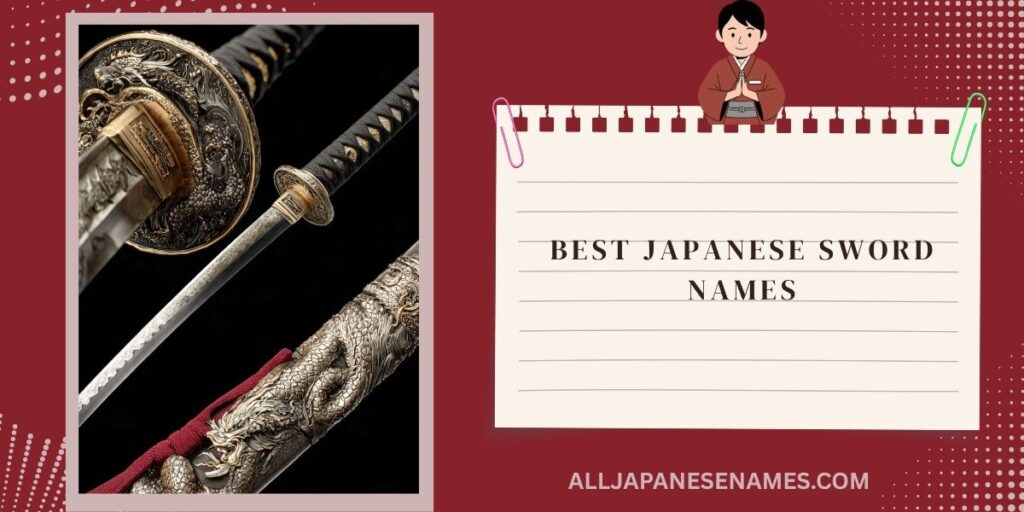
Certain sword names strike harder than others. The most effective and best Japanese sword names are not only fun to say, but they tell real stories, real battles, and a real meaning behind each sound.
The history of the world is filled with iconic weapons that changed wars, created legends, and grew bigger than the warriors that carried them. This is one of the remarkable weapons of Japanese culture, blades with names so well-known that, even centuries later, people still speak about them.
| Name | Meaning | Pronunciation | Kanji |
|---|---|---|---|
| Byakkotō | White tiger sword, symbol of the west wind | byak-koh-toh | 白虎刀 |
| Suzaku-ken | Vermillion bird blade, one of four sacred guardians | soo-zah-koo-ken | 朱雀剣 |
| Genbu-tō | Black tortoise sword, guardian of the north | gen-boo-toh | 玄武刀 |
| Kōmyō-ken | Sword of bright light and glory | koh-myoh-ken | 光明剣 |
| Enryū-maru | Flame dragon circle | en-ryoo-mah-roo | 炎龍丸 |
| Taiyō-ken | Sun sword, blade of daylight power | tye-yoh-ken | 太陽剣 |
| Shirokage | White shadow | shee-roh-kah-geh | 白影 |
| Kurotsubame | Black swallow, fast and precise | koo-roh-tsoo-bah-meh | 黒燕 |
| Raijū-ken | Thunder beast sword | rye-joo-ken | 雷獣剣 |
| Haganeumi | Steel sea, vast and unbreakable | hah-gah-neh-oo-mee | 鋼海 |
| Tōmei-tō | Transparent blade, strikes without warning | toh-may-toh | 透明刀 |
| Yamabushi-ken | Mountain warrior sword | yah-mah-boo-shee-ken | 山伏剣 |
| Kagerō-tō | Mayfly blade, brief but deadly | kah-geh-roh-toh | 蜉蝣刀 |
| Reikon-ken | Spirit soul sword | ray-kohn-ken | 霊魂剣 |
| Zantetsuken | Iron-cutting sword, slices through anything | zan-tet-soo-ken | 斬鉄剣 |
| Homuragi | Blazing flame surge | hoh-moo-rah-gee | 炎薙 |
| Yūkimaru | Courage circle, brave spirit | yoo-kee-mah-roo | 勇気丸 |
| Getsumei-tō | Moonlight blade | get-soo-may-toh | 月明刀 |
| Arashimaru | Storm circle, wild and powerful | ah-rah-shee-mah-roo | 嵐丸 |
| Tetsugiri | Iron cutter, no resistance | tet-soo-gee-ree | 鉄切 |
| Kōkū-ken | Empty sky sword | koh-koo-ken | 虚空剣 |
| Shingetsu-tō | New moon blade, strikes in darkness | shin-get-soo-toh | 新月刀 |
| Hyōketsu-ken | Frozen blood sword | hyoh-ket-soo-ken | 氷血剣 |
| Midareuchi | Disordered strike, unpredictable force | mee-dah-reh-oo-chee | 乱打 |
| Tamashii-ken | Soul sword | tah-mah-shee-ken | 魂剣 |
| Ōkami-tō | Great god blade | oh-kah-mee-toh | 大神刀 |
| Kuroyasha | Black night demon | koo-roh-yah-shah | 黒夜叉 |
| Kōtetsu-ryū | Steel dragon | koh-tet-soo-ryoo | 鋼鉄龍 |
| Fujimaru | Wisteria circle, elegance with edge | foo-jee-mah-roo | 藤丸 |
| Hibana-ken | Spark sword, ignites on contact | hee-bah-nah-ken | 火花剣 |
| Sokuten-tō | Heaven-speed blade | soh-ken-toh | 速天刀 |
| Kamikiri | God cutter | kah-mee-kee-ree | 神切 |
| Yomotsuhirasaka | Slope between the living and the dead | yoh-moh-tsoo-hee-rah-sah-kah | 黄泉平坂 |
| Tsukikage-tō | Moon shadow blade | tsoo-kee-kah-geh-toh | 月影刀 |
| Shippū-ken | Gale force sword | ship-poo-ken | 疾風剣 |
| Sangeki-tō | Three strikes blade | san-geh-kee-toh | 三撃刀 |
| Kaminari-tō | Thunder blade | kah-mee-nah-ree-toh | 雷刀 |
| Yukiotoshi | Snow drop strike | yoo-kee-oh-toh-shee | 雪落 |
| Hageshii-ken | Fierce and violent sword | hah-geh-shee-ken | 激しい剣 |
| Kurohana-tō | Black flower blade | koo-roh-hah-nah-toh | 黒花刀 |
| Tategiri | Vertical cutter, precise downward strike | tah-teh-gee-ree | 縦切 |
| Ryōken-tō | Two sword blade, dual nature | ryoh-ken-toh | 両剣刀 |
| Mizugiri | Water cutter, flows through anything | mee-zoo-gee-ree | 水切 |
| Kōga-ken | Steel fang sword | koh-gah-ken | 鋼牙剣 |
| Tenshōmaru | Heavenly rising circle | ten-shoh-mah-roo | 天昇丸 |
| Reimei-ken | Dawn sword, first light of battle | ray-may-ken | 黎明剣 |
| Haguro-tō | Black feather blade, silent and swift | hah-goo-roh-toh | 羽黒刀 |
| Gouten-ken | Five heaven sword | goh-ten-ken | 五天剣 |
| Jinchōmaru | Divine butterfly circle | jin-choh-mah-roo | 神蝶丸 |
| Mukyū-ken | Infinite void sword, endless and boundless | moo-kyoo-ken | 無究剣 |
These are the best Japanese sword names you can find anywhere. They are crafted with real, actual culture, real language, and the real spirit of a warrior. Every sword is given its name.
Looking for cute and meaningful Japanese baby names inspired by tradition and modern culture? Explore the complete Japanese baby names collection .
Japanese Sword Names By Length
Every sword is not the same size. In Japan, it wasn’t simply an individual choice; it was determined by who you were, what you were fighting, as well as the part you had in the fight.
Every sword type had its own function. The medium-length sword gave a warrior the balance and reach needed to be able to fight from afar, yet lightweight enough to move swiftly. A shorter sword was for close combat, backup, or for warriors who needed to maneuver through tight spaces. And what about the longer ones? They were designed for strength, presence, and combat dominance.
Japanese sword names by length are a reflection of a thought. The name will often reveal the exact type of blade it was before you ever had the chance to see it.
Long Japanese Sword Names
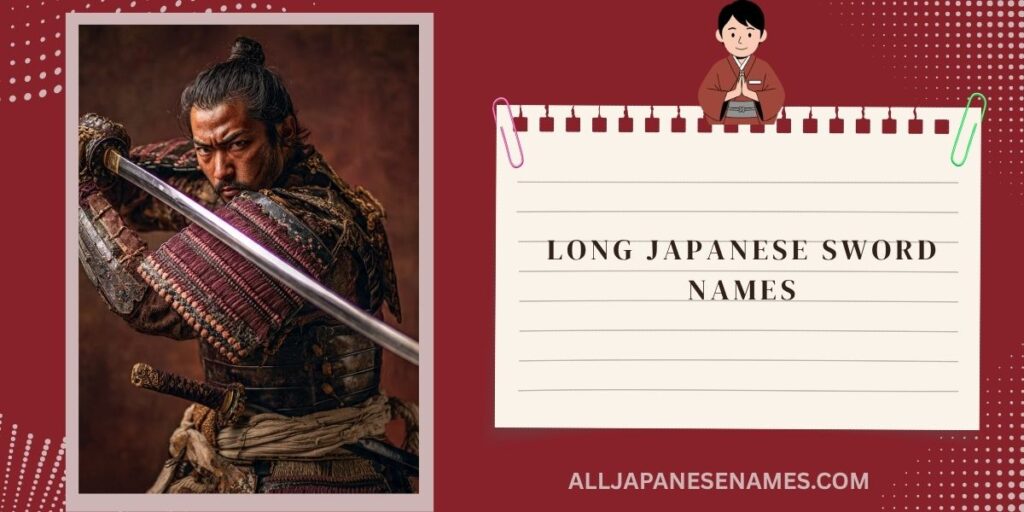
They were the toughest hitters on the battlefield. The long Japanese sword name was usually weighed down by the blade as well as the significance behind it.
| Name | Meaning | Pronunciation | Kanji |
|---|---|---|---|
| Nodachi | Field great sword, blade of open warfare | noh-dah-chee | 野太刀 |
| Oosori | Great curve, sweeping long battlefield blade | oh-soh-ree | 大反り |
| Tachikazura | Long vine blade, sword that wraps around the enemy | tah-chee-kah-zoo-rah | 太刀葛 |
| Nagamaki | Long wrapping, extended reach war blade | nah-gah-mah-kee | 長巻 |
| Ohagane | Great steel, massive forged long sword | oh-hah-gah-neh | 大鋼 |
| Kurotachi | Black long sword, dark battlefield commander blade | koo-roh-tah-chee | 黒太刀 |
| Seiryu Tachi | Blue dragon long sword, flowing force blade | seh-ee-ryoo tah-chee | 青龍太刀 |
| Harukaze Nagato | Spring wind long reach, graceful sweeping blade | hah-roo-kah-zeh nah-gah-toh | 春風長刀 |
| Tenryuu | Heavenly dragon, sky force long blade | ten-ryoo | 天龍 |
| Oobuki | Great breath, wide powerful swing blade | oh-boo-kee | 大吹 |
| Tsukishiro Nagato | White moon long sword, pale light blade | tsoo-kee-shee-roh nah-gah-toh | 月白長刀 |
| Kazanamiru | Wind watching, blade that reads the battlefield air | kah-zah-nah-mee-roo | 風波見 |
| Oonaminagi | Great wave calm, long tide-force blade | oh-nah-mee-nah-gee | 大波薙 |
| Ryuuha | Dragon wave, sweeping long school blade | ryoo-hah | 龍波 |
| Souryuu Nodachi | Twin dragon field sword, double force great blade | soh-ryoo noh-dah-chee | 双龍野太刀 |
| Yamiuchi | Darkness strike, long blade that hits from the shadows | yah-mee-oo-chee | 闇打 |
| Fujinami | Wisteria wave, elegant long sweeping blade | foo-jee-nah-mee | 藤波 |
| Kuuryuu | Empty dragon, long blade with invisible force | koo-ryoo | 空龍 |
| Oohoshi | Great star, long blade that shines on the battlefield | oh-hoh-shee | 大星 |
| Taiyounagi | Sun calm, great light long sweeping blade | tah-ee-yoh-nah-gee | 太陽薙 |
These were great sword class weapons that required the strength of a warrior and the training required to master them. There are two-handed sword designs, requiring both hands to be able to swing correctly. Some were called long light sword types, constructed long, but quite easy to use for skilled warriors.
Short Japanese Sword Names
Short doesn’t mean weak. In Japan, the shorter sword were usually equally deadly, and sometimes more deadly. A small Japanese sword name usually was a reference to a blade designed for speed, surprise, or for other purposes.
Daggers were common carry weapons carried in belts or sleeves, and always in reach. It was the Japanese dagger that had its own customs, its own names, and its own esteem.
A short Japanese sword name was often associated with the meaning of the ability to stealth, precision, or personal security. They weren’t just backup weapons. For a lot of fighters, these were their first weapon of choice.
| Name | Meaning | Pronunciation | Kanji |
|---|---|---|---|
| Tantouhi | Short blade fire, quick burning strike | tan-toh-hee | 短刀火 |
| Kakushi | Hidden blade, concealed personal sword | kah-koo-shee | 隠し |
| Kodzuka | Small handle blade, utility knife of the samurai | koh-zoo-kah | 小柄 |
| Yoroidoshi | Armor piercer, short blade built to push through steel | yoh-roh-ee-doh-shee | 鎧通し |
| Migiri | Quick cut, short decisive strike blade | mee-gee-ree | 身切り |
| Shinobi Tanto | Stealth short blade, ninja’s hidden dagger | shee-noh-bee tan-toh | 忍び短刀 |
| Kogai | Hair pin blade, small decorative but deadly tool | koh-gah-ee | 笄 |
| Hamidashi | Protruding edge, short blade with barely hidden guard | hah-mee-dah-shee | 食み出し |
| Futokoro | Chest pocket blade, small sword carried close to the heart | foo-toh-koh-roh | 懐 |
| Nukiuchi | Quick draw strike, short fast-draw blade | noo-kee-oo-chee | 抜き打ち |
| Chisagatana | Small sword, refined shorter blade for close use | chee-sah-gah-tah-nah | 小刀 |
| Kiriha | Cutting edge, short precise blade for detail strikes | kee-ree-hah | 切り刃 |
| Aizuchi | Hammer response, short blade forged with sharp agreement | ah-ee-zoo-chee | 相槌 |
| Sodegarami | Sleeve entangle, short blade that catches the opponent off guard | soh-deh-gah-rah-mee | 袖搦 |
| Tsubagiri | Guard cutter, short blade that bypasses armor edges | tsoo-bah-gee-ree | 鍔切り |
| Harakiri | Belly cut, short blade of final honor | hah-rah-kee-ree | 腹切り |
| Metezashi | Left hand blade, secondary short sword of the samurai | meh-teh-zah-shee | 馬手差し |
| Shōtō | Short sword, companion blade to the long katana | shoh-toh | 小刀 |
| Kansashi | Pin blade, short piercing ornamental dagger | kan-sah-shee | 簪刺し |
| Tebira | Hand flat blade, short open-hand strike sword | teh-bee-rah | 手平刃 |
Short or long, each blade performed a role. The length was not random, the choice was made. In Japan, every decision regarding a sword was carried by an appropriate name to remember.
Looking for strong and meaningful Japanese male names inspired by tradition and modern culture? Explore the complete Japanese male names collection .
Cool Japanese Sword Names
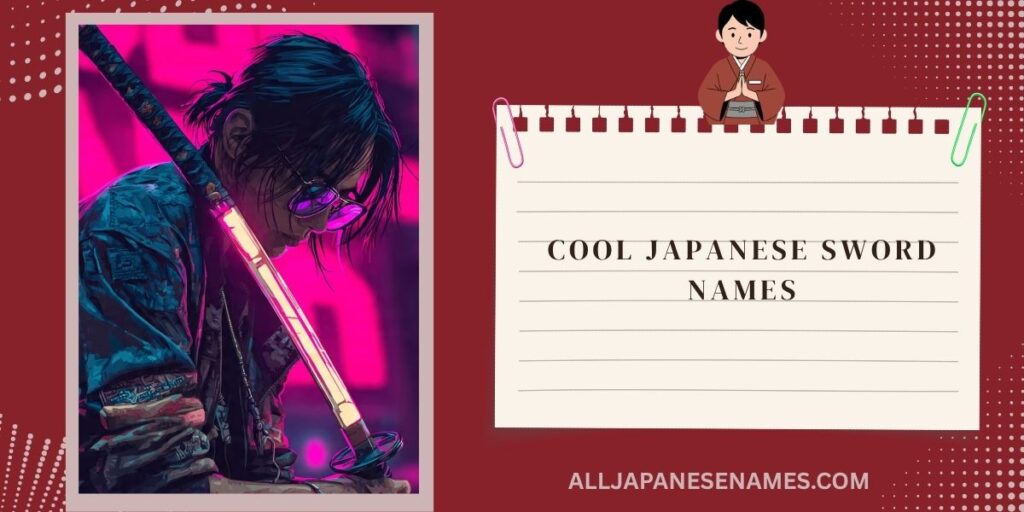
Some names just hit different. When you read them, you immediately imagine something – an enchanted blade in the darkness, or the black sword cutting through fog, or the flame sword burning through the night. This is the power of the most unique name for a sword. It’s not just a way to label something. It paints an image.
Cool Japanese sword names tend to draw inspiration from the most vibrant parts of the Japanese language, including fire storms, shadow colors, and pure power from nature. For example, a blue sword name might carry the icy cold or the depths of an ocean. A crimson sword name brings images of blood, courage, or war. A lightning sword crackles with speed and energy. Also, a black sword feels like something could be dangerous, hidden in the darkness.
| Name | Meaning | Pronunciation | Kanji |
|---|---|---|---|
| Kokuryuu | Black dragon, dark force blade | koh-koo-ryoo | 黒龍 |
| Aokaze | Blue wind, cold swift cutting blade | ah-oh-kah-zeh | 青風 |
| Enjou | Blaze, fully burning flame sword | en-joh | 炎上 |
| Shirokiba | White fang, pale gleaming strike blade | shee-roh-kee-bah | 白牙 |
| Raikousen | Lightning flash line, electric strike blade | rah-ee-koh-sen | 雷光線 |
| Kurenai | Crimson, deep red blade of passion and battle | koo-reh-nah-ee | 紅 |
| Yamikiba | Darkness fang, black sword that bites through shadow | yah-mee-kee-bah | 闇牙 |
| Aoarashi | Blue storm, cold raging tempest blade | ah-oh-ah-rah-shee | 青嵐 |
| Kaenryuu | Flame dragon, fire breathing sword force | kah-en-ryoo | 火炎龍 |
| Kurohikari | Black light, dark radiance blade | koo-roh-hee-kah-ree | 黒光 |
| Shinku | Deep crimson, blood red sword of war | sheen-koo | 深紅 |
| Raikouha | Lightning wave, electric surge blade | rah-ee-koh-hah | 雷光波 |
| Aohono | Blue blade, cool steel cutting edge | ah-oh-hoh-noh | 青刃 |
| Moekiri | Burning cutter, flame sword that slices through anything | moh-eh-kee-ree | 燃え切り |
| Yamikazari | Dark ornament, beautiful black sword with deadly edge | yah-mee-kah-zah-ree | 闇飾り |
| Aoryu | Blue dragon, ocean force blade | ah-oh-ryoo | 青龍 |
| Hinotsume | Fire claw, flame sword with tearing edge | hee-noh-tsoo-meh | 火の爪 |
| Kuroyasha | Black demon, dark spirit sword | koo-roh-yah-shah | 黒夜叉 |
| Aokaminari | Blue thunder, cold lightning sword | ah-oh-kah-mee-nah-ree | 青雷 |
| Akahono | Red blade, crimson sword of open battle | ah-kah-hoh-noh | 赤刃 |
| Kaminari Yaiba | Thunder blade, lightning sword with roaring edge | kah-mee-nah-ree yah-ee-bah | 雷刃 |
| Kokuen | Black smoke, dark haze blade | koh-koo-en | 黒煙 |
| Aosora | Blue sky, open heaven blade | ah-oh-soh-rah | 青空 |
| Kaenbaku | Flame explosion, burst fire sword | kah-en-bah-koo | 火炎爆 |
| Beniryuu | Crimson dragon, red fire serpent blade | beh-nee-ryoo | 紅龍 |
| Kurokaminari | Black thunder, dark electric force blade | koo-roh-kah-mee-nah-ree | 黒雷 |
| Mizuao | Water blue, fluid cool cutting sword | mee-zoo-ah-oh | 水青 |
| Honokiri | Flame cutter, fire sword slicing clean through | hoh-noh-kee-ree | 炎切り |
| Yamikaze | Dark wind, black sword moving like a silent breeze | yah-mee-kah-zeh | 闇風 |
| Beniha | Crimson edge, red blade with beautiful deadly shine | beh-nee-hah | 紅刃 |
| Raikessen | Lightning war line, electric battle sword | rah-ee-keh-sen | 雷決線 |
| Aokumo | Blue cloud, cold misty blade | ah-oh-koo-moh | 青雲 |
| Kurohoshi | Black star, dark shining point blade | koo-roh-hoh-shee | 黒星 |
| Kaentsurugi | Flame straight sword, upright fire blade | kah-en-tsoo-roo-gee | 火炎剣 |
| Akatsume | Red claw, crimson sword with raking edge | ah-kah-tsoo-meh | 赤爪 |
| Yamiboshi | Dark star, black sword that shines in battle | yah-mee-boh-shee | 闇星 |
| Aokami | Blue god, divine cold force blade | ah-oh-kah-mee | 青神 |
| Hinoarashi | Fire storm, raging flame sword of chaos | hee-noh-ah-rah-shee | 火の嵐 |
| Kokuyami | Black darkness, void blade beyond shadow | koh-koo-yah-mee | 黒闇 |
| Beniarashi | Crimson storm, red raging battle blade | beh-nee-ah-rah-shee | 紅嵐 |
| Raikouryuu | Lightning dragon, electric serpent sword | rah-ee-koh-ryoo | 雷光龍 |
| Aotsuki | Blue moon, cold night blade with pale glow | ah-oh-tsoo-kee | 青月 |
| Kurookami | Black wolf, dark predator hunting blade | koo-roh-oh-kah-mee | 黒狼 |
| Hinomeguri | Fire circle, rotating flame sword of destruction | hee-noh-meh-goo-ree | 火廻り |
| Beniyami | Crimson darkness, red blade born in shadow | beh-nee-yah-mee | 紅闇 |
| Aohibari | Blue spark, cold electric flash blade | ah-oh-hee-bah-ree | 青火花 |
| Kurotama | Black soul, dark spirit within the blade | koo-roh-tah-mah | 黒魂 |
| Kaenha | Flame edge, fire sword with burning cutting line | kah-en-hah | 火炎刃 |
| Benigetsu | Crimson moon, red night blade under blood sky | beh-nee-geh-tsoo | 紅月 |
| Yamitsuki | Dark moon, black sword glowing under night sky | yah-mee-tsoo-kee | 闇月 |
These names are fantastic for games, characters, or stories for anyone who enjoys the meaning and sound of strong Japanese words. Each one of them has authentically Japanese roots, nothing that was made up, and nothing random.
The cool names don’t only focus on the way they sound. The most memorable ones make you feel something. They can bring fear or power, beauty or all three in one go. Every name on this list will do exactly this. No matter if you require the black sword name with weight behind it, or a flame sword name that burns off the page, it has you covered.
Legendary Japanese Sword Names
Some swords have a history that is beyond. They are a part of prayers, stories, and fear. Legendary Japanese sword names are more than just cool-sounding words.
They are derived from a world where reality and myth blended, where the blade was either a sacred sword blessed by gods or an ominous or cursed sword that brought to ruin anyone who came in contact with it. A spirit sword was believed to contain a soul that was living inside the steel. Where a demon sword was something that warriors would rather fear more than the opponent who was holding it.
Japan has a long-standing tradition of giving swords a personality of their own. A divine sword wasn’t just a weapon but a symbol of power, destiny, or something that was beyond human control.
The legendary sword in Japanese culture frequently had a unique tale that was told for centuries, and adding more details throughout the process until the sword became something that was almost impossible to dissociate from legend.
| Name | Meaning | Pronunciation | Kanji |
|---|---|---|---|
| Kamuyaiba | Divine god’s blade, sacred sword of the heavens | kah-moo-yah-ee-bah | 神刃 |
| Tatariyomi | Curse reading, blade that speaks misfortune | tah-tah-ree-yoh-mee | 祟読み |
| Oniyaiba | Demon fang blade, demon sword of the underworld | oh-nee-yah-ee-bah | 鬼刃 |
| Tamashiiken | Soul sword, spirit sword carrying a warrior’s ghost | tah-mah-shee-ken | 魂剣 |
| Shinreiken | Divine spirit sword, blade blessed by heavenly forces | sheen-reh-ee-ken | 神霊剣 |
| Tatariken | Cursed sword, blade that brings ruin to its owner | tah-tah-ree-ken | 祟剣 |
| Majinken | Demon god sword, legendary blade of dark divinity | mah-jin-ken | 魔神剣 |
| Reikouken | Spirit light sword, glowing blade of the afterlife | reh-ee-koh-ken | 霊光剣 |
| Kamikiri | God cutter, sacred sword sharp enough to cut divinity | kah-mee-kee-ree | 神切り |
| Jaryuuken | Evil dragon sword, cursed demon blade of ancient evil | jah-ryoo-ken | 邪龍剣 |
| Seireiken | Holy spirit sword, divine blade carried by sacred warriors | seh-ee-reh-ee-ken | 聖霊剣 |
| Akuryouken | Evil spirit sword, demon sword haunted by dark souls | ah-koo-ryoh-ken | 悪霊剣 |
| Shinpuken | Divine wind sword, sacred blade blessed by storm gods | sheen-poo-ken | 神風剣 |
| Tatariyaiba | Cursed edge, blade that turns on its own wielder | tah-tah-ree-yah-ee-bah | 祟刃 |
| Kishinken | Demon god sword, legendary blade between worlds | kee-sheen-ken | 鬼神剣 |
| Reihouken | Sacred treasure sword, divine sword of the royal vault | reh-ee-hoh-ken | 霊宝剣 |
| Furyouken | Evil spirit sword, cursed sword of restless souls | foo-ryoh-ken | 不霊剣 |
| Kamunagi | God’s silence, sacred sword that speaks through stillness | kah-moo-nah-gee | 神凪 |
| Majutsuken | Sorcery sword, legendary blade powered by dark magic | mah-joo-tsoo-ken | 魔術剣 |
| Shinkou Yaiba | Divine light blade, sacred sword born from pure belief | sheen-koh yah-ee-bah | 神光刃 |
| Onimajin | Demon magic blade, cursed sword of shapeless evil | oh-nee-mah-jin | 鬼魔刃 |
| Reiryouken | Spirit force sword, blade alive with unseen energy | reh-ee-ryoh-ken | 霊力剣 |
| Tatariyoru | Curse night, demon sword that wakes after dark | tah-tah-ree-yoh-roo | 祟夜 |
| Shinkatana | God’s katana, divine sword gifted from above | sheen-kah-tah-nah | 神刀 |
| Magatsuken | Calamity sword, cursed blade that brings disaster | mah-gah-tsoo-ken | 禍剣 |
| Tamashiinagi | Soul calm, spirit sword that silences the battlefield | tah-mah-shee-nah-gee | 魂凪 |
| Ryuujaken | Dragon snake sword, legendary blade of two powers | ryoo-jah-ken | 龍蛇剣 |
| Kamifuujin | God wind blade, sacred sword carried by storm deities | kah-mee-foo-jin | 神風刃 |
| Akujinken | Evil god sword, demon sword of fallen divine power | ah-koo-jin-ken | 悪神剣 |
| Reikonken | Soul spirit sword, legendary blade housing warrior spirits | reh-ee-kon-ken | 霊魂剣 |
| Tatariyasha | Cursed demon, blade possessed by a female demon spirit | tah-tah-ree-yah-shah | 祟夜叉 |
| Shinreiblade | Holy spirit blade, sacred sword of purification ritual | sheen-reh-ee | 神霊刃 |
| Jaryouken | Wicked spirit sword, cursed sword feeding on life force | jah-ryoh-ken | 邪霊剣 |
| Onimaruken | Demon circle sword, legendary blade of the underworld gate | oh-nee-mah-roo-ken | 鬼丸剣 |
| Kamitsurugi | Divine straight sword, sacred blade of the ancient gods | kah-mee-tsoo-roo-gee | 神剣 |
| Kurayamiken | Dark darkness sword, cursed blade born in the void | koo-rah-yah-mee-ken | 暗闇剣 |
| Shinryuuken | Divine dragon sword, sacred sword of the sky serpent | sheen-ryoo-ken | 神龍剣 |
| Majinhaou | Demon blade king, legendary sword ruling over darkness | mah-jin-hah-oh | 魔刃覇王 |
| Reikatana | Spirit katana, blade that carries a ghost of its past owner | reh-ee-kah-tah-nah | 霊刀 |
| Tatarihoshi | Cursed star, demon sword that falls like a dark meteor | tah-tah-ree-hoh-shee | 祟星 |
| Kamuyoroi | Divine armor sword, sacred blade that protects its chosen warrior | kah-moo-yoh-roh-ee | 神鎧 |
| Oniyomiken | Demon night sword, cursed sword of the darkest hours | oh-nee-yoh-mee-ken | 鬼夜剣 |
| Shinkouyaiba | Sacred light edge, divine sword of blinding radiance | sheen-koh-yah-ee-bah | 神光刃 |
| Furyouken | Wandering spirit sword, blade haunted by souls without rest | foo-ryoh-ken | 浮霊剣 |
| Jashiken | Evil serpent sword, demon blade coiled in dark power | jah-shee-ken | 邪蛇剣 |
| Reimuken | Spirit dream sword, legendary blade seen only in visions | reh-ee-moo-ken | 霊夢剣 |
| Tatariryu | Cursed dragon, demon sword with a dragon’s rage trapped inside | tah-tah-ree-ryoo | 祟龍 |
| Kamuhono | Divine flame, sacred sword burning with holy fire | kah-moo-hoh-noh | 神炎 |
| Shinpouken | Sacred treasure blade, legendary sword of national reverence | sheen-poh-ken | 神宝剣 |
| Akumaruken | Devil circle sword, demon sword of absolute darkness | ah-koo-mah-roo-ken | 悪魔丸剣 |
These names have a meaning that goes beyond mere. They convey a sense of faith. In ancient Japan, there was a belief that certain blades were either good or evil, which was far more than the strength of the steel.
The spirit sword wasn’t a fantasy. It was a message. The legendary sword wasn’t just a story. This was an opportunity to remind us that certain things in the world are more important than the person who holds them.
Japanese Sword Names Anime
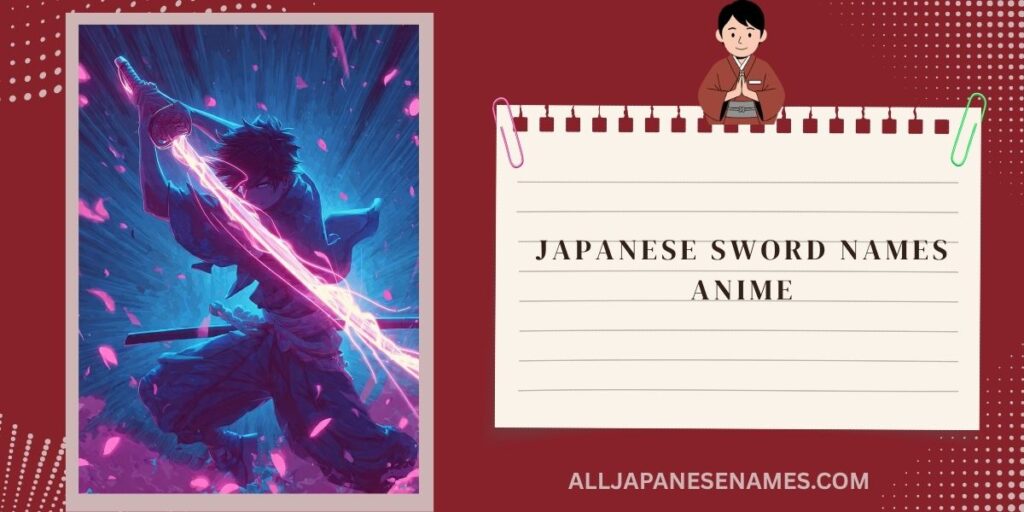
If you’ve ever spent a single moment with the anime world, you already know that swords strike different characters in Japanese animation.
It’s not only about fight scenes. When it comes to anime and manga, the sword’s name represents the entire persona of the one who wields it. When a character speaks their blade’s name loudly, particularly before the final move, the moment something clicks. This name will tell you everything. Who is this person. What do they fight for. What a serious situation it has become.
Japanese sword names anime fans usually search for are classified into a variety of groups. Some are tough and aggressive. Some are beautiful and poetic. Some are quiet on the surface, but they carry massive weight beneath. The most effective anime sword names are able to do all three simultaneously.
The anime heroes of shows such as Bleach, Demon Slayer, Rurouni Kenshin, and Sword Art Online helped bring Japanese sword culture to a wider public. Their swords became as famous as the characters themselves. The custom of the naming of swords in anime is a direct reference to real Japanese sword culture, and that’s why these names are authentic.
| Name | Meaning | Pronunciation | Kanji |
|---|---|---|---|
| Zankouken | Remaining light sword, blade that glows after the strike | zan-koh-ken | 残光剣 |
| Ryuusenken | Dragon flash sword, speed blade of the dragon style | ryoo-sen-ken | 龍閃剣 |
| Kaienken | Sea flame sword, ocean fire blade of passion | kah-ee-en-ken | 海炎剣 |
| Kokusenken | Black flash sword, dark speed strike blade | koh-koo-sen-ken | 黒閃剣 |
| Hoshikiri | Star cutter, blade that slices through the night sky | hoh-shee-kee-ree | 星切り |
| Tenshouken | Heaven rise sword, ascending divine blade | ten-shoh-ken | 天昇剣 |
| Fujinken | Wind god sword, blade moving faster than thought | foo-jin-ken | 風神剣 |
| Oukouken | King light sword, royal radiant blade of the champion | oh-koh-ken | 王光剣 |
| Kurenairyuu | Crimson dragon, red power blade of unstoppable force | koo-reh-nah-ee-ryoo | 紅龍 |
| Senkouken | Flash light sword, split-second strike blade | sen-koh-ken | 閃光剣 |
| Raijinken | Thunder god sword, electric force blade of the storm | rah-ee-jin-ken | 雷神剣 |
| Hyouketsuken | Ice crystal sword, frozen blade of absolute cold | hyoh-keh-tsoo-ken | 氷結剣 |
| Tsubakiken | Camellia sword, beautiful blade with hidden deadly edge | tsoo-bah-kee-ken | 椿剣 |
| Kagesenkou | Shadow flash, blade that strikes before the eye catches it | kah-geh-sen-koh | 影閃光 |
| Houooken | Phoenix sword, blade reborn stronger after every battle | hoh-oh-ken | 鳳凰剣 |
| Yamikousen | Dark light beam, blade that shoots darkness like an arrow | yah-mee-koh-sen | 闇光線 |
| Tenkouken | Heaven light sword, blade carrying divine radiance | ten-koh-ken | 天光剣 |
| Suiryuuken | Water dragon sword, fluid force blade of the deep current | soo-ee-ryoo-ken | 水龍剣 |
| Sougekiken | Sniper blade, long-range precision strike sword | soh-geh-kee-ken | 狙撃剣 |
| Kagayakiken | Shining sword, blade that blazes brighter in harder battles | kah-gah-yah-kee-ken | 輝剣 |
| Enraikou | Flame thunder light, triple force elemental blade | en-rah-ee-koh | 炎雷光 |
| Shirokouken | White light sword, pure radiant blade of justice | shee-roh-koh-ken | 白光剣 |
| Ryuuseiken | Meteor sword, blade falling from the sky with unstoppable speed | ryoo-seh-ee-ken | 流星剣 |
| Ankokuken | Dark void sword, blade born from pure emptiness | an-koh-koo-ken | 暗黒剣 |
| Kazenken | Wind blade, sword that cuts without sound or warning | kah-zen-ken | 風刃剣 |
| Tsukikouren | Moon ice lotus, cold moonlit blade of elegant power | tsoo-kee-koh-ren | 月氷蓮 |
| Jinraiken | Thunder blade, lightning strike sword of divine anger | jin-rah-ee-ken | 迅雷剣 |
| Kuroryuusen | Black dragon flash, dark serpent speed blade | koo-roh-ryoo-sen | 黒龍閃 |
| Gokuken | Ultimate sword, blade that surpasses all limits | goh-koo-ken | 極剣 |
| Hyouryuuken | Ice dragon sword, frozen serpent force blade | hyoh-ryoo-ken | 氷龍剣 |
| Taiyouken | Sun sword, blazing day blade of pure burning force | tah-ee-yoh-ken | 太陽剣 |
| Kagemikazuki | Shadow crescent, dark half-moon strike blade | kah-geh-mee-kah-zoo-kee | 影三日月 |
| Mugenken | Infinite sword, blade with no end to its cutting power | moo-gen-ken | 無限剣 |
| Raikouzen | Lightning before thunder, blade that hits before you hear it | rah-ee-koh-zen | 雷光前 |
| Hiryuuken | Flying dragon sword, airborne force blade of the sky warrior | hee-ryoo-ken | 飛龍剣 |
| Shiroryuuken | White dragon sword, pure light serpent blade | shee-roh-ryoo-ken | 白龍剣 |
| Bakuhatsuken | Explosion sword, burst force blade of overwhelming power | bah-koo-hah-tsoo-ken | 爆発剣 |
| Tsukiyomiken | Moon reader sword, blade that judges under moonlight | tsoo-kee-yoh-mee-ken | 月読剣 |
| Kouryuusen | Light dragon flash, golden serpent speed strike | koh-ryoo-sen | 光龍閃 |
| Zanshinken | Remaining spirit sword, blade that stays alert after every strike | zan-sheen-ken | 残心剣 |
| Eienken | Eternal sword, blade that never loses its edge or its purpose | eh-ee-en-ken | 永遠剣 |
| Arashiken | Storm sword, raging tempest blade of unstoppable fury | ah-rah-shee-ken | 嵐剣 |
| Kurohikouken | Black flight sword, dark airborne strike blade | koo-roh-hee-koh-ken | 黒飛行剣 |
| Reimeiken | Dawn sword, blade that rises with the first light of battle | reh-ee-meh-ee-ken | 黎明剣 |
| Kagenken | Shadow blade, sword born from the darkness between strikes | kah-gen-ken | 影刃剣 |
| Ryuuooken | Dragon king sword, legendary blade of the ultimate dragon warrior | ryoo-oh-ken | 龍王剣 |
| Hissatsuken | Certain kill sword, finishing move blade of the true warrior | hees-sah-tsoo-ken | 必殺剣 |
| Koukouken | Shining steel sword, brilliant radiant battle blade | koh-koh-ken | 煌鋼剣 |
| Tsuruginokami | God of the sword, divine blade that transcends all warriors | tsoo-roo-gee-noh-kah-mee | 剣の神 |
| Zekkenken | Absolute sword, blade with no equal in any world | zeh-ken-ken | 絶剣 |
What makes anime swords’ names memorable is the way they mix the real Japanese words with pure, creative energy. The names are authentic, like every blade has been through a lot before it was given an appropriate name that is worth shouting out loud. No matter if it’s writing your own tale or developing a character or just being awed by the craft of these characters, each one of them embodies the same anime spirit. Big, bold, enthralling, and memorable.
Zoro Sword Names in Japanese
If you’re familiar with One Piece, you know Roronoa Zoro. If you’re familiar with Zoro and his swords have a role to play just as equally as his swords do. Zoro is among the most famous swordsmen in the history of anime.
The whole character is built on his three-sword look with a blade in each hand, and with one in the mouth. Every weapon that he uses has a name, a story, and a character.
His weapons aren’t only instruments. They’re partners. The method Eiichiro Oda named the blades, he drew inspiration from the authentic Japanese sword culture. That is precisely what made them feel authentic and memorable.
Zoro’s sword names in Japanese have created millions of followers around the globe. The people who choose to name their characters in honor of his swords. They tattoo them. They create replicas of the sword down to the very last element on the hilt and sword guard. This kind of connection does not happen randomly, it’s because the names have importance and carry some weight.
The authentic Zoro blades Wado Ichimonji, Sandai Kitetsu, and Enma are all rooted in Japanese weaponry traditions. Each blade is a different grade, story, and inner. For example, the hilt shape, curvature of the blade and the design of the sword guard, everything about Zoro’s weapon choices reflect the same level of attention to detail that you would find in Japanese swords.
| Name | Meaning | Pronunciation | Kanji |
|---|---|---|---|
| Sankouken | Three light sword, blade of the triple radiance warrior | san-koh-ken | 三光剣 |
| Midorikaze | Green wind, swift blade named after Zoro’s signature color | mee-doh-ree-kah-zeh | 緑風 |
| Oniryu | Demon dragon, fierce weapon of unstoppable cutting force | oh-nee-ryoo | 鬼龍 |
| Santooken | Three sword style blade, weapon of the three-path warrior | san-toh-ken | 三刀剣 |
| Kuroobi | Black sash, blade named after the warrior’s belt of honor | koo-roh-oh-bee | 黒帯 |
| Zanryuuken | Slashing dragon sword, cutting weapon of dragon force | zan-ryoo-ken | 斬龍剣 |
| Midoriken | Green sword, blade of the emerald-spirited warrior | mee-doh-ree-ken | 緑剣 |
| Kitetsurei | Demon iron spirit, cursed weapon with a will of its own | kee-teh-tsoo-reh-ee | 鬼鉄霊 |
| Santouryuu | Three sword flow, weapon style of the ultimate swordsman | san-toh-ryoo | 三刀流 |
| Enryuuken | Flame dragon sword, burning weapon of a relentless fighter | en-ryoo-ken | 炎龍剣 |
| Haganeoni | Steel demon, hardened weapon forged beyond normal limits | hah-gah-neh-oh-nee | 鋼鬼 |
| Kuroarashi | Black storm, fierce weapon of the dark wind warrior | koo-roh-ah-rah-shee | 黒嵐 |
| Zanpuuken | Slashing wind sword, fast-strike cutting weapon | zan-poo-ken | 斬風剣 |
| Midoriryu | Green dragon, emerald serpent weapon of natural power | mee-doh-ree-ryoo | 緑龍 |
| Tetsumaru | Iron circle, perfectly balanced weapon of solid craftsmanship | teh-tsoo-mah-roo | 鉄丸 |
| Oniken | Demon sword, weapon that fights like it has its own anger | oh-nee-ken | 鬼剣 |
| Kokuryuuzan | Black dragon slash, single-strike weapon of devastating power | koh-koo-ryoo-zan | 黒龍斬 |
| Santouzan | Three sword slash, finishing weapon technique blade | san-toh-zan | 三刀斬 |
| Haganezan | Steel slash, cutting weapon of pure refined iron | hah-gah-neh-zan | 鋼斬 |
| Midorizan | Green slash, clean cut weapon of the emerald blade master | mee-doh-ree-zan | 緑斬 |
| Ryuuouken | Dragon king sword, supreme weapon of the dragon lord warrior | ryoo-oh-ken | 龍王剣 |
| Kurohagane | Black steel, darkened weapon of unbreakable iron will | koo-roh-hah-gah-neh | 黒鋼 |
| Zantetsuken | Iron cutting sword, legendary weapon that slices through metal | zan-teh-tsoo-ken | 斬鉄剣 |
| Midoriha | Green edge, clean sharp weapon of natural cutting precision | mee-doh-ree-hah | 緑刃 |
| Onimidori | Demon green, dark-natured weapon wrapped in emerald force | oh-nee-mee-doh-ree | 鬼緑 |
| Tetsuryu | Iron dragon, metal serpent weapon of crushing force | teh-tsoo-ryoo | 鉄龍 |
| Zanryuuha | Slashing dragon edge, precision weapon of the dragon school | zan-ryoo-hah | 斬龍刃 |
| Kuroryu | Black flow, dark current weapon moving like a shadow river | koo-roh-ryoo | 黒流 |
| Midorikami | Green god, divine weapon of the forest spirit warrior | mee-doh-ree-kah-mee | 緑神 |
| Haganekami | Steel god, divine weapon of the iron-willed champion | hah-gah-neh-kah-mee | 鋼神 |
| Kurokenzan | Black sword slash, dark strike weapon of finishing power | koo-roh-ken-zan | 黒剣斬 |
| Ryuuzenken | Dragon flash sword, speed weapon of the dragon flash school | ryoo-zen-ken | 龍閃剣 |
| Onitetsu | Demon iron, possessed weapon of supernatural metal strength | oh-nee-teh-tsoo | 鬼鉄 |
| Midoriarashi | Green storm, wild weapon of natural tempest force | mee-doh-ree-ah-rah-shee | 緑嵐 |
| Zanpuuzan | Wind slash, cutting weapon that moves faster than breath | zan-poo-zan | 斬風斬 |
| Kurokaze | Black wind, silent weapon striking without warning | koo-roh-kah-zeh | 黒風 |
| Tetsumidori | Iron green, hard-natured weapon with emerald warrior spirit | teh-tsoo-mee-doh-ree | 鉄緑 |
| Onizanken | Demon slash sword, vicious cutting weapon of dark rage | oh-nee-zan-ken | 鬼斬剣 |
| Ryuumidori | Dragon green, emerald serpent weapon of flowing battle style | ryoo-mee-doh-ree | 龍緑 |
| Kurotetsu | Black iron, heavy dark weapon of unbreakable density | koo-roh-teh-tsoo | 黒鉄 |
| Zanmidoriha | Green slashing edge, precision weapon of the emerald cutter | zan-mee-doh-ree-hah | 斬緑刃 |
| Haganezan | Steel slash circle, rotating weapon of iron cutting power | hah-gah-neh-zan | 鋼斬丸 |
| Midoritetsu | Green iron, emerald-colored weapon of steel-hard discipline | mee-doh-ree-teh-tsoo | 緑鉄 |
| Oniryuuken | Demon dragon sword, legendary weapon of the cursed dragon fighter | oh-nee-ryoo-ken | 鬼龍剣 |
| Kurozanken | Black slash sword, dark finishing weapon of the shadow blade | koo-roh-zan-ken | 黒斬剣 |
| Sanryuuken | Three dragon sword, triple-force weapon of the dragon trio style | san-ryoo-ken | 三龍剣 |
| Tetsukaze | Iron wind, fast hard weapon cutting like metal through air | teh-tsoo-kah-zeh | 鉄風 |
| Midorisenkou | Green flash, emerald speed weapon of the lightning-fast warrior | mee-doh-ree-sen-koh | 緑閃光 |
| Zanoniryuu | Slashing demon dragon, three-weapon finishing force of the master | zan-oh-nee-ryoo | 斬鬼龍 |
| Kuroryuutetsu | Black dragon iron, dark serpent weapon of unbreakable steel will | koo-roh-ryoo-teh-tsoo | 黒龍鉄 |
Zoro’s blades work because they feel alive. Every weapon carried by Zoro tells some information about where he’s been and where he’s heading.
The focus on details in everything from the curvature of the blade wrapping around the hilt to the design that forms the sword guard makes his weaponry seem authentic in a way that fictional swords do not. The names in this collection reflect the same passion. For fighters who fight using all they own, and who name their knives accordingly.
Japanese Demon Sword Names
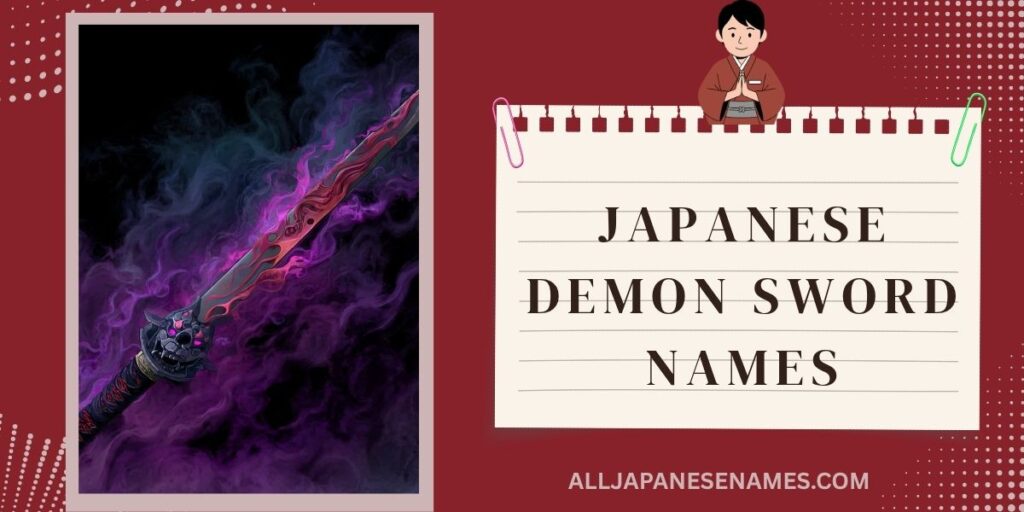
Not every blade was designed to be used for protection. Some swords from Japanese mythology and culture were considered to be feared, not revered, and not appreciated, however they were truly feared.
They were not allowed to touch them. Smiths would not make them. The owners of the Smiths’ reported bizarre accidents, deaths, and other things that could not be explained. These weren’t just myths used to make children afraid. These were tales shared by professionals who believed in every word.
Japanese demon sword names come from this dark part of sword culture, the place where steel comes into contact with something mystical or magical. A demon sword in Japanese tradition was more than just a sharp sword. The belief was that it could be a symbol of evil intent, much like the blade itself desired blood.
It was believed that a cursed sword brought ruin to its owner at some point or another, regardless of the skill level of its owner. A demon-slayer sword, on the other hand, was the answer to this darkness. It was a weapon specially designed to fight the evil forces.
Then there’s a phantom spirit sword, the rarest of all. These were swords believed to contain a wandering spirit that was neither completely evil nor good, wandering around the world and deciding its own way.
| Name | Meaning | Pronunciation | Kanji |
|---|---|---|---|
| Akumaken | Devil sword, blade born from pure malevolent intent | ah-koo-mah-ken | 悪魔剣 |
| Oniyaburi | Demon breaker, blade that tears through supernatural flesh | oh-nee-yah-boo-ree | 鬼破り |
| Tatariken | Curse blade, sword that poisons the life of its owner | tah-tah-ree-ken | 祟り剣 |
| Yuureiken | Phantom spirit sword, blade haunted by wandering ghost souls | yoo-reh-ee-ken | 幽霊剣 |
| Majinhaou | Demon blade overlord, sword that commands lesser dark forces | mah-jin-hah-oh | 魔刃覇王 |
| Onigiriken | Demon cutter, demon-slayer sword built for supernatural battles | oh-nee-gee-ree-ken | 鬼斬り剣 |
| Akuryouzan | Evil spirit slash, cutting force against dark supernatural beings | ah-koo-ryoh-zan | 悪霊斬 |
| Mazanken | Demonic slash sword, blade that cuts with evil-infused force | mah-zan-ken | 魔斬剣 |
| Onibakuken | Demon explosion sword, burst force blade of infernal power | oh-nee-bah-koo-ken | 鬼爆剣 |
| Tatariyaiba | Cursed fang edge, blade that bites back at its own wielder | tah-tah-ree-yah-ee-bah | 祟り牙刃 |
| Maboroshiken | Phantom sword, illusion blade that appears and vanishes | mah-boh-roh-shee-ken | 幻剣 |
| Jaryuuzan | Evil dragon slash, cursed serpent cutting force | jah-ryoo-zan | 邪龍斬 |
| Akukiriha | Evil cutting edge, blade sharpened by dark ritual | ah-koo-kee-ree-hah | 悪切り刃 |
| Oniyomiken | Demon reading sword, blade that reads its enemy’s soul before striking | oh-nee-yoh-mee-ken | 鬼読み剣 |
| Mazankurou | Dark demon slash, black cursed sword of pure destruction | mah-zan-koo-roh | 魔斬黒 |
| Tatariryu | Cursed dragon, serpent sword that drags its owner into ruin | tah-tah-ree-ryoo | 祟り龍 |
| Yuumiken | Dream demon sword, blade that traps the mind in illusion | yoo-mee-ken | 夢魔剣 |
| Kishinjaken | Demon god snake sword, triple dark force blade | kee-sheen-jah-ken | 鬼神蛇剣 |
| Akumazan | Devil slash, cleaving strike of the dark lord’s blade | ah-koo-mah-zan | 悪魔斬 |
| Oniyoriken | Demon possession sword, blade that takes over the fighter’s will | oh-nee-yoh-ree-ken | 鬼依り剣 |
The Japanese demon sword names don’t have to be meant only for horror enthusiasts or dark fantasy authors. They originate from a tradition that says objects can absorb energy, convey intention, and have an identity in their own. The demon sword in Japanese tradition was a warning encased in steel.
The cursed sword was history’s way to say that power comes with too steep a cost. A phantom spirit sword was the reminder that not everything that afflicts an object is obvious to the naked eye. The names of these swords represent the entire message, and they can be done in a variety of ways.
Looking for beautiful and meaningful Japanese girl names inspired by elegance, nature, and modern culture? Explore the complete Japanese girl names collection .
Japanese Straight Sword Names
There was the line, before the curve. The majority of people think of a curved blade when they are asked to imagine Japanese swords. However, Japan’s first swords were all straight. There was no bend. Straight, clean, straight-line sword built for thrusting and cutting in a manner that curved blades can’t compete with.
The first straight blades were known as tsurugi swords, and they preceded the samurai period by hundreds of years. They were introduced to Japan heavily in the influence of Chinese as well as Korean Blade designs however, Japanese smiths quickly adapted them to their own. The tsurugi was two-edged, robust, rigid, and designed for a totally different type of combat, unlike the katana, which came later.
Some straight swords were mounted on long shafts serving as the function of a pole weapon, giving warriors the ability to reach, control, as well as the ability to fight on horseback or in close formation. The combination of the sword design as well as the pole weapon design produced some of the most distinctive blades of Japanese history.
Below are some Japanese Straight Sword Names, you must look at:
| Name | Meaning | Pronunciation | Kanji |
|---|---|---|---|
| Chokuken | Straight sword, direct line blade of early Japan | choh-koo-ken | 直剣 |
| Massakiha | Forward cutting edge, straight thrust blade | mah-sah-kee-hah | 真先刃 |
| Tsurugiha | Straight blade edge, ancient double-edged cutting line | tsoo-roo-gee-hah | 剣刃 |
| Chokkouken | Direct light sword, straight radiant blade of truth | choh-koh-ken | 直光剣 |
| Massoken | True straight sword, pure unbent blade of discipline | mah-soh-ken | 真直剣 |
| Tsurugiryuu | Straight sword flow, ancient blade school of the direct path | tsoo-roo-gee-ryoo | 剣流 |
| Chokuryu | Straight current, blade moving in one unwavering direction | choh-koo-ryoo | 直流 |
| Massakiken | True forward sword, blade that never deviates from its target | mah-sah-kee-ken | 真先剣 |
| Tsurugizan | Straight sword slash, clean direct ancient cutting strike | tsoo-roo-gee-zan | 剣斬 |
| Chokusouken | Direct thrust sword, piercing straight blade of ancient warriors | choh-koo-soh-ken | 直槍剣 |
| Massazen | True forward flash, straight-line strike of pure speed | mah-sah-zen | 真先閃 |
| Tsurugikami | Straight sword god, divine ancient blade of the first warriors | tsoo-roo-gee-kah-mee | 剣神 |
| Chokutetsu | Straight iron, rigid ancient steel that refuses to bend | choh-koo-teh-tsoo | 直鉄 |
| Massakiryu | True forward dragon, straight serpent blade of ancient power | mah-sah-kee-ryoo | 真先龍 |
| Tsurugiha Masaki | Straight true blade edge, ancient direct cutting weapon | tsoo-roo-gee-hah mah-sah-kee | 剣刃真先 |
| Chokusouha | Direct thrust edge, ancient pole-mounted straight blade | choh-koo-soh-hah | 直槍刃 |
| Massenken | True flash sword, straight blade that strikes without hesitation | mah-sen-ken | 真閃剣 |
| Tsurugimaru | Straight sword circle, ancient blade of complete discipline | tsoo-roo-gee-mah-roo | 剣丸 |
| Chokukaze | Straight wind, blade that cuts in one clean direct line | choh-koo-kah-zeh | 直風 |
| Massatetsu | True forward iron, straight ancient steel of unwavering purpose | mah-sah-teh-tsoo | 真先鉄 |
Straight swords don’t get enough praise. Before the katana was the symbol of the Japanese tradition of swords, tsurugi swords were the ones that cut through the past.
They were strong, double-edged, and constructed with a completely different approach, these blades were the basis on which all else was built. When used as a single-handed weapon, a two-handed one, or a pole weapon for extended reach, straight swords proved that sometimes the straightest path will also prove to be the most effective one.
Watch Famous Samurai Sword Types
Learn about famous samurai swords, legendary Japanese blades, and traditional sword styles connected to Japanese sword culture.
Conclusion
Japanese sword names are more than just labels. We covered all the basics in this article. Ancient blades with mythological roots. The katanas that shaped history. Samurai swords that were carried with pride. Demon swords have been feared by generations. Legendary weapons linked to gods and curses. The anime sword names brought Japanese blade culture into the global spotlight.
Each blade type has its own naming tradition. Each name in this list has a real-life origin. A battlefield. A forge. A prayer, a tale that has been passed down through the generations.
These names are worth keeping, whether you’re an avid writer, gamer, history buff, or someone who is fascinated by Japanese sword culture. The blade may be steel. But the name? That part lives forever.
Frequently Asked Questions
Q1: What are the primary kinds of Japanese swords and their names?
A: The main Japanese sword types include katana, wakizashi, nodachi, tanto, and tachi. The katana is a famous curved, single-edged sword worn at the waist and used as the main weapon of samurai. Each sword had a different size, shape, and purpose in battle.
Q2: What’s the difference between the katana and wakizashi?
A: The katana is longer (24–30 inches), while the wakizashi is shorter (12–24 inches). Samurai used the katana for open combat and the wakizashi for close-range or indoor fighting.
Q3: What do Japanese sword names refer to in English?
A: Japanese sword names often reflect nature, power, or spirituality. For example, Raikiri means “lightning cutter” and Kusanagi means “grass cutter.” Names represent the sword’s purpose or symbolic meaning, not random choices.
Q4: Which is the world’s most renowned Japanese sword?
A: Honjo Masamune is considered the most famous Japanese sword. It was created by master swordsmith Masamune and became a symbol of the Tokugawa Shogunate. Its current location is unknown after it disappeared following World War II.
Q5: Is the ninjato really a Japanese sword?
A: The ninjato is debated among historians. There is no solid historical proof that ninjas used a standardized straight-bladed sword. It is believed that the popular version comes more from modern media than historical reality.
Q6: Which Japanese sword names are used in anime?
A: Anime like Bleach, Demon Slayer, and Rurouni Kenshin feature famous sword names such as Zangetsu, Nichirin, and Sakabato. These names are inspired by real Japanese sword culture and often reflect the character’s identity.
